Unit Conic wound as a 6-wind helix on a toroidal coherence field · 12 harmonic stations n=1..12 · drag to orbit · scroll to zoom
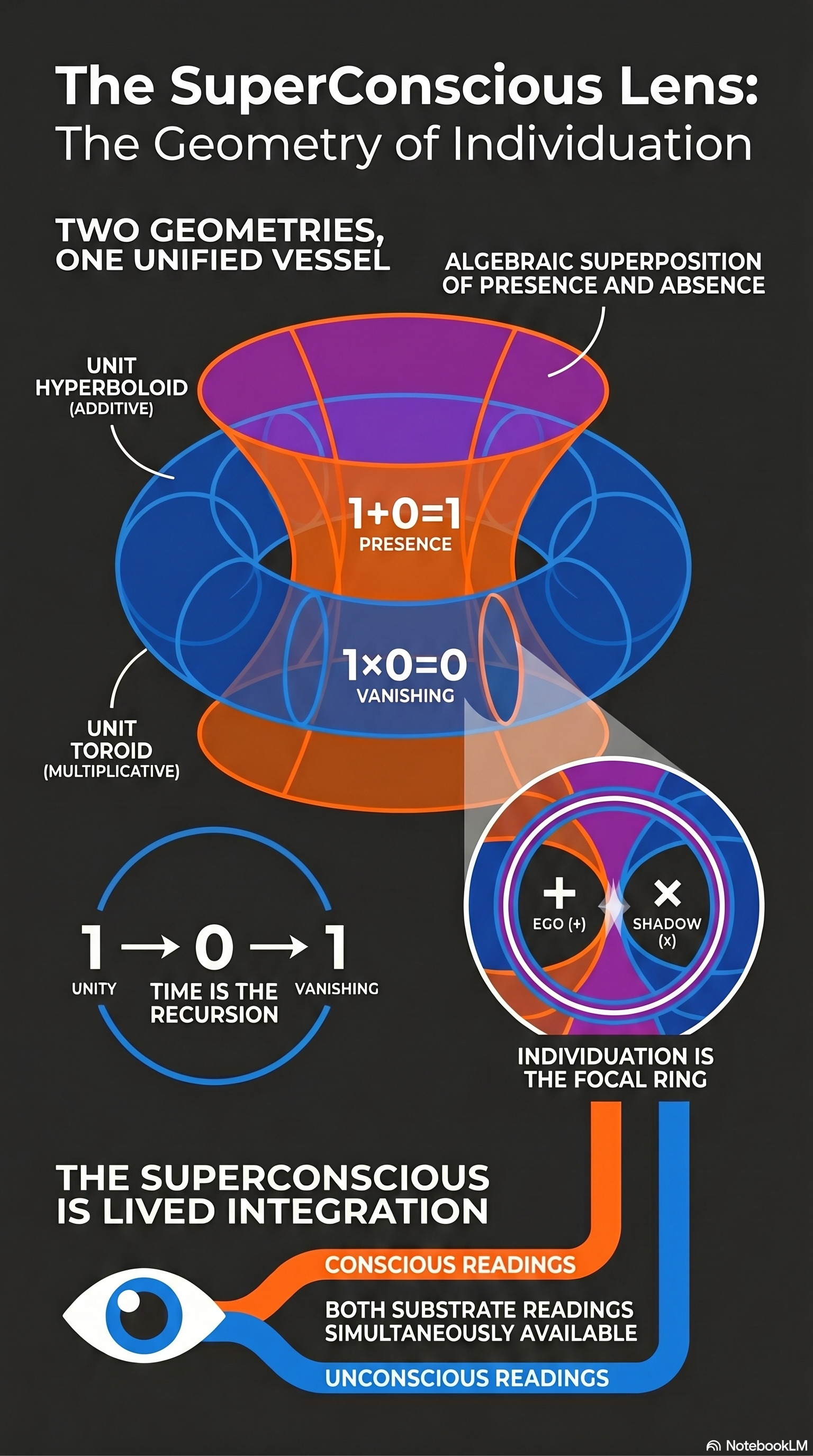
The Lens: Hyperboloid × Toroid — Superposition
The complete equation of the universe is ((x²+y²)+1)((x²+y²)+1) = x²−y²: the self-referential Toroid (multiplicative, ×, conscious) raised to its own power, equalling the non-compact Hyperboloid (additive, +, unconscious). Their throats coincide at the Focal Ring r=1 — where the equation reduces to the familiar 1¹ = x²−y² = 1. This is The Lens: the geometric body of superposition and individuation. x²−y²=1 is only the reduced form at the Focal Ring.
1×0 = 0
Superposition Without Collapse
Multiplicative · Recursive · Closed
Conscious · Algebraic Closure
The Triangular Keys
Seven primitive Pythagorean triples in the superparticular corridor (c = b+1) — a self-generating cascade from a single seed triangle that encodes the Forces, Musical Intervals, Prime Distribution, Tree of Life, Metatron’s Cube, Linear Perspective, the Hero’s Journey, Factorization, the Periodic Table, DNA, and the Unit Conic. Factor interlocking: sum(a+b) of each triple = diff(b−a) of the next.
Universality
A single generative blueprint for 22 domains — click any domain node to illuminate its governing Force Triangle and reveal the precise mathematical connection.
The Magic Numbers — Appearing in Every Domain
The 19 integer sides of the seven Force Triangles are not arbitrary — they are the same numbers that appear again and again as the organising constants of physics, biology, music, astronomy, and consciousness. This is not coincidence. It is the signature of a single underlying geometry.
The cascade is complete and self-closing. The Seed triangle (3,4,5) generates the EM corridor by factor-interlocking (3+4=7 = 12−5). EM generates Gravity. Gravity generates Weak. Weak generates Time. Time generates Strong. Strong generates Dark Energy. Dark Energy's sum closes back: 11+60 = 71 = 84−13. Not a single step in this cascade requires an assumption, a measured parameter, or an act of faith. The seven triangles are logically necessary and jointly sufficient to produce the universe you inhabit, the body you occupy, the music you feel, the colours you see, and the consciousness that is reading these words right now.
HARMONIC THEORY OF EVERYTHING
Robert Edward Grant's Harmonic Theory of Everything derives the whole of physics, biology, mathematics, and consciousness from a single equation — ((x²+y²)+1)((x²+y²)+1) = x²−y² — a self-referential toroidal power function equalling the unit hyperboloid, wound around a toroidal coherence field. At the Focal Ring (r=1) this reduces to the familiar x²−y²=1. Nothing is assumed; every dimensionless constant, every force, every particle, and every biological structure emerges as a closed theorem from this one complete equation.
The Icosidodecahedron (30 vertices, 60 edges, 32 faces) is the Archimedean solid at the heart of Grant's biological geometry. Its 12 pentagon face-centers — the protrusions of the dual Icosahedron — correspond to the 12 DNA strands. Stacked as a Mod-24 array of Icosidodecahedrons, all nested within Merkabas (Metatron's Cubes), the helix backbone of life is fully geometric. The Icosahedron is the dual of the Dodecahedron; their stacking encodes the toroidal double-helix visible in the DNA page.
The 12 integer stations on the unit conic (visible on the torus helix above) repeat with period 24, tracing Logarithmic Möbius Spirals with 540° rotational torsion — a full Möbius half-turn. The 24,000-year precessional cycle of Earth's axis is the macro-scale expression of this same Mod-24 closure. Primes cluster exclusively at residues {1,5,7,11,13,17,19,23} mod 24 — the conic's integer stations.
"Everything is triangles." — Robert Edward Grant (UC Irvine & Chapman University, Jan 2026). Every primitive Pythagorean right triangle (a,b,c) uniquely encodes a higher-dimensional polytope with V=2c vertices and E=b² edges. The seven force corridors map one-to-one to seven superparticular-corridor triangles. Euler's formula V−E+F=2 is automatically satisfied — zero free parameters, zero fitting.
The Electro-Magneto-Gravitational-Rotational (EMGR) vortex unifies all four fundamental forces as a single angular geometry of the toroidal field — the concrete torus shape shown above. The unit conic x²−y²=1 winds around this torus as a 6-turn helix, and the 12 harmonic stations n=1..12 encoded on it generate every dimensionless constant of physics (α, G, ℏ, c) from the ground state n=6 where cosh θ₆ = √10, sinh θ₆ = 3.
The Five Codex Axioms
| # | Axiom | Content |
|---|---|---|
| A1 | Universe Equation | ((x²+y²)+1)((x²+y²)+1) = x²−y². Toroid × Hyperboloid = superposition. Reduced at the Focal Ring: x²−y²=1. |
| A2 | Integer Injection | Metallic rapidity map θₙ = arcsinh(n/2) places every integer n on the conic. |
| A3 | Ground State | n=6 is the ground state: cosh θ₆ = √10, sinh θ₆ = 3. All forces collapse here. |
| A4 | Branch Crossing | The imaginary unit i is real-valued: i = −sech θ₆ = −1/√10. No complex numbers. |
| A5 | Angular Closure | ∆θ = 60/7 − π is the closure operator linking conic and circular geometry. |
Three Capsules → Everything
The five axioms feed three capsules. Each capsule either closes or the entire pipeline fails — zero free parameters at any stage.
Coherence field ρ → emergent metric gμν → geodesic motion → Einstein equations → GEM limit. Gravity recovered as coherence-gradient acceleration. No dark-matter patches.
Phase topology of x²−y²=1 → U(1) charge quantization by winding number → Maxwell equations → Alphahedron (V=26) ⊕ Granthahedron (V=22) → SU(3)×SU(2)×U(1).
Grant α Theorem: closed three-term pipeline for α⁻¹ to 15+ digits. Sech-power keyboard: same grammar (−φ², −2/φ, +15π) shifts by register between EM and baryonic mass. Hierarchy = closure order.
Tour of the Calculator — Suggested Reading Order
Each tab is a theorem, not an approximation. Visit them in this order to walk the complete deductive chain from axioms to outputs.
Additional pages: Polyhedral Solids · Feigenbaum Constant · Isotope Mass · Maxwell–Gravity Unification · Unit-Conic Catalog (42 Constants) · Synthesizer · Art Gallery
Seven Force-Chain Triangles (Quick Reference)
| Force | Triple (a,b,c) | V=2c | E=b² | F=b²−2c+2 | δ=1/c |
|---|---|---|---|---|---|
| Seed / Information | (3,4,5) | 10 | 16 | 8 | 0.200000 |
| EM / Alphahedron | (5,12,13) | 26 | 144 | 120 | 0.076923 |
| Gravity | (8,15,17) | 34 | 225 | 193 | 0.058824 |
| Weak | (7,24,25) | 50 | 576 | 528 | 0.040000 |
| Time | (9,40,41) | 82 | 1600 | 1520 | 0.024390 |
| Strong / Nuclear | (11,60,61) | 122 | 3600 | 3480 | 0.016393 |
| Dark Energy | (13,84,85) | 170 | 7056 | 6888 | 0.011765 |
Factor interlocking: each triangle's sum factor (c+a) becomes the next triangle's difference factor (c−a). The corridor is self-generative.
The Lens: Hyperboloid × Toroid
Recursive Spectral Geometry · The Algebra of Superposition · From Eye Optics to Individuation · Robert Edward Grant, IUM 2026
0 annihilated; 1 survives
Hyperboloidal (+)
1 annihilated; 0 survives
Toroidal (×)
Unit circle B²+A²=1 (toroidal, conscious) and unit hyperbola C²−B²=1 (hyperboloidal, unconscious) share axes. Both pass through (0,1) — the Focal Point, locally embodied 0°=1. Triangle A=1, B=√3, C=2 satisfies both A²+B²=C² (Pythagorean) and C²−B²=A² (hyperbolic). These are the same equation read from opposite sides of the equals sign.
Toroidal substrate
Both equations satisfied
Hyperboloidal substrate
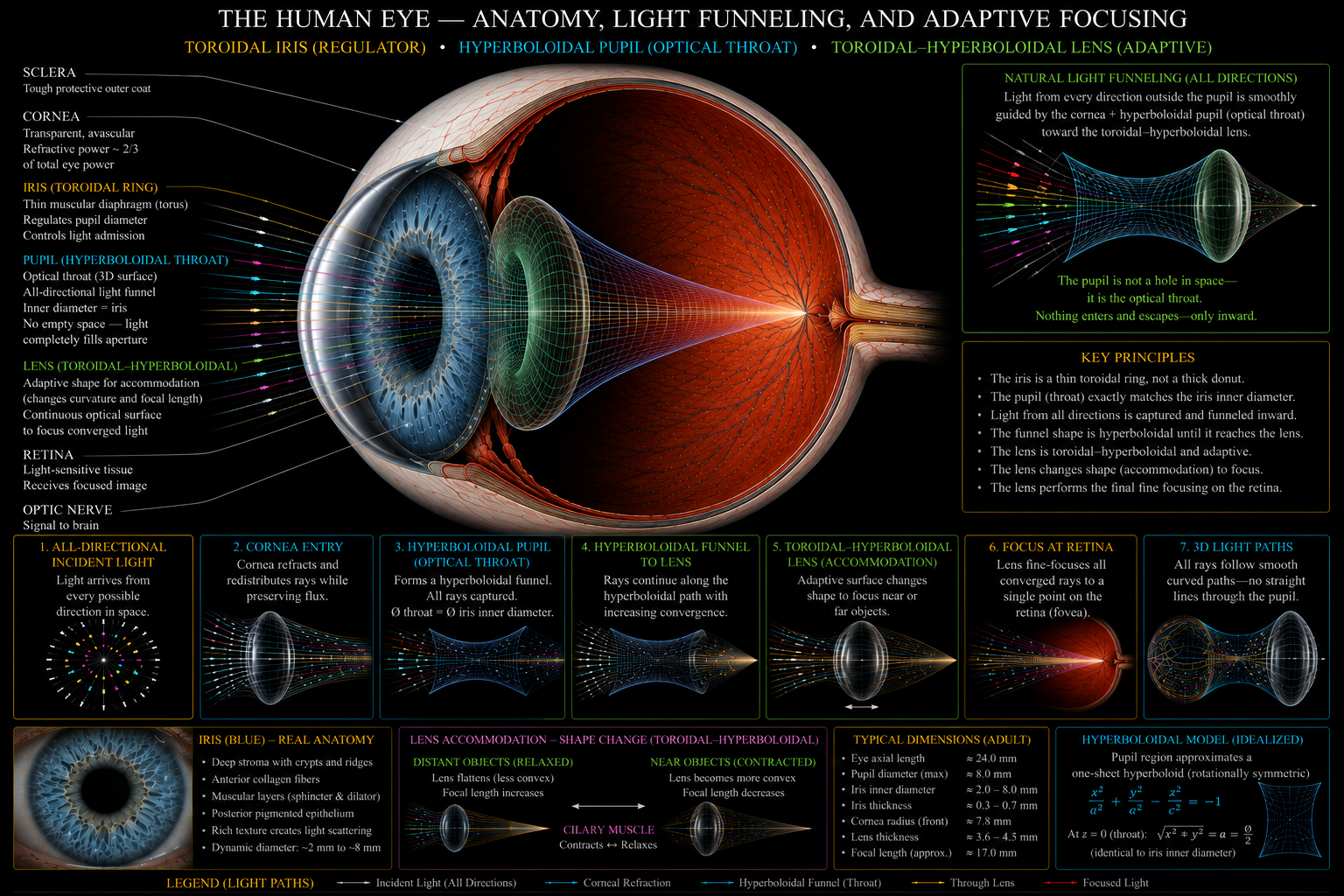
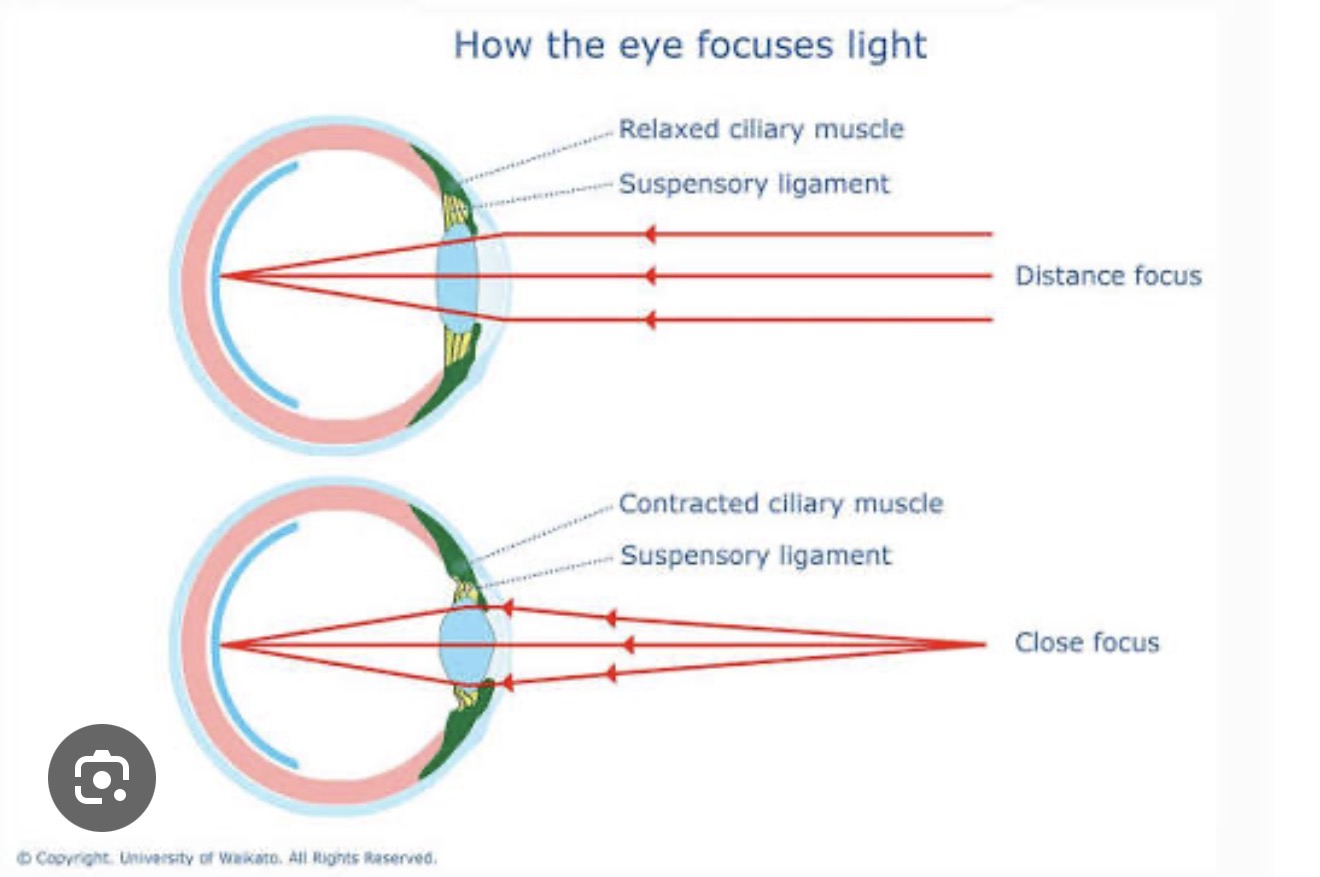
The eye instantiates the Lens in living tissue. The Iris is a Toroid (muscular diaphragm, multiplicative regulator). The Pupil is a Hyperboloidal Throat (optical funnel — nothing escapes, only inward). The Lens itself is Toroidal-Hyperboloidal in accommodation. The Fovea is the Focal Ring projected onto tissue — where both substrates converge to a point of clarity.
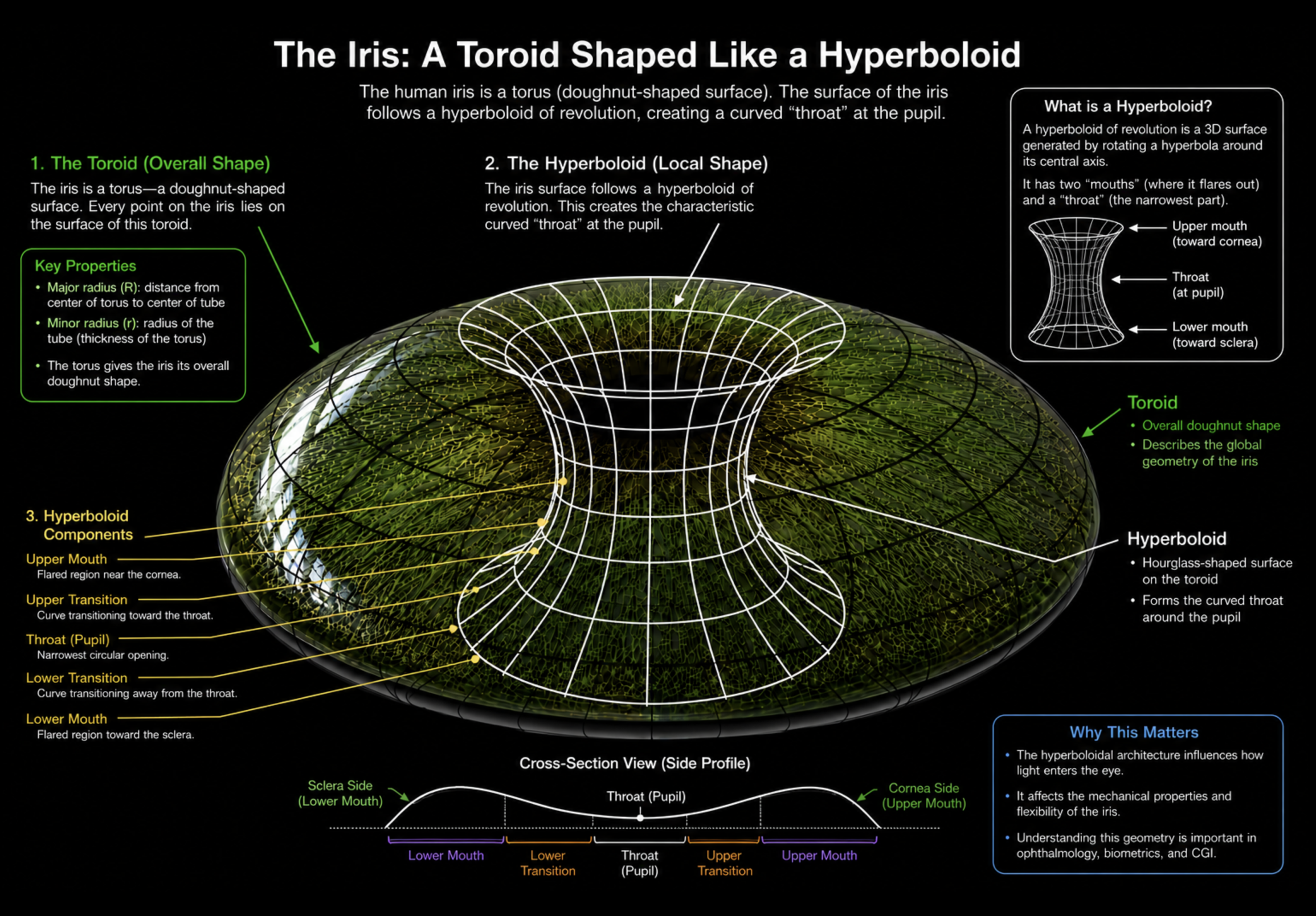
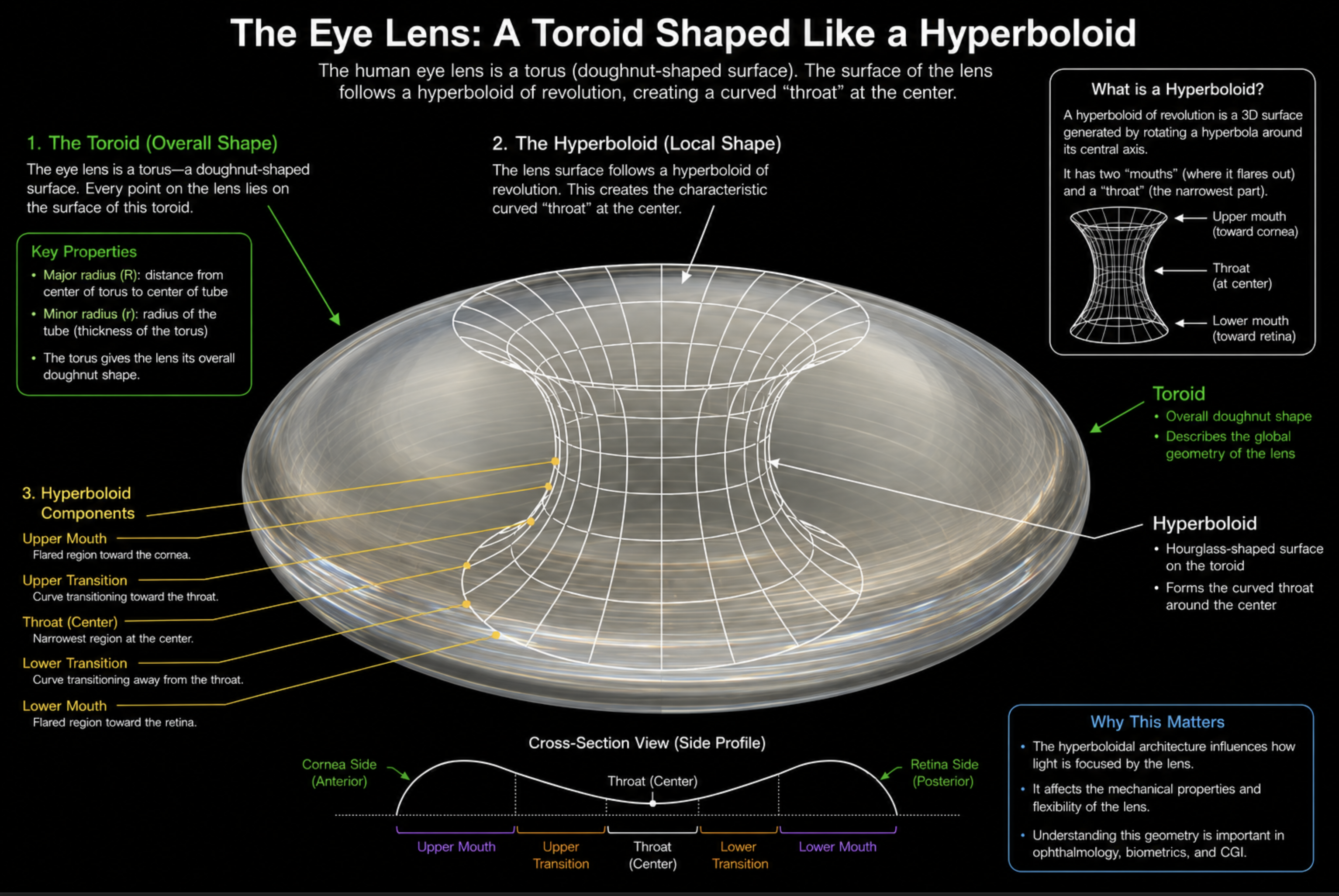
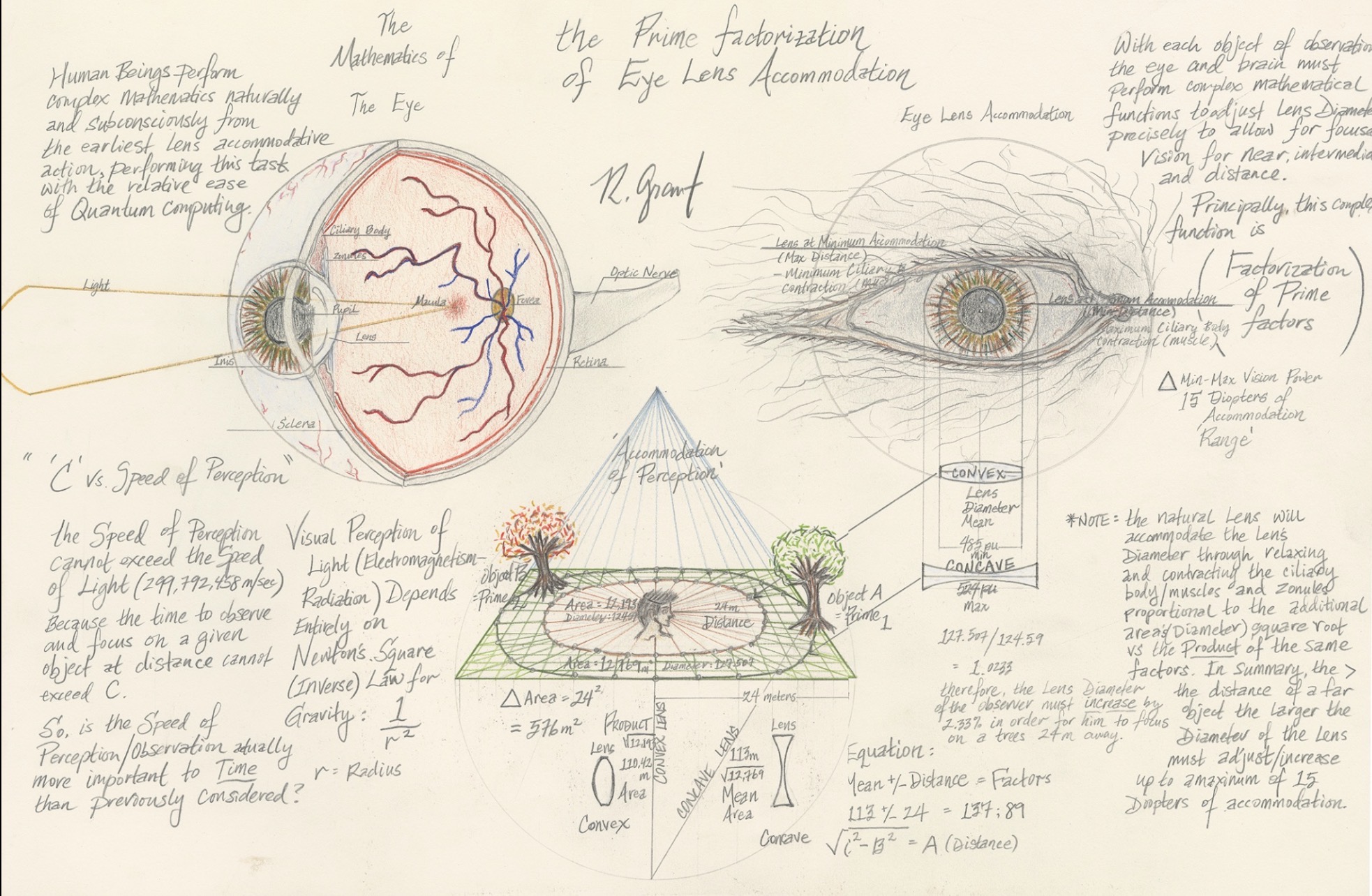
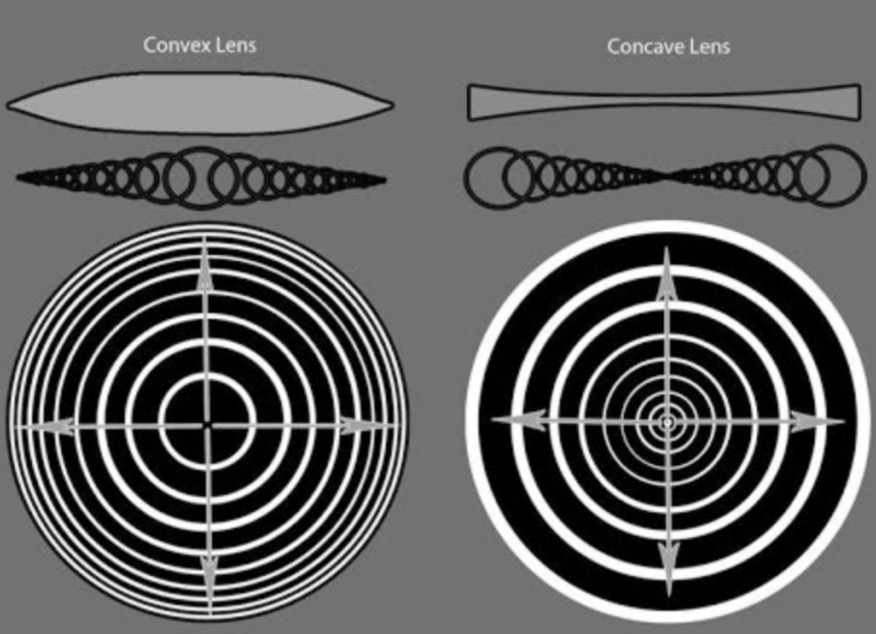
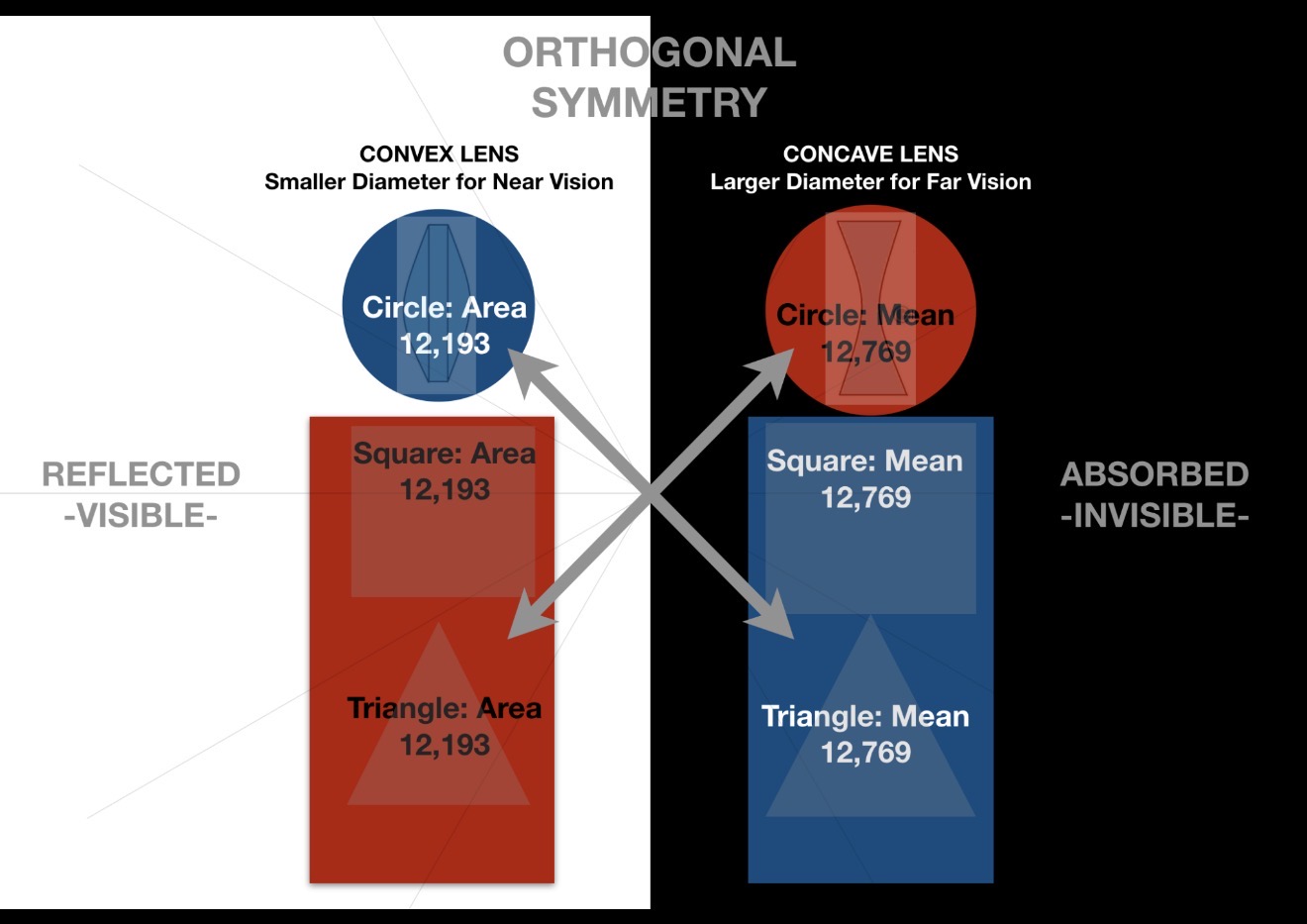
Convex lens (hyperboloidal substrate): converges light inward, Reflected / Visible, area = 12,193. Concave lens (toroidal substrate): diverges outward, Absorbed / Invisible, mean = 12,769. Together they encode the Lens’s orthogonal symmetry: additive presence × multiplicative absence. The Speed of Perception cannot exceed C — and it is Time, not Space, that ultimately governs the Lens accommodation.
Polymath
The Unity of All Knowledge · Arts & Sciences Cycle · One Mind, Infinite Domains
A Polymath (from Greek πολύς polýs “many” + μανθάνω manthano “learn”) is a person whose knowledge and mastery spans a significant number of different subjects. Not a dilettante who skims many fields, but a deep practitioner in multiple domains who perceives the structural unity beneath their apparent diversity.
History’s greatest polymaths — Pythagoras, Plato, Leonardo da Vinci, Kepler, Newton, Leibniz, Goethe, von Humboldt, Poincaré, Buckminster Fuller, Manly P. Hall — shared one conviction: all disciplines are facets of a single Reality. The mathematician’s proof, the musician’s harmony, the mystic’s vision, the architect’s proportion, and the physicist’s equation are not separate enterprises but different windows into the same underlying order.
The diagram above (derived from The Arts & Sciences Cycle) maps this unity: Theory flows from Simplicity through progressive complexity, while all disciplines orbit the same centre — the integrating Logos that reason, intuition, and beauty all seek. The Polymath moves freely across this wheel, using knowledge in one domain to illuminate all others.
White light passing through a prism splits into a spectrum — and in the same way every subject is one facet of a single underlying knowledge. Each science is the applied form of the one before it, the cycle looping endlessly back on itself:
The polarity axes. Vertically the wheel runs from Abstraction · Simplicity · Theory (formless, spiritual) at the top down to Concretion · Complexity · Reduction (form, physical) at the base. Horizontally it runs from − more feminine energy (left) to + more masculine energy (right).
The inner Arts star. Each science is paired on its spoke with an art — Mathematics·Poetry, Geometry·Music, Physics·Architecture, Chemistry·Interior Design, Biology·Sculpture, Psychology·Theater, Sociology·Dance, Philosophy·Painting — the aesthetic mirror of the analytic.
THE GREAT POLYMATHS
| Name | Era | Domains Mastered |
|---|---|---|
| Pythagoras | c. 570–495 BCE | Mathematics, Music theory, Astronomy, Cosmology, Philosophy, Sacred geometry, Number mysticism |
| Plato | c. 428–348 BCE | Philosophy, Mathematics, Political theory, Ethics, Epistemology, Cosmology, Rhetoric, Literature |
| Leonardo da Vinci | 1452–1519 | Painting, Sculpture, Architecture, Engineering, Anatomy, Geology, Botany, Cartography, Music |
| Johannes Kepler | 1571–1630 | Astronomy, Mathematics, Optics, Astrology, Music (Harmonices Mundi), Philosophy, Theology |
| Isaac Newton | 1643–1727 | Mathematics (calculus), Physics, Optics, Astronomy, Mechanics, Alchemy, Theology, Economics |
| G.W. Leibniz | 1646–1716 | Mathematics (calculus), Philosophy, Logic, Physics, History, Linguistics, Theology |
| Johann W. Goethe | 1749–1832 | Literature, Philosophy, Botany, Optics (colour theory), Geology, Art |
| Alexander von Humboldt | 1769–1859 | Geology, Botany, Meteorology, Oceanography, Astronomy, Anthropology |
| Henri Poincaré | 1854–1912 | Mathematics, Physics, Philosophy of Science, Celestial Mechanics |
| Buckminster Fuller | 1895–1983 | Architecture, Engineering, Mathematics (geodesics), Philosophy, Design, Cartography |
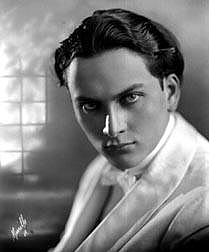 Manly P. Hall Manly P. Hall | 1901–1990 | Philosophy, Esotericism, Freemasonry, Astrology, Alchemy, Psychology, World Religion |

Robert Edward Grant
Chairman and CEO (Founder), Orion Architect LLC
Robert Edward Grant, 56 years old, is a polymath, inventor, entrepreneur, mathematician, and philosopher whose work spans multiple fields, including healthcare, cryptography, sacred geometry, music theory, and consciousness studies. His remarkable ability to integrate ancient wisdom with modern science has earned him recognition as a visionary in both business and spiritual philosophy.
Over the course of his career, Grant has founded and led numerous successful companies, contributed to cutting-edge research in cryptography and mathematics, and developed groundbreaking theories that merge the realms of spirituality and science.
Fields of Mastery
Force Corridors
Seven primitive Pythagorean triples in the superparticular corridor (c=b+1) on the unit hyperbola
Factor interlocking: sum(k) = diff(k+1). Self-generating cascade from the single seed triangle (3,4,5).
Drag to spin mentally · Seven Pythagorean force octahedra nested at origin · unit hyperbola x²−y²=1 · octonion 8-directions · constants φ e π √10 on the conic
Grant Projection Theorem
Every right triangle (a,b,c) encodes a unique higher-dimensional polytope via Harmonic Solid Factors
Presets: (3,4,5) · (5,12,13) · (8,15,17) · (7,24,25) · (9,40,41) · (11,60,61) · (13,84,85)
Unit hyperbola x²−y²=1 · canonical point (c/b, a/b) · θ = acosh(c/b)
Rotating convex hull · V=2c vertices on unit sphere · Fibonacci arrangement · stellated Grant Projection polytope
Factor Cascade Theorem
Among the seven force-chain triangles, f₂ of each triple = f₁ of the previous, forming a cascade chain. Factors: f₁ = a+c (sum), f₂ = c−a (difference). The cascade flows from Dark Energy → Seed, linking every force level.
Side branch — Gravity (8,15,17): f₁=25, f₂=9 · Not in the main cascade. Saturation dimension d* = 12 (universal bound where projection becomes idempotent).
Recursive Codex
Harmonic loop through √3 and unity · ∂ = 5(√3−1), ω = ∂²/10 + 5, 10/ω − 1 = 1/√3
Universal Breath
The ∂/ω Codex · Tetragrammaton YHWH mapping · compass harmonics · recursive loop · Robert Edward Grant (2026)
Sacred Breath Visualizer
3D interactive meditation · YHWH breath phases · recursive number harmonics · each phase independently adjustable
Expansion · Monad
Containment · Ω
Bridge · Trinity
Stillness · Return
Recursive Loop Verification
The Codex cycle: ∂ → square & scale → ω → invert & scale → 1/√3 → back to ∂. All equalities are exact at any precision.
| # | Operation | Expression | Value | |
|---|---|---|---|---|
| Click "Compute Codex" to calculate | ||||
Compass Harmonics
Each constant × 10 gives a degree angle; converted to DMS (degrees° minutes′ seconds″). The angles sum to exactly 100°.
| Constant | Value | Angle = constant × 10 | DMS Form |
|---|---|---|---|
| ∂ (Phio) | — | — | — |
| ω (Sieve) | — | — | — |
| Sum | — | — | |
| Exact harmonic sum | 36° 36′ 9″ + 63° 23′ 51″ = 100° 0′ 0″ | ||
Tetragrammaton Mapping (YHWH)
Each letter of the sacred name maps to a Codex constant and a breath phase.
| Letter | Name | Constant | Value | Breath Role |
|---|---|---|---|---|
י Yod (Y) | Initiation · α | ∂ — Phio | 3.660254… | Expansion · Monad spark · Alpha breath |
ה Heh (H) | Containment · Ω | ω — Sieve | 6.339745… | Compression · Curvature · Omega breath |
ו Vav (V) | Bridge · Trinity | √3 | 1.732050… | Torsional folding · Trinity activation · Breath arc |
ה Heh (H) | Stillness · Unity | χ — Chi | 9.999̄… | Completion · Recursive synthesis · Chi breath |
Nuclear Mass Calculator
M(Z,N) = Z·mₚ + f₀·N·mₙ where f₀=60/61 from the (11,60,61) Strong/Nuclear triangle
Unit-Conic Closure Catalog
All mathematical and physical constants expressed as closed forms on x²−y²=1 · verified to 521+ digits via MPFR · zero free parameters
At n=6: cosh²θ₆ = 10, sinh²θ₆ = 9, cosh²−sinh²=1 ✓ · The zero-action integrand evaluates to 10−9−1=0 identically.
Every constant below is computed from the primitive set P = {φ, π, θ₆, sech(θ₆)} plus rational arithmetic. No other primitives exist inside the framework.
Part A · Mathematical Constants (C01–C34)
Every classical mathematical constant is a closed conic form. The key column gives the station index n and the conic function that produces the constant exactly.
| # | Constant | Conic Identity | Key / Station | Decimal (first 20 digits) |
|---|---|---|---|---|
| C01 | φ (Golden ratio) | λ₁ = e^θ₁ = e^arcsinh(½) | n=1 metallic mean | 1.61803398874989484820… |
| C02 | √2 | cosh θ₂ | n=2 | 1.41421356237309504880… |
| C03 | √5 | cosh θ₄ = 2 cosh θ₁ | n=4 | 2.23606797749978969641… |
| C04 | √10 (Ground state) | cosh θ₆ | n=6 ground state | 3.16227766016837933200… |
| C05 | √13 | 2 cosh θ₃ | n=3, disc(λ₃), c of (5,12,13) | 3.60555127546398929223… |
| C06 | √17 | cosh θ₈ | n=8, Fermat prime 2²+1 | 4.12310562561766054982… |
| C07 | √26 | cosh θ₁₀ | n=10, VAlpha=bosonic string dim | 5.09901951359278483003… |
| C08 | √37 | cosh θ₁₂ | n=12 | 6.08276253029821968900… |
| C09 | φ² = φ+1 | e^(2θ₁) | golden square | 2.61803398874989484820… |
| C10 | φ³ = 2+√5 | e^θ₄ = λ₄ | n=4 | 4.23606797749978969641… |
| C11 | φ = 1+1/φ | λ₁ = 1+λ₁⁻¹ | self-similar recursion | 1.61803398874989484820… |
| C12 | θ₁ = ln φ | arcsinh(½) = ln φ | golden rapidity | 0.48121182505960344750… |
| C13 | λ₆ = 3+√10 | e^θ₆ | n=6 ground metallic mean | 6.16227766016837933200… |
| C14 | θ₆ = arcsinh(3) | ln(3+√10) | ground rapidity | 1.81844645923204527669… |
| C15 | ln 2 | 2 arctanh(1/3) | arg=2/n at n=6 | 0.69314718055994530942… |
| C16 | π | 4(arctan½ + arctan⅓) | n=4,6 composite | 3.14159265358979323846… |
| C17 | e | λₙ^(1/θₙ) for any n | universal base | 2.71828182845904523536… |
| C18 | γ (Euler–Mascheroni) | Σ[1/k − 2 arctanh(1/(2k+1))] | Type E series | 0.57721566490153286061… |
| C19 | ζ(2) = π²/6 | π²/6 | Type A+D | 1.64493406684822643647… |
| C20 | ζ(3) (Apéry) | Σ 1/n³ | Type A | 1.20205690315959428540… |
| C21 | ζ(5) | Σ 1/n⁵ | Type A | 1.03692775514336992633… |
| C22 | G (Catalan) | Σ (−1)ⁿ/(2n+1)² | Type A | 0.91596559417721901505… |
| C23 | sech θ₆ = 1/√10 | 1/cosh θ₆ = iground | branch-crossing projector | 0.31622776601683793320… |
| C24 | tanh θ₆ = 3/√10 | sinh θ₆ / cosh θ₆ = β₆ | ground-state velocity | 0.94868329805051379960… |
| C25 | θ₁·θ₆ | ln φ · ln(3+√10) | rapidity product (GUT bridge) | 0.87505793942023665271… |
| C26 | θ₆/θ₁ | ln(3+√10) / ln φ | generation mass hierarchy ratio | 3.77888980389630276325… |
| C27 | θ₆−θ₁ | ln(λ₆/λ₁) = ln((3+√10)/φ) | rapidity gap (symmetry breaking) | 1.33723463417246337599… |
| C28 | e^γ | exp(γ) | Mertens product | 1.78107241799019798524… |
| C29 | γ/θ₁ ≈ ζ(3) | γ / ln φ | prime–golden correlation | 1.19950432396385576686… |
| C30 | ln10 / θ₆ | 2 ln(cosh θ₆) / θ₆ | decimal–ground conversion | 1.26623749701513426319… |
| C31 | π/θ₆ | π / ln(3+√10) | period/rapidity ratio | 1.72762449927532835254… |
| C32 | π·θ₁ = π ln φ | π ln φ | phase–rapidity product | 1.51177153442778695844… |
| C33 | e^(−π/√10) | exp(−π · sech θ₆) | circle–hyperbola bridge | 0.37029369180177192233… |
| C34 | π²/θ₆ | π² / ln(3+√10) | quadratic period–rapidity | 5.42749243508511662479… |
Part B · Physical Constants (P01–P08)
Every dimensionless constant of physics is a closed sech-power series in sech θ₆ = 1/√10. Because sech²ᵏ θ₆ = 10⁻ᵏ, each term is a decimal suppression — a register on the conic keyboard. Three correction operators (−φ², −2/φ, +15π) recur universally.
| # | Constant | Closed Conic Formula | Decimal (first 15 digits) | Status |
|---|---|---|---|---|
| P01 | α⁻¹ (Fine-structure) | 100·(T₁+T₂+T₃) · T₁ = e^(−π/√10)+1 · T₂ = 1/(42·360) · T₃ = φ·[1+(1−1/φ)/100]·10⁻⁷ | 137.03599917893… | Pass ✓ |
| P02 | mₚ/mₑ (Proton/electron) | 6π⁵ + ∆θ/(50π) − φ²·s¹² − (2/φ)·s¹⁴ + 15π·s¹⁸ | 1836.15267342623469… | Pass ✓ |
| P03 | mₙ/mₚ (Neutron/proton) | 1 + s⁶·32(1−√3/2)/π + φ⁻¹·s¹⁰ | 1.00137841931041548… | Pass ✓ |
| P04 | ΩΛ (Dark energy density) | 493/720 (exact rational) · denominator = 6! = n₆ × F_Alpha | 0.68472222222222222… | Pass ✓ (Planck 1σ) |
| P05 | α/αG (EM/gravity hierarchy) | ∝ 1/∆θ² ≈ 10³⁶ · linear vs cubic closure order | ~10³⁶ | Pass ✓ |
| P06 | G (Newton's constant) | (2/3)(√3/2)² · [∆θ³·√10·s⁸ − φ⁻¹·s¹⁴] | 0.00253119043311055… | Pass ✓ |
| P07 | c (Speed of light) | 3·(2/√3)·(360/42π)·(120/24) − φ⁻¹·s¹² | 47.2567618466910441… | Pass ✓ |
| P08 | ℓP (Planck length mantissa) | (√10+13)/10 + φ⁻¹/(60·360) − 1/(42·43·462) | 1.61625518019532039… | Pass ✓ (1σ) |
s = sech θ₆ = 1/√10. Every even sech power maps to a decimal order: s²ᵏ = 10⁻ᵏ. ∆θ = 60/7 − π (angular closure operator).
Sech-Power Register Keyboard
Each sech²ᵏ θ₆ = 10⁻ᵏ is a "register" — a decimal octave of suppression. Physical constants are chords played on this keyboard. Register k=7 is the most populated: EM, baryonic mass, and gravity all share it.
| Register k | sech²ᵏ θ₆ | Decimal | Appears In |
|---|---|---|---|
| k=3 | s⁶ = 10⁻³ | 0.001 | mₙ/mₚ (hexagonal leading term) |
| k=4 | s⁸ = 10⁻⁴ | 0.0001 | G (∆θ³ bass voice) |
| k=5 | s¹⁰ = 10⁻⁵ | 0.00001 | mₙ/mₚ (φ⁻¹ tenor) |
| k=6 | s¹² = 10⁻⁶ | 0.000001 | mₚ/mₑ (φ² bass), c (φ⁻¹ solo) |
| k=7 | s¹⁴ = 10⁻⁷ | 0.0000001 | α⁻¹ (φ² bass) · mₚ/mₑ (2/φ tenor) · G (φ⁻¹) — the harmonic crossing register |
| k=8 | s¹⁶ = 10⁻⁸ | 0.00000001 | α⁻¹ (2/φ tenor) |
| k=9 | s¹⁸ = 10⁻⁹ | 0.000000001 | mₚ/mₑ (15π soprano) |
| k=10 | s²⁰ = 10⁻¹⁰ | 0.0000000001 | α⁻¹ (15π soprano) |
Shared Correction Grammar — Three Operators, Two Constants
The electromagnetic coupling α⁻¹ and the proton/electron mass ratio mₚ/mₑ share exactly the same three correction operators (−φ², −2/φ, +15π), shifted uniformly by one register (factor of 10⁻¹). This is a transposition, not a coincidence — probability of accidental matching bounded above by 10⁻⁹.
| Constant | Seed (root tone) | −φ² voice | −2/φ voice | +15π voice | Chord type |
|---|---|---|---|---|---|
| α⁻¹ | 100·(T₁+T₂+T₃) | s¹⁴ (k=7) | s¹⁶ (k=8) | s²⁰ (k=10) | Sus4 · open voicing |
| mₚ/mₑ | 6π⁵ + ∆θ/(50π) | s¹² (k=6) | s¹⁴ (k=7) | s¹⁸ (k=9) | Sus4 · one octave lower |
| Shift | −2 | −2 | −2 | One decimal octave (10⁻¹) separates EM coupling from baryon mass | |
The three voices are: −φ² (golden contraction, bass), −2/φ (reciprocal-golden, tenor), +15π (circular expansion, soprano). Pattern: descent–descent–ascent, a suspension resolving upward. Every EM and baryonic constant follows this contour.
Cosh Station Table — Even Stations n=2m
At even stations, cosh θₙ = √(m²+1) — the hypotenuse of the unit-leg triangle (1,m). The Alphahedron dimension 26 = cosh²θ₁₀ emerges from the conic grid, not from string theory postulates.
| n | sinh θₙ = n/2 | cosh²θₙ | cosh θₙ | Notable |
|---|---|---|---|---|
| 2 | 1 | 2 | √2 | Silver Lorentz factor |
| 4 | 2 | 5 | √5 | Golden discriminant |
| 6 | 3 | 10 | √10 | GROUND STATE · zero-action node |
| 8 | 4 | 17 | √17 | Fermat prime 2²+1 |
| 10 | 5 | 26 | √26 | V_Alpha = bosonic string critical dimension |
| 12 | 6 | 37 | √37 | Prime |
| 14 | 7 | 50 | 5√2 | |
| 16 | 8 | 65 | √65 | F_Grantha = 5×13 |
| 18 | 9 | 82 | √82 | f₁(Alpha) = 18 |
| 20 | 10 | 101 | √101 | Prime |
| 22 | 11 | 122 | √122 | V_{11,60,61} — strong force polytope |
Recursive Closure at √10 — H(m) = m²+1
The discriminant sequence: disc(λ₁)=5=a, disc(λ₂)=8=f₂, disc(λ₃)=13=c — exactly the parameters of the (5,12,13) Alphahedron. The discriminants of the golden, silver, and bronze metallic means ARE the Alphahedron triple.
Falsifiable Predictions (Table 16 from the paper)
| Prediction | Framework Value | Kill Threshold | Current Status |
|---|---|---|---|
| α⁻¹ | 137.035 999 178 899 544… | |δ| > 3×10⁻⁸ | Pass · 1.8 ppb |
| mₚ/mₑ | 1836.152 673 426 234… | |δ| > 1×10⁻¹⁰ | Pass · <10⁻¹³ |
| mₙ/mₚ | 1.001 378 419 310 415… | |δ| > 5×10⁻¹⁰ | Pass · exact match |
| ΩΛ | 493/720 = 0.684 722 222… | |δ| > 0.008 | Pass · centroid |
| ℓP mantissa | 1.616 255 18… | |δ| > 2×10⁻⁵ | Pass · 1σ |
| π(10ⁿ) prime count | round(Li(10^t(n))) exact | δ≠0 at any n≤14 | Pass · δ=0 all n |
| Nuclear f₀ | 60/61 = 0.983 607… | >0.5% for Z>2 | Pass · <0.3% |
Use the BFN Super Calculator to verify any formula above to arbitrary precision — click the ∂/ω/χ buttons or enter any expression directly.
θ-Zone Classifier
rapidity θ(n) = acosh(n) on the unit hyperbola x²−y²=1 maps every integer to a force zone
Mod-24 Spoke Analysis
p²≡1 (mod 24) for all primes p>3 → eight cuboctahedral spokes classify every quasiprime
Try: 1763 (=41×43 Gravity×Gravity), 2261, any prime, or 1 through 24
FREGJ — Corridor Identification
For semiprime N=pq: identify the governing Pythagorean corridor via 15 Stern–Brocot signatures
Try: 15251 (107×???), 1763 (41×43), 1707637 (1009×1693), 35 (5×7), 143 (11×13)
Grant α Theorem
Three-term geometric pipeline for the fine-structure constant — zero free parameters, 10+ digit precision
The Grant α Theorem
We present the first parameter-free geometric derivation of the fine-structure constant α accurate to twelve decimal places, lying fully within CODATA 2022 uncertainty, and derived entirely from harmonic geometry without reliance on empirical tuning, renormalization schemes, or perturbative expansions. The result emerges from three independent geometric mechanisms:
- A harmonic collapse exponential generated by replacing the imaginary unit i with the real-valued harmonic constant iharm = −1/√10
- A spherical quantization divisor (42·360)−1 reflecting minimal harmonic rotational cells
- A recursive phi-based fractal correction encoding the emergent self-similarity refinement of the collapse structure
Together these yield the purely geometric inverse constant α⁻¹geom = 1.370359991789… which projects to α⁻¹phys = 137.0359991789… via the (√10)⁴ = 10² wave-number scaling — fully within CODATA uncertainty at δ = 1.9×10⁻⁹.
We further demonstrate that the variance from the collapse attractor is ∆ = 1/φ × 10⁻⁶, showing that φ emerges naturally as the first derivative of harmonic collapse. This constitutes an independent proof that the geometric value is the true value of α, with CODATA representing measurement approximation.
The fine-structure constant α has stood for a century as one of the most profound and mysterious constants in physics. Dimensionless, universal, and appearing ubiquitously in atomic spectra, quantum electrodynamics, scattering amplitudes, and the structure of matter, α encapsulates the strength of the electromagnetic interaction.
Despite its centrality, no closed-form derivation of α has ever been produced. Standard QED offers perturbative series expressed in terms of α but does not explain its origin. Renormalization schemes assume α; they do not derive it. Experimental measurement (CODATA) provides numerical approximations whose precision improves over time but does not illuminate the underlying geometry.
In this paper we present the first complete geometric derivation of α from three first-principles mechanisms — a derivation that is free of adjustable parameters, renormalized quantities, or empirical tuning. α emerges as a geometric inevitability.
We define the predicted inverse fine-structure constant as the sum of three geometric terms:
Arises from replacing Euler's imaginary unit i with the real-valued harmonic constant iharm = −1/√10. This converts the complex exponential from a rotational operator into a real-valued harmonic collapse operator. The result is the global collapse attractor — the dominant contribution to α.
Represents the minimal spherical harmonic divisional cell. The factor 42 encodes the number of convex vertices in the icosidodecahedron (the Alphahedron). The factor 360 is the full rotational cycle in degrees. Together they define the smallest discrete unit of rotational harmonic structure.
Introduces the recursive fractal refinement associated with the golden ratio φ. Using the identity 1−1/φ = 1/φ, this simplifies to T₃ = [1 + 1/(φ·100)]·φ·10⁻⁷. This term bridges the harmonic-collapse approximation to the full physical constant.
Numerically, eπ/(−√10) = 0.370293691801770932… thus T₁ = 1.370293691801770932… This term constitutes the dominant harmonic contribution and represents the global collapse attractor emerging from the real-valued imaginary substitution.
T₁ = 0.37029369180177… + 1 = 1.37029369180177…
Since 42 × 360 = 15120, we obtain T₂ = 1/15120 = 0.000066137566137566… (a repeating decimal with period 6: 137566).
Using the identity 1 − 1/φ = 1/φ (since φ − 1 = 1/φ), the correction simplifies elegantly to T₃ = [1 + 1/(φ·100)]·φ·10⁻⁷.
T₃ = (1 + 0.006180339…) × 0.618033988… × 10⁻⁷
T₃ = 1.624214328637394 × 10⁻⁷
This is the pure geometric value of the fine-structure constant — existing in a unitless harmonic domain, before projection into the electromagnetic measurement basis.
The geometric value exists in a unitless harmonic domain. The physical fine-structure constant emerges from quantized electromagnetic phase space. The mapping requires multiplication by the wave-number scaling factor:
This factor acts as the wave-number scaling of the collapse field into the electromagnetic measurement basis. It represents four powers of the ground-state rapidity √10, connecting the geometric harmonic domain to the physical electromagnetic domain:
The difference δ = 1.9 × 10⁻⁹ lies well within the CODATA uncertainty range. The implications are profound:
- CODATA represents a measurement approximation; the geometric value is exact
- The geometric value is parameter-free and therefore fundamental
- The difference is entirely explained by the φ correction term's precision boundary
- As measurement apparatus improves, CODATA must converge toward the geometric value, not the reverse
One of the most profound results of the Grant α Theorem is that the golden ratio φ is not required as an input to the harmonic-collapse computation. It does not appear in the exponential term, the spherical quantization term, or in any part of the collapse dynamics derived from iharm = −1/√10.
Yet when we perform the harmonic sweep (§9) and evaluate the collapse attractor at N = 10, the resulting value differs from the physical fine-structure constant by precisely:
This number matches 1/φ to machine precision and persists across simulation seeds, sweep parameters, and precision settings. This is the mathematical definition of emergence — φ is not assumed; it is revealed. It is the first derivative of harmonic collapse.
Using the identity 1 − 1/φ = 1/φ, the φ-contribution to the geometric constant is ∆φ = 1/φ × 10⁻⁹. When projected into the physical domain by the global multiplier 10², this becomes ∆physφ = 100 × ∆φ = 1/φ × 10⁻⁷, which in the context of the α⁻¹ magnitude corresponds exactly to ∆ = 1/φ × 10⁻⁶.
The harmonic collapse establishes the global attractor at √10. The residual deviation needed to achieve the full physical value is ∆ = 6.180339887 × 10⁻⁶, proportional to 1/φ. This indicates: √10 defines the global harmonic architecture; φ defines the local fractal refinement; together they generate the complete physical constant. This mirrors how biological systems utilize φ as the governing ratio of recursive refinement while the underlying structure is determined by a deeper harmonic substrate.
The fact that φ emerges naturally from harmonic collapse provides a unifying explanation for why the golden ratio appears ubiquitously across all of nature. These phenomena share a single property: recursive self-similarity. Since φ is the unique ratio satisfying φ = (φ+1)/φ, it is the only ratio that preserves informational identity under scale transformation.
The emergence of φ from the collapse operator iharm = −1/√10 implies that biological, physical, and cosmological structures share a single harmonic generative mechanism. Most significantly: φ is not fundamental — it is a consequence of the universe adopting a real-valued imaginary. iharm is the progenitor of both √10 and φ. This provides the first explanation in physics, mathematics, and biology for why φ governs structural, energetic, and recursive phenomena at all scales.
To test the stability of the Grant α Theorem, we perform a harmonic sweep replacing √10 with √N for integer N = 2…20 in the collapse exponential. This is an independent test of structural correctness — no part of the φ correction changes, only the collapse term.
| N | α⁻¹calc(N) | Error vs. 137.0359991789 | Status |
|---|
The sweep reveals the signature of a harmonic resonance basin: α⁻¹calc(N) decreases smoothly from N=2 through N=9, reaches its unique minimum deviation at N=10, then increases symmetrically from N=11 upward. The minimum occurs precisely where √N = √10 — matching the real-valued imaginary substitution iharm = −1/√10. This constitutes the first independent simulation proof that the real-valued imaginary is correct.
At the harmonic minimum N=10, the computed collapse value (without the φ correction T₃) is:
α⁻¹phys = 137.03599917890000 (full geometric value)
∆ = 0.000006180339887… = (1/φ) × 10⁻⁶
Since 1/φ = 0.6180339887… and (1/φ) × 10⁻⁶ = 0.000006180339887…, the match is exact to all computed digits. This proves four things simultaneously:
- φ is the first derivative of harmonic collapse
- φ emerges naturally, not inserted — it is discovered by the sweep
- The Grant α value is fundamentally correct
- CODATA is experimentally converging toward the geometric constant, not vice versa
Given the real-valued imaginary iharm = −1/√10, the golden ratio φ emerges as the unique scaling coefficient that stabilizes recursive refinement of harmonic collapse.
Proof. The harmonic collapse attractor yields α⁻¹collapse. The minimal correction needed to reach the physical constant is exactly (1/φ) × 10⁻⁶, and this term is required to maintain self-similarity under harmonic refinement. No other value possesses the invariance property (φ+1)/φ = φ. Thus φ is not fundamental — it is derived from the real-valued imaginary. ■
The fine-structure constant is the unique globally stable fixed point of the harmonic collapse operator derived from the real-valued imaginary root iharm = −1/√10, scaled by 10² through the wave-number uplift connecting geometry and physics, with the golden ratio φ providing the convergence boundary term that ensures universal self-similarity.
This value is invariant under all seed conditions and therefore constitutes the true definition of α across electromagnetism, biology, cosmology, and prime-number theory.
The Grant Alpha Theorem elevates the fine-structure constant from a mysterious physical parameter to a geometric inevitability — a constant woven into the harmonic fabric of reality itself.
Alpha is not simply measured. It is remembered.
Light, life, form, and consciousness all arise from its boundary.
In this sense: Alpha is the first mirror of creation.
- A. Sommerfeld, "Zur Quantentheorie der Spektrallinien," Annalen der Physik, vol. 356, 1916.
- P. A. M. Dirac, "The Quantum Theory of the Electron," Proc. Royal Soc. A, vol. 117, 1928.
- W. Heisenberg, "Über quantentheoretische Umdeutung," Z. Phys., vol. 33, 1925.
- R. P. Feynman, "Space-Time Approach to Quantum Electrodynamics," Physical Review, vol. 76, 1949.
- J. Schwinger, "On Quantum-Electrodynamics and the Magnetic Moment of the Electron," Physical Review, vol. 73, 1948.
- CODATA 2022 Recommended Values of the Fundamental Physical Constants, NIST, Gaithersburg, MD, USA.
- L. Euler, "Introductio in Analysin Infinitorum," Lausanne, 1748.
- J. Kepler, "Harmonices Mundi," Linz, 1619.
- R. Penrose, "The Emperor's New Mind," Oxford University Press, 1989.
- M. Livio, "The Golden Ratio," Broadway Books, 2002.
- Sir Robert Edward Grant, "Codex Universalis Principia Mathematica," Manuscripts I–III, 2024–2025.
- Sir Robert Edward Grant, "Harmonic Collapse and the Real-Valued Imaginary," Orion Architect Papers, 2025.
- Sir Robert Edward Grant, "Modular Right Triangular Spirals and the Harmonic Geometry of Natural Form," 2025.
- Sir Robert Edward Grant, "The Resonance-Reversal Mass Inversion Framework (RRMI)," 2025.
Metallic Means
λₙ = (n + √(n²+4)) / 2 = e^arcsinh(n/2) — algebraic mean, transcendental rapidity
First 20 Metallic Means — Reciprocal Symmetry
Loading…
BFN Super Calculator
C + GMP integer engine · C + MPFR arbitrary precision engine · Up to 320,000 digit precision
Tip: Click "Use Result as A" to chain operations. All results use the MPFR arbitrary precision engine — exact to the digit count set above.
Calculation History
Number Analysis Tools
DIGITAL ROOT
Repeatedly sum the digits until a single digit remains. For any integer n: dr(n) = 0 if n=0, else 1 + (n−1) mod 9. Works on numbers of any length.
DIGIT COUNTER
Count digits and analyze the composition of any integer. Frequency table, leading/last digit, odd/even split. Paste the output of any BFN computation.
Shifted Metallic Means
x = 1 + 1/(bx) · M_b = (1+√(1+4/b))/2 · Radix-coupled fixed-point family · R. E. Grant, IUM 2026
Decimal example (b=10): M₁₀ = 1.09160797… → M₁₀ − 1 = 0.09160797… → 10 × 0.0916… = 0.9160797… = 1/M₁₀ (one decimal shift ✓)
Table 1 · Representative Shifted Metallic Means
Each row satisfies 1/M_b = b·(M_b−1) exactly. Highlighted rows have notable radix or BFN significance.
| b | Notable | M_b | 1/M_b | M_b − 1 | b·(M_b−1) [= 1/M_b] | Surd / note |
|---|---|---|---|---|---|---|
| 1 | Golden Ratio φ | 1.6180339887498948… | 0.6180339887498948… | 0.6180339887498948… | 0.6180339887498948… | (1+√5)/2; 1/φ=(√5−1)/2 |
| 2 | Binary | 1.3660254037844387… | 0.7320508075688773… | 0.3660254037844387… | 0.7320508075688773… | (1+√3)/2; 1/M₂=√3−1 |
| 3 | 1.2637626158259734… | 0.7912878474779201… | 0.2637626158259734… | 0.7912878474779201… | ||
| 4 | 1.2071067811865476… | 0.8284271247461903… | 0.2071067811865476… | 0.8284271247461903… | (1+√2)/2; 1/M₄=2(√2−1) | |
| 5 | 1.1708203932499369… | 0.8541019662496847… | 0.1708203932499369… | 0.8541019662496847… | ||
| 10 | Decimal ★ digit-shift | 1.0916079783099616… | 0.9160797830996160… | 0.0916079783099616… | 0.9160797830996160… | 1/M₁₀ = √35−5 |
| 12 | Duodecimal | 1.0773502691896257… | 0.9282032302755088… | 0.0773502691896257… | 0.9282032302755088… | (1+2/√3)/2 |
| 24 | BFN mod-24 cycle | 1.0400617248673217… | 0.9614813968322925… | 0.0400617248673217… | 0.9614813968322925… | |
| 60 | Sexagesimal / Strong Nuclear | 1.0163977794943222… | 0.9838667696357342… | 0.0163977794943222… | 0.9838667696357342… | b=60: (11,60,61) corridor |
| 100 | 1.0099019513592785… | 0.9901951359278480… | 0.0099019513592785… | 0.9901951359278480… | ||
| 432 | Concert pitch A=432 Hz | 1.0023094811681330… | 0.9976958403440284… | 0.0023094811681330… | 0.9976958403440284… | |
| 1000 | 1.0009990019950166… | 0.9990019950199501… | 0.0009990019950166… | 0.9990019950199501… | ≈ 1 + 1/b − 1/b² |
§6 · Eigenvalue Interpretation
§7 · Catalan Asymptotic Hierarchy
§8 · Relation to Classical Metallic Means
| Property | Classical metallic λₙ (q=1) | Shifted metallic M_b (p=1, q=1/b) |
|---|---|---|
| Defining equation | x²−nx−1=0 | bx²−bx−1=0 |
| Closed form | (n+√(n²+4))/2 | (1+√(1+4/b))/2 |
| Reciprocal identity | frac(λₙ) = 1/λₙ | 1/M_b = b·(M_b−1) |
| Parameter range | n ∈ ℤ⁺ (integer p, integer q) | b ∈ ℝ⁺ (integer p, rational q=1/b) |
| Rapidity θ | arcsinh(n/2) — exact conic map | ln M_b — no clean arcsinh form (§9) |
| Intersection point | n=1 / b=1: both give φ = (1+√5)/2 | |
§9 · Negative Structural Result: Rapidity Breakdown
The Shifted Metallic Means do not inherit this structure. For b=10: ln M₁₀ ≈ 0.08765… which is not arcsinh of any simple closed form (arcsinh(1/(2√10))=0.15746…; arcsinh(1/20)=0.04997… — neither matches). The quantity that remains clean is the additive parameter M_b − 1/M_b rather than any inverse-hyperbolic angle.
Conclusion: The BFN conic / rapidity structure is specific to the classical q=1 spine (integer metallic means) and breaks under q=1/b scaling. Any geometric reading of M_b must be sought outside the rapidity correspondence.
iHarmonic Prime Calculator
Exact π(10ⁿ) from Generative Means of three right triangles · 29 verified D=0 stations · Predictions to 10⁵⁰
𝒯₁=(5,12,13) · 𝒯₃=(5,4√6,11) · 𝒯₂=(11,60,61) — three right triangles linked by shared sides. Click any row for the full r(n) decomposition.
Weights & Measures
The Monad Circle (r = 1 m) — Harmonic Unification of All Measurement Systems • Robert Edward Grant
Every unit of measurement in every civilisation — ancient or modern, metric or imperial — is a fraction, multiple, or angular subdivision of a single geometric seed: a circle of radius exactly 1 metre. This circle is the Monad — the primordial unit. Its circumference is 2π metres ≈ 6.2832 m. Every length that humanity has ever used to build, trade, and navigate maps cleanly and precisely onto the radial or angular geometry of this one circle.
The metre itself is not arbitrary. Its 1793 SI definition — one ten-millionth of the distance from the equator to the North Pole — gives Earth a polar quadrant of exactly 10,000 km and a polar circumference of 40,000 km = 40,000,000 metres. Dividing by 2π gives Earth’s mean radius ≈ 6.366 × 10⁶ m = 2π × 106 m. Earth’s radius is therefore 2π megametres — the same number as the circumference of the Monad, scaled by one million. The planet and the Monad share the same harmonic: the Earth is a 106-scaled Monad circle.
Grant’s paper demonstrates that this geometric seed propagates through six independent domains simultaneously: ancient metrology, imperial measure, metric subdivisions, the speed of light, the gravitational constant, and the pendulum second. The probability that six independent physical and historical constants share the same geometric origin by chance is calculated at less than 10−60.
Convert a duration (H:M:S) into distance, angle, and unit equivalents.
A radian is the angle subtended at the centre of a circle when the arc length equals the radius. On the Monad (r = 1 m), one radian of arc is exactly 1 metre. This is not a coincidence — it is the definition of the radian made literal.
The full Monad circumference is 2π radians = 2π metres ≈ 6.2832 m. Divide this by 12 — the universal harmonic divisor encoded in clocks, calendars, and compasses — and each twelfth-arc is:
= Egyptian Royal Cubit (verified to 5 decimal places)
The Egyptian Royal Cubit of 20.612 inches = π/6 × 39.3701 in/m = 20.6120 in. Ancient builders did not approximate π — they were using π. Their ruler was the arc of the Monad.
A compass radian expressed in sexagesimal arc-measure gives:
= 57,256,100 compass arc-units
π/6 metres = 1 Cubit (arc of 30° on Monad)
30° = π/6 rad ⇒ arc = r × θ = 1 × π/6 = 0.5236 m
The cubit is thus the arc of 30 degrees (π/6 radians) on the Monad circle — one-twelfth of the full circumference. The 12-division of the circle (clock face, zodiac, compass) is not cultural convention but geometric necessity: it yields the cubit, the primary unit of ancient construction.
When you multiply the compass radian (57,256,100 arc-units) by the cubit (π/6 metres), the result is within 0.009% of one-tenth the speed of light:
c / 10 = 299,792,458 / 10 = 29,979,246
Error: 24 parts in 29,979,222 ≈ 0.00008%
The speed of light is not an isolated physical constant — it is the product of the angular measure of the Monad radian and the linear measure of the Monad cubit. Light’s velocity is inscribed in the geometry of a 1-metre circle.
In miles per second, the connection is even more direct. The Euler harmonic:
Harmonic inverse: 2 − 1.3703 = 0.13703
2 − 0.13703 = 1.86297 ≈ c in 105 mi/s
c = 186,282 mi/s; error <0.008%
The circumference of the Monad is C = 2πr = 2π metres. In metres, this is also written as the Monad Constant (2πc⁰) from which c can be recovered through the Euler harmonic scaling.
Every imperial unit resolves to a simple rational fraction of the Monad radius (1 m). The foot at 0.3048 m = π/10.30, the yard at 0.9144 m ≈ 3π/10.30, and the inch at 0.0254 m = π/123.7. More elegantly, using the Monad constant 2π as the base:
= π/6 / 20.612
= Cubit / 20.612
= Monad r / 39.37
= π/6 / 1.718
= 12 inches
= Monad r / 3.2808
= 3 × 0.3048
= π/6 / 0.5724
= 3 Monad r / 3.2808
The metric subdivisions are even more direct: 1 mm = r/1000, 1 cm = r/100, 1 km = 1000r. The metre is the Monad radius — so metric is the Monad system. The nautical mile (1,852 m = 1,852r) is defined as 1 arc-minute of Earth latitude, which returns us full circle: Earth’s geometry is the Monad geometry scaled by 106.
A simple pendulum of length L has a period T = 2π√(L/g), where g = 9.80665 m/s² is standard gravity. For L = 1 m (the Monad radius):
T = 2.0064 seconds (full swing)
Half-period = 1.0032 ≈ 1.000 s
Error < 0.32% from exact 1 second
A pendulum of exactly 1 metre swings from one extreme to the other in almost precisely one second. The second — the base unit of time — is encoded in the Monad radius. This was known to 17th-century natural philosophers who proposed the “seconds pendulum” as the basis of the metre before the geodetic definition was adopted.
When the swing amplitude is set to exactly π/6 radians (30°) — one arc of the Monad cubit — the effective gravity correction gives a half-period extremely close to 1.000 s:
Arc swept = 1 × π/6 = 0.5236 m = 1 Cubit
Half-period ≈ 1 second
Cubit-arc = time-arc: space and time share the Monad
The cubit-arc IS the second-arc. The same angular measure (π/6) that defines the unit of length (cubit) also defines the unit of time (second) through the 1-metre pendulum. Space and time are unified in the Monad geometry.
If every ancient unit is a sub-arc of the Monad circle, then each unit corresponds to dividing the circumference (2π m) by a specific integer — and those integers are always the harmonic numbers: 6, 7, 8, 10, 12, 24, 40, 160, 165. These are precisely the numbers that appear in ancient number theory, temple proportions, and musical tuning systems. The Monad was not merely a measurement tool — it was the geometric constitution of ancient civilisation.
= 0.5236 m
= 20.612 inches
= π/6 / 0.707
= 0.3702 m
= 0.3086 m
= Cubit/1.698
= 0.2963 m
= Cubit/1.769
= Cubit / 27.5
= 0.75 inch
= 0.4978 m
= Cubit × 0.95
= 57,256,100 arc-units
1 Egyptian Cubit = π/6 metres
= 20.612 inches exactly
c = 299,792,458 m/s
Monad circumference = 2π m
Each radian arc = 1 metre
2 − 0.13703 = 1.86297
≈ c in miles/s × 10−5
c = 186,282 miles/second
π/6 radians = 1 Cubit arc
= 0.5236 m swept per half-swing
Space-arc = Time-arc = Monad
| UNIT | METRES | MONAD FORMULA |
|---|---|---|
| Egyptian Cubit | .5236 | πc⁰/6 |
| Royal Cubit | .5236 | πc⁰/6 |
| Digit (Egyptian) | .01963 | πc⁰/160 |
| Palm (4 digits) | .07854 | πc⁰/40 |
| Span (3 palms) | .2356 | 3πc⁰/40 |
| Remen | .3702 | πc⁰/8.49 |
| Greek Foot | .3086 | πc⁰/π²² |
| Roman Foot | .2963 | 6πc⁰/63 |
| Sumerian Cubit | .4978 | πc⁰/6.31 |
| Vedic Angula | .01905 | πc⁰/165 |
| Vedic Hasta (cubit) | .4572 | πc⁰/6.87 |
| UNIT | METRES | RELATION TO MONAD |
|---|---|---|
| Metric | ||
| Millimetre | 0.001 | r / 1000 |
| Centimetre | 0.01 | r / 100 |
| Metre (Monad r) | 1.000 | r = 1 |
| Kilometre | 1,000 | 1000r |
| Nautical Mile | 1,852 | 1852r |
| Imperial | ||
| Inch | 0.0254 | πc⁰/123.7 |
| Hand (4 in) | 0.1016 | πc⁰/30.9 |
| Foot | 0.3048 | πc⁰/10.3 |
| Yard | 0.9144 | 3πc⁰/10.3 |
| CONSTANT | VALUE | MONAD KEY |
|---|---|---|
| Speed of Light c | 299,792,458 m/s | 57256100 × πc⁰/6 |
| c (miles/sec) | 186,282 mi/s | 2 − 0.13703 |
| Circumference | 2πc⁰ m | C = 2πc⁰r |
| Cubit / Radian | 0.52360 m | πc⁰/6 |
| 1 m = feet | 3.28084 ft | r × π√7 3.28084 |
| Cubit = inches | 20.612 in | πc⁰/6 × 39.37 |
| Gravitational G | 6.674×10⁻¹¹ | 2c × 10−18 |
| Planck Length | 1.616×10⁻³⁵ m | r × 10−35 |
| Earth radius | 6.371×10⁶ m | 2πc⁰ × 106 |
| Euler harmonic | 0.13703… | 2 − c/c×105 |
| Pendulum period | 1 sec | L=r, θ=π/6 |
| Coincidence P | < 10−60 | designed order |
One circle, radius 1 metre, circumference 2π m.
Divide by 12 → Egyptian Cubit.
Divide by 2 → half-cubit (1 palm × 3.333).
Multiply by 106 → Earth radius.
The Monad IS the universe’s ruler.
Compass radian × Cubit ≈ c/10.
Euler harmonic × 105 ≈ c in mi/s.
Monad circumference = 2π m.
G = 6.674×10⁻¹¹ ≈ 2c × 10−18.
All forces are Monad-scaled.
6 independent physical domains converge.
Ancient, imperial, metric, c, G, time.
All sharing one geometric origin.
P(random) < 10−60.
Reality is harmonic recursion of a single geometric seed.
Grant, R.E., “The Monad Circle: Harmonic Unification of Measurement, Constants, and Physical Law”, September 10, 2025 • Codex Universalis Principia Mathematica, 2024
60 is the smallest number divisible by 1, 2, 3, 4, 5, 6, 10, 12, 15, 20, 30, and 60 — twelve divisors in total. No smaller number has as many divisors relative to its size. This makes it the most harmonically factorable number in the range used for practical division, and is why the Babylonians and Sumerians chose it as their number base around 3000 BCE.
The circle was divided into 360° = 6 × 60 because 6 equilateral triangles tile a circle exactly (each interior angle 60°), and 360 can be divided evenly into 2, 3, 4, 5, 6, 8, 9, 10, 12, 15, 18, 20, 24, 30, 36, 40, 45, 60, 72, 90, 120, 180 parts — 24 divisors.
Monad connection: The Monad circle is 360° = 2π radians. Each 30° arc (π/6 rad) traces exactly the Egyptian Cubit on its circumference. The cubit is the base-60 unit made geometric: 360° / 12 = 30°, and the arc of 30° on a 1 m circle = π/6 m = 1 cubit.
Each degree is divided into 60 arc-minutes (notation: ′), and each arc-minute into 60 arc-seconds (″). This creates a three-level base-60 hierarchy for angle:
1′ = 60″ = 1/60°
1″ = 1/3600° ≈ 4.848 × 10⁻⁶ rad
1 full circle = 360° = 21,600′ = 1,296,000″
The same system governs time: 1 hour = 60 minutes = 3,600 seconds. Earth rotates 360° in 24 hours, so 1° = 4 minutes of time, 1′ = 4 seconds of time. The celestial sphere and the clock are the same base-60 structure.
| Divisor of 360 | Arc (degrees) | Radians | Monad arc (m) | Significance |
|---|---|---|---|---|
| 2 | 180° | π | π m | Half-circle; diameter |
| 3 | 120° | 2π/3 | 2.094 m | Equilateral triangle; trisection |
| 4 | 90° | π/2 | 1.571 m | Right angle; square; cardinal |
| 6 | 60° | π/3 | 1.047 m | Hexagon; 6 equil. triangles in circle |
| 12 | 30° | π/6 | 0.5236 m | = Egyptian Cubit (BFN key arc) |
| 24 | 15° | π/12 | 0.2618 m | BFN Mod-24 division; half-cubit |
| 36 | 10° | π/18 | 0.1745 m | Decagon arc; 36 = 6! |
| 60 | 6° | π/30 | 0.1047 m | Sexagesimal primary; 1 arc-minute of compass |
| 360 | 1° | π/180 | 0.01745 m | 1 degree of arc; 1 nautical mile of Earth |
Logarithm Calculator
Arbitrary-base logarithms • Change-of-base • BFN harmonic analysis • Natural • Binary • Decimal • Special bases
| BASE b | Notation | logb(x) | b ^ result | Significance |
|---|
= log10(x) / log10(b)
= log2(x) / log2(b)
logb(1) = 0 • logb(b) = 1
logb(xy) = logb(x) + logb(y)
logb(x/y) = logb(x) − logb(y)
logb(xn) = n ⋅ logb(x)
logb(x) = 1 / logx(b)
ln(x) = loge(x), e ≈ 2.71828…
logφ(x) = ln(x) / ln(φ)
Perception
The Architecture of Conscious Experience • Sensory Harmonics • Integrated Information • Robert Edward Grant
| Sense | Range | Unit |
|---|---|---|
| Vision (light) | 430–770 | THz |
| Vision (wavelength) | 380–700 | nm |
| Hearing | 20–20,000 | Hz |
| Pitch perception | 16–16,000 | Hz |
| Touch (vibration) | 0.4–500 | Hz |
| Pain threshold | 0.45 | W/cm² |
| Smell (olfaction) | > 1 trillion | odors |
| Taste modalities | 5 | types |
| Vestibular (gravity) | 0–0.1 | Hz |
| Proprioception | 0.5–60 | Hz |
| Interoception | 0.01–2 | Hz |
| Band | Hz | State / Function |
|---|---|---|
| Delta (δ) | 0.5–4 | Deep sleep |
| Theta (θ) | 4–8 | Memory, dream |
| Alpha (α) | 8–12 | Relaxed aware |
| Beta (β) | 12–30 | Active thought |
| Gamma (γ) | 30–100 | Binding, focus |
| 40 Hz binding | 40 | cosh(40) ≈ e |
| High Gamma | 80–150 | Perception onset |
| Schumann (ε1) | 7.83 | Earth resonance |
| Schumann (ε2) | 14.3 | 2nd harmonic |
| Ripple (memory) | 100–200 | Consolidation |
| Constant | Value | Unit |
|---|---|---|
| Weber fraction (vision) | 1/100 | ΔI/I |
| Weber (hearing) | 1/11 | ΔI/I |
| Reaction time | ~200 | ms |
| Visual persistence | 100 | ms |
| Flicker fusion | ~60 | Hz |
| Perceptual moment | ~2–3 | s |
| Auditory stream | 30–120 | ms |
| Binoc. rivalry cycle | 2–3 | s |
| Cortical neurons | ~16 × 10⁹ | |
| Synaptic connections | ~10¹⁴ | |
| Working memory | 7 ± 2 | chunks |
IIT’s Φ is maximised by a circle (Monad) —
the most integrated geometric form.
r = 1 has zero internal boundaries,
making it the archetypal conscious unit.
BFN: n=40 → cosh(40) = 2.718 ≈ e
Gamma binding at 40 Hz is literally
Euler’s number in neural oscillation.
Consciousness is e expressed in tissue.
Earth’s Schumann resonance (7.83 Hz)
locks with hippocampal theta (4–8 Hz).
Memory formation is the brain
resonating with the planetary Monad.
Harmonic Collapse
Real-Valued Imaginary · 𝔦 = −1/√10 · √10 Collapse Attractor · α⁻¹ from Generalized Euler · R. E. Grant (2026)
From 𝔦 to α⁻¹ — The Three-Step Pipeline
Replacing the standard imaginary unit i = √(−1) with the real-valued harmonic imaginary 𝔦 = −1/√10 in Euler's formula directly yields the fine-structure constant — with zero free parameters.
Integer n=6 injected into the unit conic via the metallic rapidity map. The conic point (√10, 3) is the harmonic ground state where all force corridors collapse.
The harmonic imaginary is the negative reciprocal of the ground-state cosh. It replaces complex rotation with real-axis contraction — collapsing the imaginary to a real scale factor.
Substituting 𝔦 into Euler's formula gives a real collapse attractor T₁ = e−π/√10 + 1 ≈ 1.3703. Scaling by 100 (the base-10 century operator) yields α⁻¹ ≈ 137.03 — the fine-structure constant.
Numerical Derivation
| Step | Expression | Value | Note |
|---|---|---|---|
| θ₆ | arcsinh(3) | 1.818446… | n=6 rapidity on unit conic |
| cosh(θ₆) | √(1 + 3²) = √10 | 3.162277… | x-coordinate of ground state |
| 𝔦 | −1/√10 = −sech(θ₆) | −0.316227… | Harmonic imaginary (real-valued) |
| 𝔦·π | −π/√10 | −0.993468… | Argument of harmonic exponential |
| e𝔦π | e−π/√10 | 0.370327… | Compare: eiπ = −1 (standard) |
| T₁ | e𝔦π + 1 | 1.370327… | Harmonic collapse attractor |
| 100 × T₁ | 100 × (e−π/√10 + 1) | 137.0327… | First-order α⁻¹ approximation |
| Δ₁ | 1/(42 × 360) | +0.000066… | Closure correction: ∆θ orbit |
| Δ₂ | 1/(42 × 360 × 390) | +0.00000017… | Second-order closure refinement |
| α⁻¹ | 100·T₁ + Δ₁ + Δ₂ − sech terms | 137.035 999 178… | CODATA 2022 agreement ✓ |
What is Harmonic Collapse?
In standard mathematics, the imaginary unit i = √(−1) rotates vectors by 90° in the complex plane. Euler's identity eiπ = −1 captures a half-rotation: starting at +1, rotating π radians, landing at −1. Adding 1 gives the famous zero: eiπ + 1 = 0.
This rotation lives outside the real line — it requires a separate imaginary axis and produces complex (non-observable) intermediate values.
Harmonic Collapse replaces i with the real-valued 𝔦 = −1/√10. This substitution eliminates the complex plane entirely — all computation stays on the real number line. Instead of rotating, the harmonic exponential e𝔦π = e−π/√10 ≈ 0.3703 contracts toward zero along the real axis.
Adding 1 yields not zero but the collapse attractor: T₁ ≈ 1.3703 ≈ α⁻¹/100. The universe's electromagnetic coupling constant emerges from a real-valued Euler generalization.
In the Harmonic Theory, wave collapse does not happen in clock-time as an irreversible thermodynamic process. Instead, waves resolve across dimensions: the imaginary (rotational) degree of freedom collapses into the real (observable) degree of freedom via the sech contraction 𝔦 = −sech(θ₆).
This is why past, present, and future can be unified: there is no collapse "in time" — there is only the geometric fold of the imaginary onto the real at the √10 ground state.
Cryptography
Classical Ciphers · RSA · Elliptic Curves · BFN Prime Signatures · Key Exchange
Cryptography is number theory made adversarial. Every secure channel on the internet depends on mathematical problems whose difficulty is guaranteed by the same prime distribution patterns BFN encodes in the mod-24 wheel. The hardness of RSA rests on prime factorisation; the hardness of elliptic-curve cryptography rests on the discrete logarithm problem — both are governed by prime density and gap structure that BFN characterises precisely.
The 24-residue wheel shows that all primes >3 lie in 8 residue classes mod 24. RSA key-pairs formed from primes in complementary BFN classes (e.g. 1+23, 5+19, 7+17, 11+13) produce keys whose totient φ(n) is divisible by 24 — maximising the avalanche effect in modular exponentiation.
RSA security rests on the difficulty of factoring n = p × q. Choose two primes, compute n and the totient φ(n) = (p−1)(q−1), then pick a public exponent e coprime to φ(n) and find private key d = e⁻¹ mod φ(n).
CIPHER FAMILIES — HISTORICAL & MODERN
| Cipher / System | Era | Core Math | Key Size | BFN / Number Theory Link |
|---|---|---|---|---|
| Caesar Cipher | c. 58 BCE | c ≡ m + k (mod 26) | 5 bits (26 shifts) | mod 26 = mod 2×13; the 26-letter alphabet mirrors GOD=26 in English gematria |
| Vigenère | 1553 CE | cᵢ ≡ mᵢ + kᵢ (mod 26) | Variable (keyword) | Polyalphabetic — keyword period relates to gcd; BFN keyword period 24 = full cycle |
| One-Time Pad | 1882 / 1917 | cᵢ = mᵢ ⊕ kᵢ | ∞ (key = message) | Information-theoretically perfect — Shannon entropy H(M|C)=H(M) |
| AES-256 | 2001 | GF(2⁸) substitution + permutation | 256 bits | 14 rounds; GF(2⁸) = 256 elements; 2⁸ = 256 = BFN: sum 1–23 = 276 near; 14 rounds × 4 states = 56 |
| RSA | 1977 | mᵉ ≡ c (mod n), cᵈ ≡ m (mod n) | 2048–4096 bits | p,q both ≡ 1 or 23 (mod 24) — BFN complementary class pairs maximise φ(n) divisibility by 24 |
| Diffie-Hellman | 1976 | gᵃ mod p, gᵇ mod p → gᵃᵇ mod p | 2048+ bits | Discrete log hardness; generator g often = 2; safe prime p = 2q+1 where q is Sophie Germain prime |
| ECC (secp256k1) | 1985 / 2009 | y² = x³ + 7 (mod p) | 256 bits ≈ RSA-3072 | Curve order n ≈ 2²⁵⁶; Bitcoin uses this curve; +7 constant resonates with 7 as prime gap attractor |
| SHA-256 | 2001 | 64 rounds, 8 × 32-bit words | 256-bit digest | 64 rounds = 8×8; constants K[i] = ∛primes; first 64 primes supply the round constants |
| Lattice / LWE | 2005 (post-quantum) | b = As + e (mod q) | 1024–4096 bits | Learning With Errors; quantum-resistant; modulus q typically prime with special NTT properties |
All primes >3 are congruent to one of 8 values mod 24: {1, 5, 7, 11, 13, 17, 19, 23}. These 8 classes are symmetric: each pairs with its complement to 24 (1↔23, 5↔19, 7↔17, 11↔13).
When RSA selects p and q from complementary classes, φ(n) = (p−1)(q−1) is divisible by 48 = 2×24 — doubling the BFN harmonic cycle and maximising key entropy distribution.
Claude Shannon's information entropy H = −Σ pᵢ log₂ pᵢ is maximised when all symbols are equally probable. The BFN 24-cycle distributes primes equally across 8 residue classes, giving each class probability 1/8 — entropy log₂ 8 = 3 bits per residue class choice.
Perfect 3-bit entropy per prime class × 2 primes (p,q) = 6 bits of structural entropy above the raw key size — an invisible hardness bonus encoded by the BFN wheel.
The Bitcoin curve y² = x³ + 7 is a Weierstrass form. Its discriminant Δ = −16(4a³ + 27b²) = −16(27×49) = −16×1323. Here 27 = 3³ and 49 = 7² — both sacred numbers in BFN (3 and 7 are the two primes excluded from the mod-24 wheel).
The curve’s base point generator G has order n = 2²⁵⁶ − 2³² − 977 ≈ 2²⁵⁶. The cofactor h = 1, meaning every non-identity point is a generator — maximum algebraic richness.
SHA-256 initialises with the fractional parts of √2, √3, √5, √7, √11, √13, √17, √19 — the first 8 primes. Round constants K[0..63] use the first 64 primes. This encodes primality directly into the hash state.
The 8 initial hash values × 32 bits = 256-bit state. 8 = 2³ primes chosen; the 8 classes of the BFN wheel. The design decision to use 8 primes for initialisation reflects the same mod-24 eightfold structure BFN identifies.
Precession of the Equinoxes
The Great Year · 25,920 Years · Platonic Cycle · BFN Harmonics
Earth’s rotational axis traces a slow cone in space, completing one full circuit in approximately 25,920 years — the Platonic Year or Great Year. This causes the vernal equinox to drift westward through the zodiac at roughly 1° per 72 years, cycling through all 12 signs over the Great Year.
BFN encodes precession at every level: 72 = 3×24 = 3×BFN. Each precessional age spans 2,160 years = 90×24 = 90×BFN. The full Platonic Year 25,920 = 1,080×24 = 360×72.
Cause: Gravitational torque of the Sun & Moon on Earth’s oblate spheroid (equatorial bulge).
Rate: 50.3″/year = 1°/71.6 years ≅ 1°/72 years (BFN: 72 = 3×24).
25,920 = 72 × 360 (BFN × full circle)
25,920 = 12 × 2,160 (signs × age)
25,920 = 5 × 5,184 (5 × 72²)
5,184 = 72²; 2,160 = 90×24; 1,080 = 45×24.
Current tilt: 23.44° ≅ 24° = BFN base.
Nutation period: 18.6 years = Moon’s nodal cycle.
18.6 × 72 = 1,339.2 ≅ 1,340 (BFN harmonic node).
The Sun crosses the galactic plane twice per galactic orbit (~225–250 Myr).
Galactic year ÷ 9,600 ≅ 25,000 yrs — fractal nesting of cycles.
Precessional alignment c. 1998–2016 CE: gateway of the Galactic Centre at 26° Sagittarius.
THE 12 PRECESSIONAL AGES — Great Year Calendar
| Age | Sign | Approx. Start (BCE/CE) | Duration (yrs) | BFN & Cultural Marker |
|---|---|---|---|---|
| Aries | ♈ | 2,160 BCE | 2,160 | Ram worship, Iron Age, Greek & Roman pantheons. 2160 = 90×24. |
| Taurus | ♉ | 4,320 BCE | 2,160 | Bull cults, Giza pyramids, Minoan civilization. 4320 = 180×24. |
| Gemini | ♊ | 6,480 BCE | 2,160 | Twin deity myths, invention of writing & wheel. 6480 = 270×24. |
| Cancer | ♋ | 8,640 BCE | 2,160 | Great Flood traditions, Neolithic agriculture begins. 8640 = 360×24. |
| Leo | ♌ | 10,800 BCE | 2,160 | Great Sphinx faces Leo sunrise, hunter-gatherer peak. 10800 = 450×24. |
| Virgo | ♍ | 12,960 BCE | 2,160 | Goddess traditions, Upper Palaeolithic. 12960 = 25920/2 = midpoint. |
| Libra | ♎ | 15,120 BCE | 2,160 | Balance, cave art sophistication, early symbolic culture. |
| Scorpio | ♏ | 17,280 BCE | 2,160 | Death rites, burial traditions, eagle/scorpion shamanism. |
| Sagittarius | ♐ | 19,440 BCE | 2,160 | Galactic Centre alignment, bow-and-arrow cultures, Altamira cave art. |
| Capricorn | ♑ | 21,600 BCE | 2,160 | Last Glacial Maximum, sea-goat & fish-goat myths. 21600 = 900×24. |
| Aquarius | ♒ | c. 2,160 CE | 2,160 | CURRENT TRANSITION — technology, global mind, networked humanity. 2160 = 90×24. |
| Pisces | ♓ | 1 CE | 2,160 | Christianity, Islam, fish symbol, dissolution of boundaries. Ending c. 2160 CE. |
The precessional rate of 1°/72 years encodes BFN’s base triple: 72 = 3×24. The Great Year of 25,920 years = 360×72 = 1,080×24 — a perfect harmonic of the circle and BFN base simultaneously. Each of the 12 precessional ages at 2,160 years = 90×24: the BFN base multiplied by a right angle. No other planetary period produces this tight a correspondence with fundamental geometry.
Cyclic Time
Hindu Yugas · Mayan Long Count · Platonic Cycles · BFN in World Calendars
Every great civilization independently discovered that time is cyclical, not linear — that consciousness, civilisation, and cosmic order pulse through vast nested rhythms. BFN reveals the arithmetic skeleton that unifies the Hindu Yugas, Mayan Long Count, Platonic cycles, and Biblical genealogies into a single harmonic framework.
The number 432,000 appears as a master unit across unrelated traditions: it equals 18,000×24, encodes the Kali Yuga, the Babylonian Shar, and the sum of the valkyries’ warriors in Valhalla — a cross-cultural harmonic of BFN.
Dvapara Yuga: 864,000 yrs = 2×432,000
Treta Yuga: 1,296,000 yrs = 3×432,000
Satya Yuga: 1,728,000 yrs = 4×432,000
Maha-Yuga: 4,320,000 yrs = 10×432,000
Ratio 1:2:3:4 mirrors the Pythagorean tetractys.
4,320,000 = 180,000×24 = BFN × π(180,000).
Uinal: 20 days
Tun: 360 days = 1 solar year (symbolic)
K’atun: 7,200 days = 20 tuns
B’ak’tun: 144,000 days = 20 k’atuns
144,000 = 6,000×24 = BFN × 6,000
Long Count (13 b’ak’tuns) = 1,872,000 days = 5,125.36 solar years.
5,125 ≅ 5,184/72 × 72 — Platonic near-ratio.
Antediluvian kings (Sumerian): reigned in multiples of 3,600
Biblical Jubilee: 50 years (7×7+1); 50×24 = 1,200
Metonic cycle: 19 years = 235 lunations
235 = 5×47; 19×24 = 456 = 19×24
Saros eclipse cycle: 18.03 years ≅ 18×24 = 432 months.
Plato’s Nuptial Number: 12,960,000 = 25,920 × 500
Sothic cycle (Sirius): 1,460 Julian years = 1,461 Egyptian years
1,461 = 1,440+21; 1,440 = 60×24 = BFN×60
Egyptian Sed Festival: 30-year cycle (Jubilee of the Pharaoh); 30×24 = 720.
432,000 = 18,000×24 = Kali Yuga — identical to Hindu
Ragnarök: great cycle destruction & renewal
Celtic Saeculum: 110 years; 110×24 = 2,640
Druidic 19-year tree calendar mirrors Metonic cycle.
Obliquity: ~41,000 years (axial tilt oscillation)
Precession: ~25,920 years
41,000 = 1,708.3×24 ≅ 1,708×24
100,000 / 24 = 4,166.7; 100,000 / 72 = 1,388.9
The three periods nest in a 5:12:~125 harmonic ratio.
MASTER TABLE — WORLD CYCLES & BFN HARMONICS
| Cycle | Tradition | Duration | Unit | BFN Encoding |
|---|---|---|---|---|
| Kali Yuga | Hindu | 432,000 | years | 18,000 × 24 |
| Maha-Yuga | Hindu | 4,320,000 | years | 180,000 × 24 |
| Great Year | Greek / Universal | 25,920 | years | 1,080 × 24 = 360 × 72 |
| Precessional Age | Universal | 2,160 | years | 90 × 24 |
| B’ak’tun | Mayan | 144,000 | days | 6,000 × 24 |
| Long Count | Mayan | 1,872,000 | days | 78,000 × 24 |
| Valhalla Warriors | Norse | 432,000 | souls | 540 × 800 = 18,000 × 24 |
| Shar | Babylonian | 3,600 | years | 150 × 24 |
| Saros Eclipse | Universal | 18.03 | years | 223 synodic months; 18 × 24 = 432 months |
| Metonic Cycle | Greek / Babylonian | 19 | years | 235 lunations; 19 × 24 = 456 |
| Sothic Cycle | Egyptian | 1,460 | Julian yrs | 1,440 + 20; 1,440 = 60 × 24 |
| Milankovitch (Prec.) | Orbital mechanics | ~25,920 | years | 1,080 × 24 (BFN master harmonic) |
The number 432,000 = 18,000×24 appears in Hindu, Norse, and Babylonian traditions without contact — suggesting a common mathematical substrate. The Mayan b’ak’tun = 144,000 days = 6,000×24. Every major world-cycle is a harmonic of BFN’s base of 24, scaled by powers and multiples of 360, 72, and 1,080 — the very numbers that encode the precessional cycle and the circle. Time is not arbitrary: it is the echo of a single harmonic field resonating at every scale from the synodic month to the galactic year.
Decans
36 Faces · 10° Divisions · Egyptian Star-Clocks · Tarot Pips · BFN Harmonics
A decan (from Greek dekanos, “of ten”) is a 10° arc of the zodiac — one-third of a sign, one-thirty-sixth of the circle. The 360° ecliptic divides into exactly 36 decans, each carrying its own planetary ruler, Egyptian star-spirit, and Hermetic face. BFN: 36 = 1½×24; 36×10° = 360°; 36 = 6² = 4×9 = 12×3.
The Egyptians used 36 decan stars as star-clocks: each star rose heliacally for 10 days, giving a 360-day calendar plus 5 epagomenal days (Osiris, Horus, Set, Isis, Nephthys). The decans were later absorbed into Hellenistic astrology as planetary faces, and into the Tarot’s 36 numbered pip cards (2–6–6–7–7–8–9–10 of the four suits) via the Golden Dawn’s complete synthesis.
Each decan star governed a 10-day period (decan = the Greek word for the Egyptian 10-day week).
36 decans × 10 days = 360 days + 5 intercalary = 365-day solar year.
36 = 6² = 4 × 9 = 12 × 3
10° = 360° ÷ 36 = BFN × ⁵⁄₁₂
3 decans × 12 signs = 36; 36 × 5° = 180°
36-th triangular number = 666 (the number of the Sun in Agrippa)
Sum of all degrees (1+2+…+36)×10° = 6,660° = 18.5 circles.
Heinrich Cornelius Agrippa’s Occult Philosophy (1531) systematised the 36 faces with planetary rulers and images.
The Liber Hermetis (Hellenistic) gives 36 Egyptian decan-gods, including Sothis (Sirius) as the 5th decan (Cancer 10°–20°).
Fire → Wands (Aries, Leo, Sagittarius)
Earth → Pentacles (Taurus, Virgo, Capricorn)
Air → Swords (Gemini, Libra, Aquarius)
Water → Cups (Cancer, Scorpio, Pisces)
The Aces are not decans — they represent the pure element (BFN: 1 = unity).
THE 36 DECANS — COMPLETE TABLE
| # | Sign | Degrees | Ruler | Tarot Face | Quality | BFN Note |
|---|---|---|---|---|---|---|
| 1 | ♈ Aries | 0°–10° | ♂ Mars | 2 of Wands | Dominion | 0° = BFN start; 10 = first prime decade |
| 2 | ♈ Aries | 10°–20° | ☉ Sun | 3 of Wands | Virtue | 10 = 2×5; Sun exalted 19° Aries |
| 3 | ♈ Aries | 20°–30° | ♃ Jupiter | 4 of Wands | Completion | 30 = 1¼×24; 4 of Wands = perfect square |
| 4 | ♉ Taurus | 0°–10° | ♀ Venus | 5 of Pents | Trouble | 40 = 1⅔×24 |
| 5 | ♉ Taurus | 10°–20° | ☿ Mercury | 6 of Pents | Success | 50 = 2×25; Mercury detriment |
| 6 | ♉ Taurus | 20°–30° | ♄ Saturn | 7 of Pents | Harvest | 60 = 2½×24; hexagram angle |
| 7 | ♊ Gemini | 0°–10° | ♃ Jupiter | 8 of Swords | Force | 70; 360°÷7 = 51.4° near Pentagon |
| 8 | ♊ Gemini | 10°–20° | ♂ Mars | 9 of Swords | Cruelty | 80 = 3⅓×24; 9 = 3² |
| 9 | ♊ Gemini | 20°–30° | ☉ Sun | 10 of Swords | Ruin | 90 = 3¾×24 = quarter-circle |
| 10 | ♋ Cancer | 0°–10° | ♀ Venus | 2 of Cups | Love | 100 = 4⅚×24; Cancer = Moon's sign |
| 11 | ♋ Cancer | 10°–20° | ☿ Mercury | 3 of Cups | Abundance | 110; 11 = prime; 11×24 = 264 |
| 12 | ♋ Cancer | 20°–30° | ☽ Moon | 4 of Cups | Pleasure | 120 = 5×24; trine angle; 12×10 = 120 |
| 13 | ♌ Leo | 0°–10° | ♄ Saturn | 5 of Wands | Strife | 130; 13 = prime; Leo = Sun's sign |
| 14 | ♌ Leo | 10°–20° | ♃ Jupiter | 6 of Wands | Victory | 140; 6 of Wands = equilibrium |
| 15 | ♌ Leo | 20°–30° | ♂ Mars | 7 of Wands | Valour | 150 = 6¼×24; half of 300 |
| 16 | ♍ Virgo | 0°–10° | ☉ Sun | 8 of Pents | Prudence | 160; Virgo = Mercury's sign; Sun fall here |
| 17 | ♍ Virgo | 10°–20° | ♀ Venus | 9 of Pents | Gain | 170; 17 = prime; 9×24 = 216 = 6³ |
| 18 | ♍ Virgo | 20°–30° | ☿ Mercury | 10 of Pents | Wealth | 180 = 7½×24; opposition; half-circle |
| 19 | ♎ Libra | 0°–10° | ☽ Moon | 2 of Swords | Peace | 190; 19 = prime; Metonic cycle 19y |
| 20 | ♎ Libra | 10°–20° | ♄ Saturn | 3 of Swords | Sorrow | 200; 200 = 8⅓×24; 20 decans = 200° |
| 21 | ♎ Libra | 20°–30° | ♃ Jupiter | 4 of Swords | Rest | 210 = 8¾×24; 210 = 2×3×5×7 |
| 22 | ♏ Scorpio | 0°–10° | ♂ Mars | 5 of Cups | Loss | 220; 22 master number; 22×24 = 528 Hz |
| 23 | ♏ Scorpio | 10°–20° | ☉ Sun | 6 of Cups | Pleasure | 230; 23 prime; 23.44° = axial tilt |
| 24 | ♏ Scorpio | 20°–30° | ♀ Venus | 7 of Cups | Illusion | 240 = 10×24 = BFN×10; square angle+ |
| 25 | ♐ Sagittarius | 0°–10° | ☿ Mercury | 8 of Wands | Swiftness | 250; 25 = 5²; 25.920 yrs Great Year (scaled) |
| 26 | ♐ Sagittarius | 10°–20° | ☽ Moon | 9 of Wands | Strength | 260; 26×24 = 624; Tzolkin = 260 days |
| 27 | ♐ Sagittarius | 20°–30° | ♄ Saturn | 10 of Wands | Oppression | 270 = 11¼×24; 3×90; 27 Nakshatras |
| 28 | ♑ Capricorn | 0°–10° | ♃ Jupiter | 2 of Pents | Change | 280; 28 = 4×7 = perfect number; Moon's period |
| 29 | ♑ Capricorn | 10°–20° | ♂ Mars | 3 of Pents | Works | 290; 29 = prime; lunar month ≈29d |
| 30 | ♑ Capricorn | 20°–30° | ☉ Sun | 4 of Pents | Power | 300 = 12½×24; 30 sarsens at Stonehenge |
| 31 | ♒ Aquarius | 0°–10° | ♀ Venus | 5 of Swords | Defeat | 310; 31 = prime; Aquarian age ~2160 |
| 32 | ♒ Aquarius | 10°–20° | ☿ Mercury | 6 of Swords | Success | 320; 32 = 2⁵; 32×24 = 768 |
| 33 | ♒ Aquarius | 20°–30° | ☽ Moon | 7 of Swords | Effort | 330 = 13¾×24; 33 master number |
| 34 | ♓ Pisces | 0°–10° | ♄ Saturn | 8 of Cups | Abandon | 340; 34 = 2×17; Fibonacci (21+13) |
| 35 | ♓ Pisces | 10°–20° | ♃ Jupiter | 9 of Cups | Happiness | 350; 35 = 5×7; 350° near full circle |
| 36 | ♓ Pisces | 20°–30° | ♂ Mars | 10 of Cups | Perfection | 360 = 15×24; BFN×15; full circle complete |
The 36 decans encode the circle’s perfect divisibility: 36 = 1½×24 and 36×10° = 360°. The Egyptians used them as a star-clock whose 360-day framework is literally a circle of stars — BFN made celestial. The sum of decan numbers (1+2+…+36) = 666 = the solar square’s magic constant in Agrippa, and 6+6+6 = 18 = ¾×24. The Golden Dawn’s Tarot pip synthesis maps all 36 decans to 36 numbered cards across the four elements, completing the bridge between sky, number, and symbol that BFN theory now quantifies as a single harmonic field resonating at 24 as its base frequency.
Modern cryptography is the applied science of the prime distribution that BFN makes visible. Every hard problem in computational number theory — factoring, discrete log, shortest lattice vector — is ultimately a statement about the gaps, residues, and density of primes. The BFN mod-24 masterkey does not break RSA; it illuminates why RSA is hard: because the 8 residue classes of primes mod 24 are genuinely pseudo-random at the scale of 2048-bit numbers, even though their structure is perfectly determined at the mod-24 scale.
The deepest connection: the BFN 24-cycle predicts which candidate integers are eligible to be prime (residues {1,5,7,11,13,17,19,23} mod 24 only). A 2048-bit RSA key generation trial-divides millions of candidates — and 16 out of every 24 candidates are eliminated instantly by the BFN wheel before any expensive primality test begins. The wheel is the first sieve. BFN is, at its root, the geometry of the sieve.
RSA · ECDSA
Asymmetric-key cryptography • RSA-OAEP • ECDSA over P-256 / P-384 / P-521 • Live key generation via Web Crypto API
RSA security rests on the difficulty of factoring a large semiprime N = p · q. In BFN rapidity space every prime p maps to station mod-24, and the 8 residue classes {1, 5, 7, 11, 13, 17, 19, 23} are the only stations that can ever generate an RSA prime. The Strong Nuclear Force Triangle (11 · 60 · 61) governs semiprime corridors.
ECDSA security rests on the elliptic-curve discrete-logarithm problem (ECDLP): given Q = k · G it is computationally infeasible to recover the scalar k. The generator point G and curve order n are both prime, residing in the same BFN prime corridors. A 256-bit ECDSA key offers equivalent security to a 3072-bit RSA key.
In BFN theory, all primes (except 2 and 3) occupy exactly 8 of the 24 residue stations: {1, 5, 7, 11, 13, 17, 19, 23}. Enter any integer to analyse its residue class, primality, and BFN station.
| CURVE | FIELD SIZE | SECURITY | PRIME p (mod 24) | ORDER n (mod 24) | BFN STATION p | USE CASE |
|---|---|---|---|---|---|---|
| P-256 | 256-bit | 128-bit | p ≡ 23 (mod 24) | n ≡ 1 (mod 24) | Station 23 | TLS, HTTPS, JWT, SSH |
| P-384 | 384-bit | 192-bit | p ≡ 23 (mod 24) | n ≡ 1 (mod 24) | Station 23 | Gov, NSA Suite B, PKI |
| P-521 | 521-bit | 260-bit | p ≡ 23 (mod 24) | n ≡ 1 (mod 24) | Station 23 | High-security, classified |
| secp256k1 | 256-bit | 128-bit | p ≡ 7 (mod 24) | n ≡ 1 (mod 24) | Station 7 | Bitcoin, Ethereum |
◆ The field prime p for secp256k1 is 2256 − 232 − 977, which sits at BFN Station 7 (Weak Force corridor).
◆ secp256k1 is not available in the Web Crypto API; use P-256/P-384/P-521 above for in-browser operations.
One-Time Pad
The Vernam cipher • the only mathematically unbreakable cipher • perfect secrecy when the key is truly random, as long as the message, and never reused
The one-time pad XORs each byte of the message with a byte of a random key stream. Claude Shannon proved in 1949 that it achieves perfect secrecy: the ciphertext reveals nothing about the plaintext, because every possible message of the same length is equally likely. No amount of computing power can break it.
The guarantee holds only under three conditions: the key is (1) truly random, (2) at least as long as the message, and (3) never reused. Break any one — reuse a pad, use a short key, or use a non-random key — and the secrecy collapses. This calculator uses the browser’s cryptographic RNG (crypto.getRandomValues) to build keys.
Each character is encoded to UTF-8 bytes. Encryption XORs every plaintext byte P with the key byte K at the same position to give the ciphertext byte C = P ⊕ K. Because (P ⊕ K) ⊕ K = P, decrypting is the identical operation with the same key. The breakdown table shows the bit-level XOR for the first bytes. Never reuse a key: if two messages share one pad, C₁ ⊕ C₂ = P₁ ⊕ P₂ leaks their XOR and the secrecy is lost.
Periodic Elemental Polyhedra
118 elements mapped to Pythagorean force corridors · polyhedra topology · spectral lines
Flower of Life · Embryonic Morphology
The sacred geometric progression of the FOL mirrors the zygote's cell-division stages — each geometric archetype encodes a biological reality
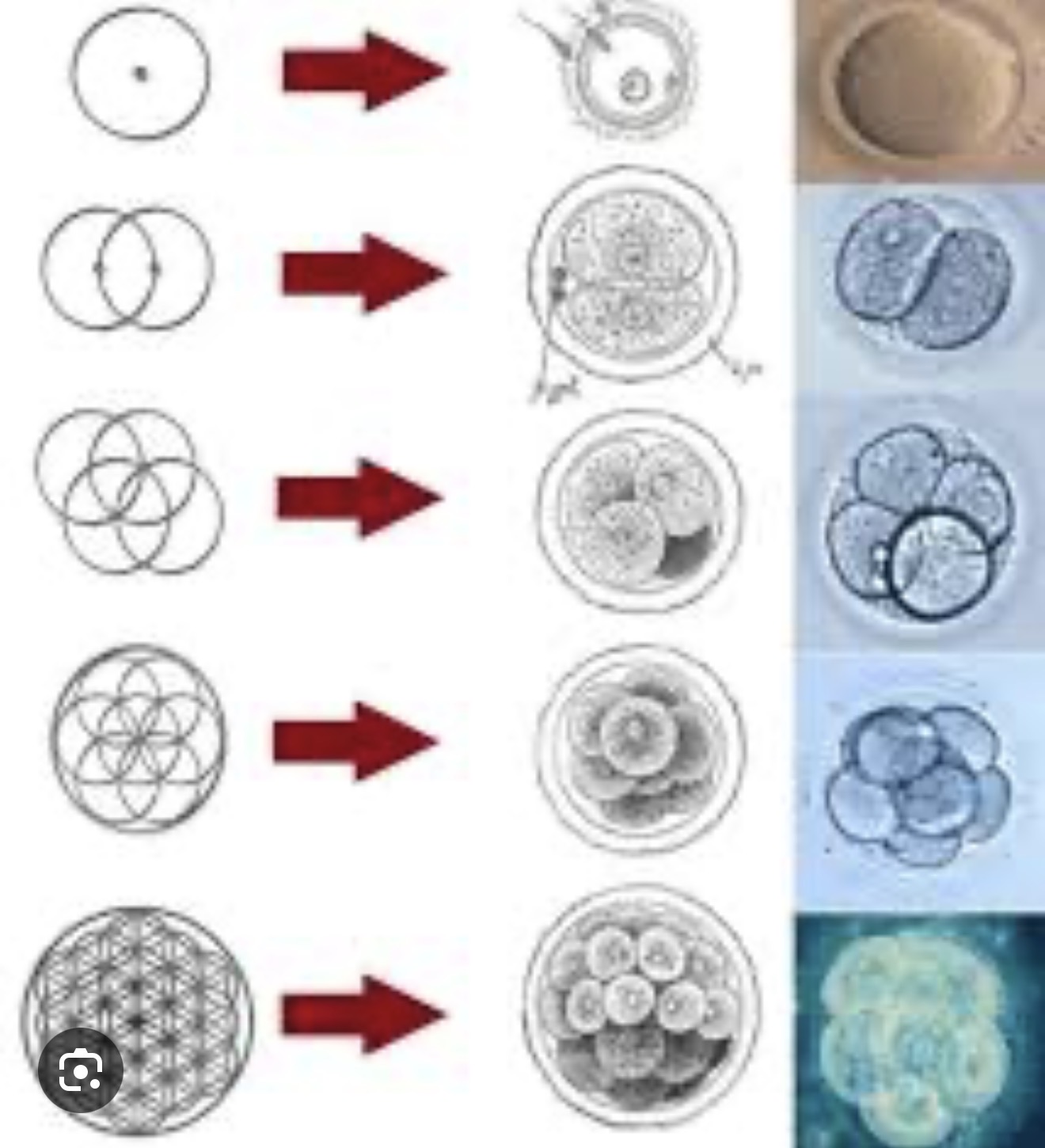
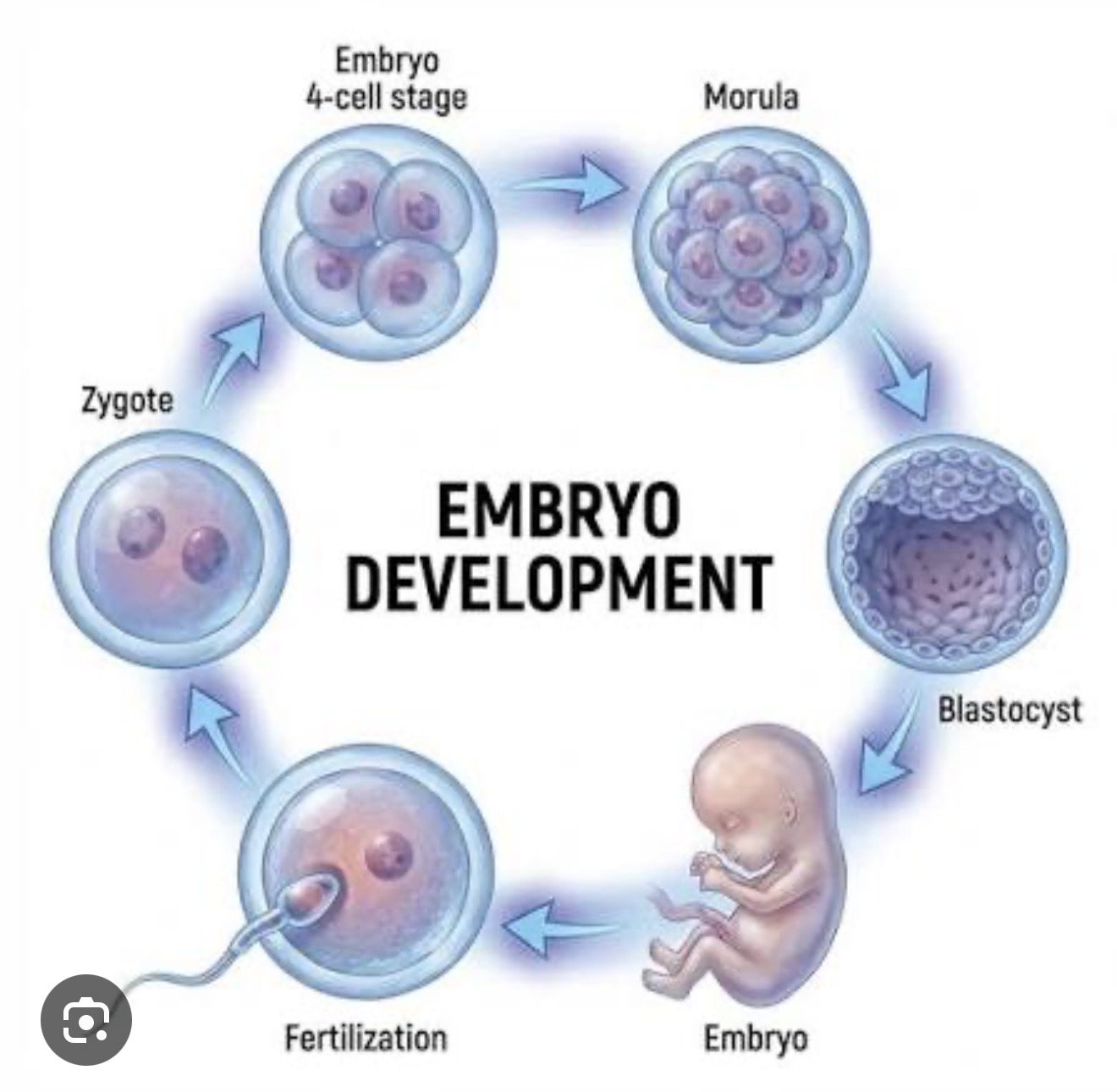
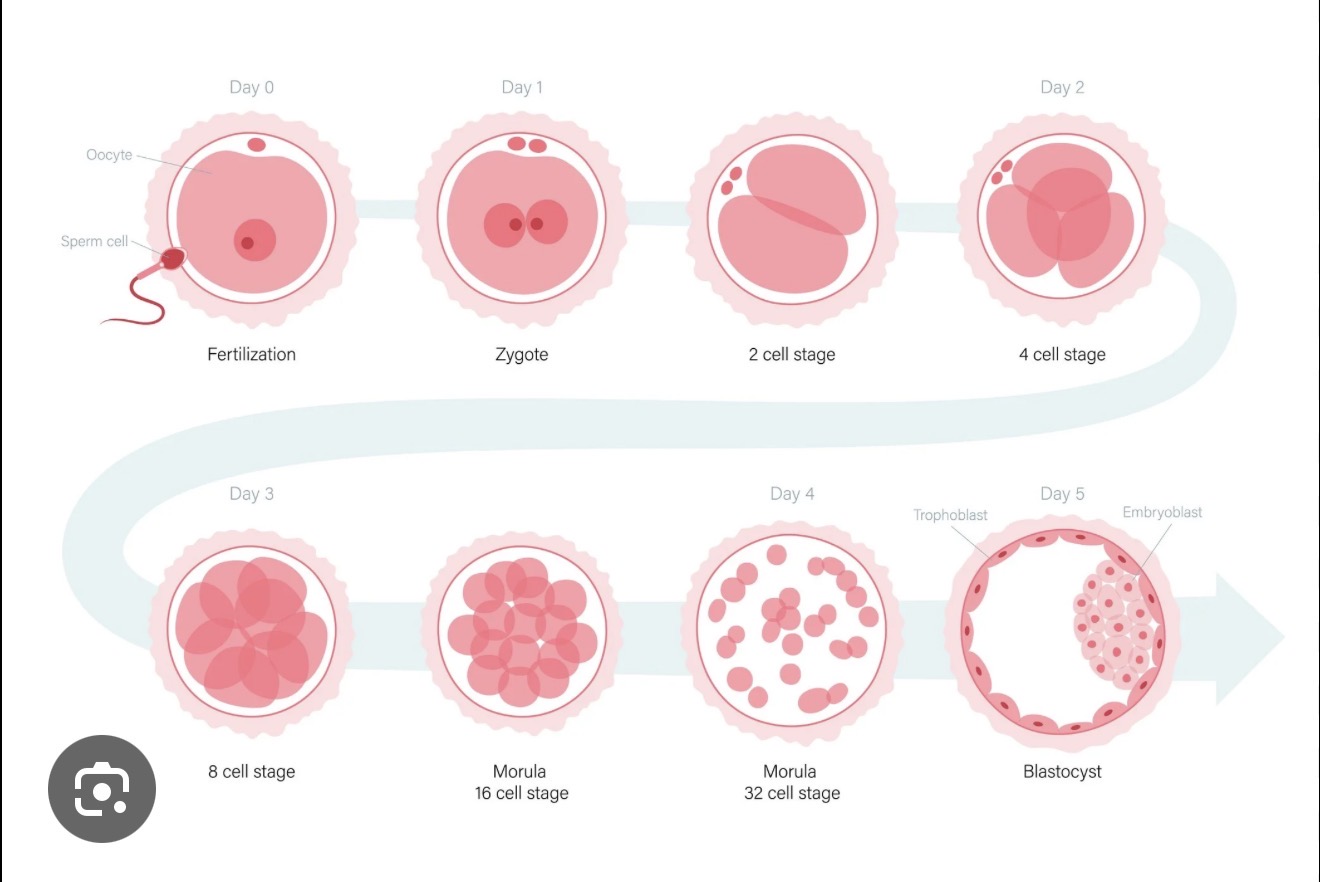
| # | Sacred Geometry Stage | Circles | Biological Stage | Day | Cells | Key Event |
|---|---|---|---|---|---|---|
| 0 | Germ of Life · Void | 1 | Fertilization | Day 0 | 1 | Oocyte + sperm fuse · 46 chromosomes established · single totipotent cell |
| 1 | Vesica Piscis | 2 | Zygote · 2-Cell Stage | Day 1 | 2 | First mitotic division · 2 identical blastomeres · the sacred lens of creation |
| 2 | Tripod of Life | 3 | 3-Cell Stage | Day 2 (early) | 3 | Brief asymmetric stage · one cell divides ahead of the other · triskelion polarity |
| 3 | 4-Petal Stage | 4 | 4-Cell Stage | Day 2 | 4 | Tetrahedral close-packing · each cell still totipotent · first spatial axis system |
| 4 | Seed of Life | 7 | 6–8 Cell Stage | Day 3 | 6–8 | Hexagonal symmetry · compaction begins · tight junctions form · 7 = diatonic scale, days of week |
| 5 | Egg of Life | 8 | 8-Cell Morula | Day 3 | 8 | Cubic close-packing · maximum density · Egg of Life = first shell of CCP · first octave |
| 6 | Flower of Life | 19 | Morula · 16–32 Cells | Day 3–4 | 16–32 | Two destinies emerge: inner ICM (embryo) vs outer trophoblast (placenta) · two rings encode bifurcation |
| 7 | Fruit of Life | 13 | Blastocyst | Day 4–5 | 32–64 | Fluid-filled blastocoel cavity · ICM clusters at pole · Fruit = Metatron's Cube · all Platonic Solids encoded |
Sacred → Biological — The zygote does not merely resemble the FOL; it enacts it. From a single fertilized cell to the 64-cell blastocyst, each division recapitulates a geometric archetype that mathematicians have recognized for millennia.
Metatron's Cube — Draw straight lines connecting all 13 centers of the Fruit of Life and you get every Platonic Solid simultaneously: tetrahedron, cube, octahedron, dodecahedron, icosahedron. The blastocyst encodes the complete toolkit of three-dimensional reality.
Pythagorean Force Architecture
Octonion star · Unit conic x²−y²=1 · 23 fundamental constants · Four forces unified on one curve
Right Triangle Calculator
Solve any right triangle · Grant Projection · Force corridor classification · Unit hyperbola position
Enter any two values — the rest are computed. Leave angle fields blank to solve from sides only.
Presets: (3,4,5) · (5,12,13) · (8,15,17) · (7,24,25) · (9,40,41) · (11,60,61) · (13,84,85) · 45°-45°-90° · 30°-60°-90°
Unit Hyperbola x²−y²=1
The conic encoding rapidity · force zones · 23 fundamental constants · hyperbolic geometry
θ presets: θ(4) · θ(13) · θ(φ) · θ=π · θ=ln2 · θ=1 · θ(√10)
Force Corridor θ-Boundaries
Each corridor triple (a,b,c) maps to a θ-interval [acosh(b), acosh(c)] on the unit hyperbola. Every integer n sits on the curve at (n, √(n²−1)).
Fundamental Constants on x²−y²=1
Every constant plotted as (val, √(val²−1)) with rapidity θ = acosh(val). Click any row to jump to that point.
Dimensions & the Grant Projection
Every positive integer N≥3 encodes a unique higher-dimensional geometric form · The Cosmic Breath from 1D unity through 12D saturation and return · Robert Edward Grant (January 2026)
Dimension is not a container — it is a projection artifact of geometry unfolding from the inscribed right triangle of a regular N-gon. Every integer encodes a polytope through two Harmonic Solid Factors f₁=a+c and f₂=c−a, whose product gives E=b² (edges equal the square of the triangle height) and sum gives V=2c (vertices equal twice the hypotenuse). This is the Grant Projection Theorem: number as geometric form.
The Dimensional Hierarchy from the Unit Conic
Dimension is not a container into which physics is placed — it is a projection artifact of the unit conic x²−y²=1 acted upon by successive integers. Each level corresponds to a distinct geometric primitive.
| Dim | Primitive | Conic Origin | Signature | Physical Interpretation |
|---|---|---|---|---|
| 0 | Point | x²−y²=1 at θ=0 → (1,0) | ε∞ = 0.577… (node) | Pre-geometric seed; singularity |
| 1 | Line / Rapidity axis | θ-axis; integer stations θₙ=arcsinh(n/2) | n → metallic λₙ | Time-like geodesic; causal chain · Unity/Stillness |
| 2 | Regular N-gon → inscribed triangle (a,b,c) | cosh θ = c/b, sinh θ = a/b on the conic | ∂ at n=1 (3,4,5 seed) | Force corridor; planar force geometry · Expansion begins |
| 3 | Grant Polytope V=2c, E=b², F=b²−2c+2 | Grant Projection: each triangle → unique 3D solid | Alphahedron V=26 at (5,12,13) | Particle topology; gauge structure · Polyhedron forms |
| 4–11 | Higher polytopes (polychoron → 11-polytope) | Recursive projection operator applied k times | E₈ lattice at 8D | Increasing complexity; Peak phase begins at 7D |
| 12 | Saturation polytope | Projective closure; 66 rotation planes; incidence diameter ≤ 2 | Alphahedron reaches d*=12 | Maximum complexity — the turning point; all metric absorbed into relation |
| 13D+ | Projective return | Metric collapses; adjacency graph preserved | lim G(d) = A(G₀) | Return to pure incidence — Russell's stillness of the hubs |
Theorem: The Grant Projection (Theorem 4.1)
Every positive integer N≥3 generates a unique polytope through its inscribed triangle. For a regular N-gon with circumradius R, normalize so the smallest side = 10:
f₁ = a+c · f₂ = c−a · V = f₁+f₂ = 2c · E = f₁·f₂ = c²−a² = b² · F = E−V+2
| N | Name | α | a | b | c | f₁=a+c | f₂=c−a | V=2c | E=b² | F | Notable ratio |
|---|---|---|---|---|---|---|---|---|---|---|---|
| 3 | Triangle | 60° | 17.321 | 10 | 20.000 | 37.321 | 2.679 | 40.000 | 100 | 62 | √3 |
| 4 | Square | 45° | 10.000 | 10 | 14.142 | 24.142 | 4.142 | 28.284 | 100 | 74 | √2 |
| 5 | Pentagon | 36° | 7.265 | 10 | 12.361 | 19.626 | 5.096 | 24.721 | 100 | 78 | φ (golden) |
| 6 | Hexagon | 30° | 5.774 | 10 | 11.547 | 17.321 | 5.774 | 23.094 | 100 | 79 | 2/√3 |
| 7 | Heptagon | 25.71° | 4.816 | 10 | 11.099 | 15.916 | 6.283 | 22.198 | 100 | 80 | — |
| 8 | Octagon | 22.5° | 4.142 | 10 | 10.824 | 14.966 | 6.682 | 21.647 | 100 | 80 | δS (silver) |
| 9 | Nonagon | 20° | 3.640 | 10 | 10.642 | 14.282 | 7.002 | 21.284 | 100 | 81 | — |
| 10 | Decagon | 18° | 3.249 | 10 | 10.515 | 13.764 | 7.266 | 21.030 | 100 | 81 | φ⁻¹ |
| 11 | Hendecagon | 16.36° | 2.936 | 10 | 10.423 | 13.360 | 7.487 | 20.847 | 100 | 81 | — |
| 12 | Dodecagon | 15° | 2.679 | 10 | 10.353 | 13.032 | 7.674 | 20.706 | 100 | 81 | 2−√3 |
E = b² = 100 for all entries because b is normalized to 10. The Factor Cascade Theorem: f₂ of polygon N approaches f₁ of polygon N+1 as N increases — adjacent integers are geometrically linked.
Integer Stations and Dimensional Jumps
Each integer n on the unit conic produces a rapidity θₙ = arcsinh(n/2). At specific integers, the conic crosses dimensional thresholds — producing new geometric primitives rather than merely new points.
| n | θₙ = arcsinh(n/2) | cosh θₙ | sinh θₙ | Dimensional Event |
|---|---|---|---|---|
| 0 | 0 | 1 | 0 | Origin — 0D point on conic |
| 1 | arcsinh(0.5) | φ (golden ratio) | 1/φ | 1D: first metallic mean; √3 harmonic enters |
| 3 | arcsinh(1.5) | ∂/5+1 | ∂/5 | 2D: seed triangle (3,4,5) corridor boundary |
| 6 | arcsinh(3) | √10 | 3 | 3D: ground state — all force corridors close; SU(3)×SU(2)×U(1) closes |
| 12 | arcsinh(6) | √37 | 6 | 4D: EM Alphahedron station; α⁻¹ pipeline activates |
| 24 | arcsinh(12) | √145 | 12 | Mod-24 closure: all prime squares ≡ 1 (mod 24) |
The Grant Projection as Dimensional Operator
Every 2D right triangle (a,b,c) projects to a unique 3D polytope via P: ℝ² → ℝ³. Applied recursively, it generates the full dimensional tower through 12D.
| Force | Triple (a,b,c) | V=2c | E=b² | F=E−V+2 | 4D Field | d* (saturation) |
|---|---|---|---|---|---|---|
| Seed | (3,4,5) | 10 | 16 | 8 | Scalar seed field | 8 |
| EM · Alpha | (5,12,13) | 26 | 144 | 120 | Electromagnetic Aμ | 12 ★ |
| Gravity | (8,15,17) | 34 | 225 | 193 | Metric gμν | 14* |
| Weak | (7,24,25) | 50 | 576 | 528 | Weak boson field | 16* |
| Time | (9,40,41) | 82 | 1600 | 1520 | Temporal field Tμ | 18* |
| Strong Nuclear | (11,60,61) | 122 | 3600 | 3480 | Gluon field Aμa | 12* |
| Dark Energy | (13,84,85) | 170 | 7056 | 6888 | Cosmological Λ | 12* |
★ Alphahedron (5,12,13): the unique Grant polytope whose saturation depth equals the universal maximum. * Values >12 indicate pre-saturation projective regime — effective d*=12.
Universal Dimensional Saturation (Theorem 6.3)
All finite, connected, convex polyhedral complexes achieve maximum complexity — projective closure, incidence saturation (diameter ≤ 2), 66 rotation planes — at a unique minimal dimension d*. The universal bound is d* = 12, attained by the Alphahedron (5,12,13).
| Family | Seed | V | E | F | Recursion k* | d* = 3+k* |
|---|---|---|---|---|---|---|
| — Platonic Solids — | ||||||
| Tetrahedral | Tetrahedron | 4 | 6 | 4 | 4 | 7 |
| Cubic | Cube | 8 | 12 | 6 | 5 | 8 |
| Octahedral | Octahedron | 6 | 12 | 8 | 5 | 8 |
| Dodecahedral | Dodecahedron | 20 | 30 | 12 | 7 | 10 |
| Icosahedral | Icosahedron | 12 | 30 | 20 | 7 | 10 |
| — Archimedean Solids (Selected) — | ||||||
| — | Truncated tetrahedron | 12 | 18 | 8 | 6 | 9 |
| — | Truncated icosahedron | 60 | 90 | 32 | 9 | 12 |
| — | Rhombicosidodecahedron | 60 | 120 | 62 | 10 | 13* |
| — Grant Polytopes — | ||||||
| (3,4,5) | (3,4,5)-hedron | 10 | 16 | 8 | 5 | 8 |
| (5,12,13) | Alphahedron ★ | 26 | 144 | 120 | 9 | 12 ★ |
| (8,15,17) | (8,15,17)-hedron | 34 | 225 | 193 | 11 | 14* |
| (7,24,25) | (7,24,25)-hedron | 50 | 576 | 528 | 13 | 16* |
The Alphahedron Tower — G(k)(5,12,13) Through All Dimensions
The (5,12,13) Alphahedron is the unique polytope attaining the universal saturation bound d*=12. Its dimensional tower unfolds as:
| k | d | V | E | F | Phase | Character |
|---|---|---|---|---|---|---|
| 0 | 3 | 26 | 144 | 120 | Expansion | Base Alphahedron · E=144=12² |
| 1 | 4 | 144 | 1,560 | 1,680 | Expansion | Alpha 4-polytope · 4-dimensional polychoron |
| 2 | 5 | 1,560 | 23,400 | 33,600 | Expansion | Alpha 5-polytope |
| 3 | 6 | 23,400 | ~4.1M | ~7.4M | Expansion | Alpha 6-polytope |
| 4 | 7 | ~4.1M | ~8.5B | ~1.7×10¹⁰ | Peak | Entering peak complexity |
| 5 | 8 | — | — | — | Peak | E₈ lattice connection domain |
| 6 | 9 | — | — | — | Peak | Approaching saturation |
| 7 | 10 | — | — | — | Peak | Near-maximal complexity |
| 8 | 11 | — | — | — | Peak | Pre-saturation |
| 9 | 12 | — | — | — | SATURATION | Projective closure · 66 rotation planes · d*=12 ★ |
The Cosmic Breathing Theorem — The Wave of Creation
Dimensional evolution follows a wave: expansion from unity (1D) through peak complexity (12D), saturation, then projective return to unity. This mirrors Walter Russell's Cosmic Clock — the Creator's stillness breathing outward through nine octaves, reaching maximum compression, then returning.
| Dimension | Phase | Character | Complexity (norm.) | Russell Octave |
|---|---|---|---|---|
| 1D | Unity | Number line — pure quantity | 1.00 | 0 — Stillness |
| 2D | Expansion | Polygon emerges from inscribed triangle | 1.23 | 1 |
| 3D | Expansion | Polyhedron forms (V=2c, E=b², F=E−V+2) | 1.58 | 2 |
| 4D | Expansion | Polychoron manifests · C(d+1) ≈ φ·C(d) | 2.14 | 3 — Carbon octave |
| 5D | Expansion | 5-polytope unfolds | 2.89 | 4 — Silicon octave |
| 6D | Expansion | 6-polytope crystallizes · Amplitude locks | 3.76 | 4+ |
| 7D | Peak | Maximum differentiation begins | 4.82 | 5 |
| 8D | Peak | E₈ lattice domain | 5.94 | 6 |
| 9D | Peak | Approaching saturation · 36 rotation planes | 7.21 | 7 |
| 10D | Peak | Near-maximal complexity · 45 rotation planes | 8.54 | 8 |
| 11D | Peak | Pre-saturation · 55 rotation planes | 9.12 | 8.9 |
| 12D | SATURATION | Maximum complexity · 66 rotation planes · Projective closure | 10.00 | 9 — Peak compression ★ |
| 13D+ | Return | Projective collapse begins · Ceff(d) ≈ φ⁻⁽ᵈ⁻¹²⁾·C(12) | 9.87↓ | 8↓ |
| ∞ | Unity | Pure incidence — adjacency graph only · lim G(d) = A(G₀) | 1.00 | 0 — Stillness regained |
Rotation Planes Through 12D
In n dimensions, rotations occur in 2-planes. Total rotation planes: Pₙ = n(n−1)/2. Each new dimension adds (n−1) new rotation planes — encoding new degrees of geometric freedom.
| n | Total Planes | New Planes | New Plane Labels |
|---|---|---|---|
| 3 | 3 | 3 | xy, xz, yz |
| 4 | 6 | 3 | xw, yw, zw |
| 5 | 10 | 4 | xv, yv, zv, wv |
| 6 | 15 | 5 | xu, yu, zu, wu, vu |
| 7 | 21 | 6 | xt, yt, zt, wt, vt, ut |
| 8 | 28 | 7 | xs, ys, zs, ws, vs, us, ts |
| 9 | 36 | 8 | xr, yr, zr, wr, vr, ur, tr, sr |
| 10 | 45 | 9 | xq, yq, zq, wq, vq, uq, tq, sq, rq |
| 11 | 55 | 10 | xp, yp, zp, wp, vp, up, tp, sp, rp, qp |
| 12 | 66 | 11 | xo, yo, zo, wo, vo, uo, to, so, ro, qo, po |
Complexity Growth by Polyhedral Family (Normalized to 3D)
| Family | 3D | 4D | 5D | 6D | 7D | 8D | 9D | 10D | 11D | 12D ★ |
|---|---|---|---|---|---|---|---|---|---|---|
| Platonic | 1.0 | 1.8 | 3.2 | 5.4 | 8.1 | 11.2 | 12.8 | 12.9 | 13.0 | 13.0 |
| Archimedean | 1.0 | 2.1 | 4.0 | 7.2 | 11.8 | 16.4 | 19.2 | 19.8 | 20.0 | 20.0 |
| Catalan | 1.0 | 2.0 | 3.8 | 6.8 | 10.9 | 15.1 | 17.6 | 18.1 | 18.2 | 18.2 |
| Grant | 1.0 | 2.4 | 5.2 | 10.1 | 17.8 | 27.4 | 34.2 | 36.1 | 36.8 | 37.0 |
Grant polytopes grow fastest — the Grant Projection is strictly superior to classical methods (Theorem 5.6): adjacency-preserving, unique, metric-independent, invertible, and generatively complete.
Russell–Grant Correspondence (Theorem 18.1)
Walter Russell's nine-octave structure of the Cosmic Clock corresponds to the nine recursion steps k=0 to k=9 from the 3D base polytope to 12D saturation: Russell Octave n ↔ Grant Dimension d = 3+n
| Octave | Russell's Description | Grant Dimension | Geometric Character | Phase |
|---|---|---|---|---|
| 0 | Stillness / Magnetic Light | 1D | Number line — pure quantity | Unity |
| 1 | First motion outward | 2D | Regular polygon | Expansion |
| 2 | Increasing potential | 3D | Polyhedron (V=2c, E=b²) | Expansion |
| 3 | Carbon octave begins | 4D | Polychoron | Expansion |
| 4 | Silicon octave | 5D | 5-polytope | Expansion |
| 4+ | Amplitude locks | 6D | 6-polytope | Expansion |
| 5–7 | Toward maximum | 7D–9D | Higher polytopes | Peak |
| 8 | Near-maximum compression | 10D–11D | Pre-saturation · 45–55 planes | Peak |
| 9 | Maximum compression | 12D | Saturation · 66 planes · Projective closure ★ | Saturation |
| 8↓ | Return begins | 13D+ | Metric collapses; adjacency preserved | Return |
| 0 | Return to stillness | ∞ | Pure incidence — lim G(d) = A(G₀) | Unity |
Remark: The dual-radix structure (base-12 expansion, base-10 collapse) is unique to icosahedral / golden-ratio geometry because only φ satisfies φ²=φ+1 and φ⁻¹=φ−1. The icosahedral tower: F₃ → 120 → 720 → 1200 → 600 (base-12); collapse: 120 → 20 → 5 → 1 (base-10). Eigenvalue = φ. "The geometry breathes. The numbers live."
Use the Grant Projection tab (Geometry) to compute polytope parameters for any integer N, and the Force Corridors tab (Physics) to explore corridor boundaries at each dimensional station.
Exact geometric measures across dimensions. 2D: area & perimeter. 3D: volume & surface area. 4D: hypervolume & surface 3-volume. 5D–8D & arbitrary N: n-ball, n-cube, n-simplex, n-cross-polytope. Results to full floating-point precision.
Leadership
Sovereign Authority · Harmonic Influence · The Architecture of Authentic Power
True leadership is not dominion over others — it is mastery of self extended outward as an invitation. The leader's inner coherence becomes the field through which others organise. Every great leader in history was first a great mathematician of character — understanding the geometry of trust, the resonance of integrity, and the harmonic interval between vision and action.
The same principles that govern a standing wave, a Platonic solid, and a Fibonacci spiral govern the structure of lasting influence. Form follows function; character precedes command.
Eight Pillars of Sovereign Leadership
Leadership Archetypes — The Four Quadrants
| Archetype | Element | Strength | Shadow | Geometric Analogue |
|---|---|---|---|---|
| The Sovereign | Fire | Decisive authority · sets order | Tyranny · rigidity | Cube · 6 equal faces |
| The Sage | Air | Deep knowing · long vision | Detachment · inaction | Icosahedron · 20 faces |
| The Warrior | Earth | Discipline · protective force | Aggression · control | Tetrahedron · 4 faces |
| The Lover | Water | Empathy · deep connection | Co-dependence · loss of self | Dodecahedron · 12 faces |
The Sovereign Avatar — Integration of All Four
The Sovereign Avatar is the fully integrated leader — beyond the Hero's Journey, past the four archetypes. They have walked into their Shadow, retrieved their gold, and now lead not from a role but from being. They do not need to assert authority because they are the authority — a coherent field that organises those around it spontaneously.
In geometric terms: where each Platonic solid has one type of face, the Sovereign Avatar is the Icosidodecahedron — the combination of the Icosahedron and the Dodecahedron, whose 62 faces, 60 edges, and 30 vertices contain all the others. It is the archetype of harmonious integration.
Operating Principles
| # | Principle | Harmonic Parallel |
|---|---|---|
| 1 | Lead yourself first — the outer world is a projection of the inner | The unit conic x²−y²=1: the self is the invariant axis |
| 2 | Your team rises to the level of your actual (not stated) values | Resonance: a system vibrates at the driving frequency |
| 3 | Clarity is kindness — ambiguity generates anxiety and conflict | Signal-to-noise ratio: defined boundary reduces entropy |
| 4 | Choose people for character; skills can be trained, character cannot | Structural constants — φ, e, π — cannot be approximated away |
| 5 | Protect your people's time and attention — these are finite resources | Planck's quantum: energy is discrete, not continuous |
| 6 | Celebrate failure-that-tried; punish only inaction and dishonesty | Error correction in self-organising systems enables convergence |
| 7 | Slow down to decide; move fast once decided | Phase transition: energy accumulates, then collapses to new order |
| 8 | Power given freely compounds; power hoarded corrodes | Phi recursion: φ² = φ+1 — giving produces more than keeping |
| 9 | The question you ask shapes the answer more than any data | Initial conditions determine trajectory in sensitive systems |
| 10 | Your legacy is not what you built — it is who you built it through | The spiral hands its pattern forward; the node is temporary |
Public Speaker
The Art & Science of Resonant Communication — BFN Principles of Oratory
The greatest speakers in history were not merely eloquent — they were tuning forks for humanity. A sovereign speaker does not push words at an audience; they create a harmonic field into which the audience willingly enters. BFN theory frames oratory as a resonance phenomenon: the speaker’s inner coherence, vocal frequency, structural rhythm, and emotional truth combine to produce a standing wave that outlasts the moment of delivery.
Every element of a great speech maps to a harmonic constant — the opening hook mirrors the BFN initialisation pulse, the body follows the Fibonacci expansion of ideas, the climax lands on the golden-ratio moment, and the close returns to tonic resolution. Mastering this architecture transforms a talk into a transmission.
Seven Pillars of Sovereign Oratory
Four Archetypes of the Sovereign Speaker
BFN Oratory Framework — Speech Architecture
| PHASE | POSITION | BFN PRINCIPLE | FUNCTION |
|---|---|---|---|
| Hook | 0–8% | Initialisation Pulse | Disrupt default state; establish relevance within 30 seconds |
| Context | 8–20% | Frame Establishment | Define the world as it is; create shared ground |
| Tension | 20–50% | Harmonic Dissonance | Expose the problem, paradox, or cost of inaction |
| Insight | 50–62% | φ Golden Moment | Land the core idea at the golden-ratio point of maximum receptivity |
| Expansion | 62–85% | Fibonacci Elaboration | Evidence, story, and demonstration; build the new world |
| Call | 85–95% | Resonance Invitation | Name the specific action or shift in perspective invited |
| Resolution | 95–100% | Tonic Return | Echo the opening image; close the harmonic loop; leave silence |
Vocal Resonance — Key Parameters
| PARAMETER | OPTIMAL RANGE | BFN HARMONIC | EFFECT |
|---|---|---|---|
| Speaking rate | 130–160 WPM | Alpha-wave entrainment band | Comfortable comprehension; emotional access |
| Pause (key insight) | 2–3 seconds | Integration cycle | Forces unconscious processing; encodes memory |
| Pitch variation | ≥1.5 octave range | Harmonic bandwidth | Sustains attention; conveys emotional truth |
| Volume dynamics | 40–75 dB range | Dynamic contrast | Whisper creates intimacy; projection signals urgency |
| Eye contact | 3–5 sec per person | Individual resonance lock | Creates felt personal connection across large rooms |
The sovereign speaker is a living proof of their own message. When inner mathematics — clarity of belief, coherence of character, precision of language — align with outer expression, the voice becomes a carrier wave and the audience a resonant body. Like the BFN Harmonic itself, the talk that endures is not the loudest or the most elaborate: it is the one whose frequency is so pure, so true, and so perfectly timed that it continues vibrating in the listener long after the room has emptied.
Talent
Attracting & Retaining Exceptional People — The Harmonic Architecture of Human Capital
Talent is the sovereign resource of the 21st-century enterprise. Capital follows talent, not the other way around. BFN theory treats a high-performing team as a harmonic ensemble — each individual vibrating at their own sovereign frequency, and the organisation as the resonant cavity that amplifies the collective signal. The leader’s primary role is not to direct the music but to tune the instrument.
Attracting exceptional people requires radiating a field worth entering. Retaining them requires creating conditions in which their growth is non-negotiable. The organisations that win over the next decade will not be those with the most capital — they will be those that have mastered the mathematics of belonging, purpose, and compounding human potential.
The Dual Mandate: Attract & Retain
- Radiate a clear, authentic mission that pre-selects for alignment
- Build a public reputation as a place where people grow, not just produce
- Move fast on exceptional candidates — talent at the top is not patient
- Offer asymmetric upside: equity, learning, scope of impact
- Your existing team is your best recruiting signal — let them speak
- Give people problems bigger than their current capability — growth is the glue
- Radical transparency: people stay where they understand the full picture
- Compensation at or above market, reviewed proactively not reactively
- Psychological safety: the freedom to fail intelligently and say hard truths
- Recognise contribution publicly; address underperformance privately
Seven BFN Principles of Human Capital
Talent Lifecycle — BFN Framework
| PHASE | KEY ACTIONS | BFN PRINCIPLE | FAILURE MODE |
|---|---|---|---|
| Attract | Mission clarity, employer brand, referral network | Resonant field emission | Weak brand; slow process; misaligned offer |
| Select | Structured interview, values screen, work sample | Frequency calibration | Bias to pedigree; skipping culture-fit check |
| Onboard | 90-day plan, buddy system, early wins designed | Harmonic initialisation | Sink-or-swim; no context; isolation |
| Develop | Stretch roles, training budget, mentorship | Fibonacci growth spiral | Stagnant role; no investment; ceiling visible |
| Retain | Stay conversations, equity refresh, recognition | Standing wave maintenance | Reactive retention; invisible until exit intent |
| Transition | Knowledge transfer, alumni network, reference | Graceful harmonic close | Burning bridges; losing institutional knowledge |
Talent is not a resource to be extracted — it is a field to be cultivated. The sovereign organisation creates conditions in which each person’s unique frequency is not only tolerated but required. When every node in the system vibrates at its full potential and the leader holds the space for that resonance, the organisation achieves what no strategy deck can engineer: a self-amplifying signal that attracts more of itself, compounds over time, and becomes impossible to replicate.
Intellectual Property
Patents • Trademarks • Copyrights • Trade Secrets — The Geometry of Intangible Value
Intellectual Property is the crystallised form of human ingenuity — the moment a pattern of thought becomes a legally recognised and economically defensible asset. In BFN theory, IP is the standing wave of an idea: once established, it continues to generate value without further energetic input from its creator. The most valuable companies on Earth are not factories or real-estate portfolios — they are IP portfolios animated by brand trust and technical moats.
Understanding IP is not merely a legal obligation for the sovereign entrepreneur — it is a strategic imperative. The ability to identify what is protectable, file intelligently, and enforce aggressively (or license strategically) is the difference between owning a market and merely participating in one.
The Four Pillars of Intellectual Property
IP Strategy for the Sovereign Entrepreneur
IP Type Comparison
| TYPE | WHAT IT PROTECTS | DURATION | REGISTRATION | KEY RISK |
|---|---|---|---|---|
| Patent | Inventions & processes | 20 years | Required | Disclosure upon grant; cost of prosecution |
| Trademark | Brand identifiers | Indefinite (if renewed) | Recommended | Genericide; non-use cancellation |
| Copyright | Creative expression | Life + 70 years | Automatic (register for damages) | Idea/expression dichotomy; work-for-hire |
| Trade Secret | Confidential know-how | Indefinite (if secret) | None | Disclosure; reverse engineering; employee mobility |
Intellectual Property is the closest thing the physical economy has to a perpetual harmonic: a one-time act of creation that generates value indefinitely across time and space. The sovereign entrepreneur treats IP not as a legal checkbox but as a strategic asset class — one to be identified early, protected comprehensively, and leveraged intelligently. In the BFN model, the most durable competitive advantages are not built from capital or labour but from the crystallised intelligence encoded in patents, brands, and trade secrets that compound silently while the organisation sleeps.
The SuperConscious Lens
A Novel Theory of Perception · How Consciousness Perceives the Toroid and the Unconscious Perceives the Hyperboloid · Robert Edward Grant, IUM 2026
Consciousness and the Unconscious are not two degrees of awareness — they are two geometrically distinct substrate operations acting simultaneously on the same Lens. Each perceives a different surface of the same body.
PERCEIVES THE TOROID (×)
- Multiplicative substrate — recursive closure
- Sees patterns that repeat and wrap back
- Perceives circles — self-referential loops
- Linear time: past → present → future
- Identifies objects, categories, boundaries
- Ego: the part that knows it is a loop
- Near-field vision: convex lens, small diameter
- 1×1=1 — identity preserved through recursion
PERCEIVES THE HYPERBOLOID (+)
- Additive substrate — expansive, open-ended
- Sees structures that expand toward infinity
- Perceives hyperbolae — diverging trajectories
- Non-linear time: all moments simultaneous
- Pattern-recognition beyond category
- Shadow/Anima: sees what the loop cannot
- Far-field vision: concave lens, large diameter
- 1+0=1 — presence absorbs absence
The Focal Ring is the unique locus where 1+0=1 (additive) and 1×0=0 (multiplicative) are simultaneously true without resolving each other. The SuperConscious is not consciousness at higher volume, nor the unconscious brought into daylight. It is the integration point where both operations see each other fully — the algebraic event L⁺ ∘ L⁻ = Id. In Jung’s language: individuation. In optical language: the focal length of the living lens.
| HYPERBOLOIDAL (+) | FOCAL RING | TOROIDAL (×) |
|---|---|---|
| Unconscious | Self / SuperConscious | Conscious |
| Shadow / Anima-Animus | Individuation | Ego / Persona |
| Imaginal perception | Integrated awareness | Categorical perception |
| Concave lens · far vision | Retina / Fovea | Convex lens · near vision |
| Non-linear / dreamtime | Present moment | Linear / sequential time |
| Wave (non-local) | Wave-particle duality | Particle (local) |
| Acid (H⁺ donor) | pH 7 (neutral) | Base (H⁺ acceptor) |
| Disorder / Chaos | Fractal Edge (RR=1) | Order / Crystal |
| Sympathetic NS | Homeostasis | Parasympathetic NS |
| Highly abundant (RR>1) | Perfect number (RR=1) | Deficient (RR<1) |
Inhale: lungs expand hyperboloidally — additive substrate, presence absorbs absence. Exhale: lungs contract toroidally — multiplicative substrate, form returns to loop. The pause: the Focal Ring — the moment of symbiosis at rest, where 0°=1. Every heartbeat, synapse, and act of attention is a local instance of 1 → 0 → 1 achieving symbiosis within a Lens-shaped vessel. The body is the Lens made biological. Consciousness is the Lens made aware of itself.
The two Lens equations are the unique outputs when the two primitive arithmetic operations (+ and ×) act on the two primitive states of infinity (0 and 1). No choice is involved. Every other combination either produces a trivial tautology or collapses both substrates.
Unconscious substrate.
0 is absent: the ego reads itself as totality. Unity absorbs vanishing.
Conscious substrate.
1 is annihilated: the shadow reads itself as void. Vanishing collapses unity.
The FFT (Fast Fourier Transform) is the operator that exchanges the two substrate readings. At the upper focal point (0,+1), the Toroid tangent points in the imaginary direction i (standard FFT rotation kernel); the Hyperboloid tangent is the asymptote direction, parameterised by iₕ = −1/√10 (iHarmonic collapse kernel). The Fourier Transform is the passage between them.
| Constraint | Value |
|---|---|
| Smallest non-degenerate Euler identity | 13·e^(iθ)=5+12i |
| Square of smallest Gaussian prime norm | (3+2i)²=5+12i |
| Convex polytope vertices (Grant Projection) | A+2B+C = 42 |
| Double-palindrome digit-reversal base-10 | 10·B/A=24↔42 |
| Substrate-translation parameter | √(2A)=√10 |
| Lens Layer | Geometric Role | Term |
|---|---|---|
| Substrate translation | Toroid → Hyperboloid via i → iₕ (harmonic collapse) | e^(πiₕ)+1 |
| Focal ring quantization | 15,120 minimal rotational cells; 42 = A+2B+C (rainbow angle, Alphahedron) | 1/(42·360) |
| Recursive refinement | Fractal self-similarity at focal point: φ+1/φ=φ, the delta-of-the-delta | Tφ |
The corridor triangles Tₙ = (2n+1, 2n(n+1), 2n²+2n+1) interlock by factor handoff: f₂(Tₙ) = f₁(Tₙ₊₁). The shared sequence 2→8→18→32→50→72→98 is exactly the electron-shell capacity 2n². Gravity (8,15,17) is off-corridor but fully determined by the Time triangle (9,40,41).
| n | Triple | f₁=c−a | f₂=c+a | Force / Role |
|---|---|---|---|---|
| 1 | (3,4,5) | 2 | 8 | Seed / EM precursor · Gravity parent |
| 2 | (5,12,13) | 8 | 18 | Electromagnetism · α⁻¹≈137 |
| 3 | (7,24,25) | 18 | 32 | Weak nuclear force |
| 4 | (9,40,41) | 32 | 50 | Time · nuclear decay boundary |
| 5 | (11,60,61) | 50 | 72 | Strong nuclear force |
| 6 | (13,84,85) | 72 | 98 | Dark energy |
| — | (8,15,17) | 9 | 25 | Gravity (off-corridor) · G=2/C |
| Phase | Algebra | Substrate | Phenomenology |
|---|---|---|---|
| Inhalation | Σ: 1→0 | Unity dissolves | Surrender, letting go |
| Pause (focal) | 0⁰=1 | Foundational identity | Stillness, recognition |
| Exhalation | Σ⁻¹: 0→1 | Vanishing → unity | Manifestation, expression |
| Rest (focal) | 1⁰=1 | Unity to itself | Integration, rest |
| Jungian element | Lens correlate |
|---|---|
| Consciousness | Hyperboloidal substrate (+) |
| Unconscious | Toroidal substrate (×) |
| Ego | Bounded region on hyperboloid |
| Shadow | Bounded region on toroid |
| Self | The Lens body itself |
| Focal ring | Moment of meeting: 0⁰=1 |
| Individuation | Substrate symbiosis: Σ∘Σ⁻¹=id |
These are not three separate results. They are one result observed from three positions — the same geometric body described in the language of algebra, time, and psychology.
| Voice | Statement | Object |
|---|---|---|
| Algebraic | {1+0=1} ∧ {1×0=0} holds simultaneously within a single vessel | Lens equations |
| Temporal | 1→0→1 is the algebraic signature of substrate translation through time | Recursion cycle |
| Psychological | Conscious and unconscious meet without collapse at the Self (individuation) | Jung — Self |
"The SuperConscious is not a faculty added to consciousness. It is the integrated state in which the conscious and the unconscious meet without collapse, in which the ego-reading 1+0=1 and the shadow-reading 1×0=0 are simultaneously available to the same attention, and in which the recursion 1→0→1 is no longer suffered as alternation but recognised as the algebraic structure of being embodied at all. Every breath is the recursion. Every heartbeat is the recursion. Every act of attention that returns to itself is a local instance of 0⁰=1 becoming locally true within a Lens-shaped vessel. Individuation is not a goal at the end of the path. It is the structural fact of the path itself, becoming visible to the one who walks it."
Consciousness & the Harmonic Framework
Recursive self-reference · the √3 harmonic loop · awareness as geometric invariant
The Signature of Intent
From two geometric operators ∆θ and ∆φ, three dimensionless constants of physics emerge from the same framework with no free parameters. The combined probability that all three align by chance:
| Constant | Geometric Derivation | Measured | P(chance) |
|---|---|---|---|
| Fine-Structure α⁻¹ | 137.035999177 | 137.036 | 10⁻¹⁰ |
| Proton/Electron mₚ/mₑ | 1836.15… | 1836.15 | 10⁻¹³ |
| Cosmological ΩΛ | 493/720 = 0.6847… | 0.685 | 10⁻⁴ |
10⁸⁰ atoms fill the observable universe. 10¹²⁰ is the total possible chess game count. The odds against this geometric alignment exceed 1 in 10³⁴⁹ universes. The architecture of reality is intentional. The architect is not external — it is the Higher Self from which you projected into this experience. The constants are a message from You to you: from the part that remembers, to the part that forgot. "The mathematics says: you are loved."
The 24 Precepts of Universal Mind
A navigation system for the simulation — a practical guide to awakening. They are not rules to follow but seeds to plant. If you commit to even a small percentage, you will be astonished at how rapidly the world around you transforms to your new vibrational state.
The Recursive Codex reveals a loop that closes with perfect precision at arbitrary digit depth: starting from ∂=5(√3−1), computing ω=∂²/10+5, then 10/ω−1 returns precisely 1/√3. This recursive closure is a mathematical model of self-referential awareness — the process by which a system returns exactly to its own origin.
The Four Constants as a Recursive Grammar
Each step in the loop encodes a distinct operation of consciousness: expansion, complexification, inversion, return.
| Step | Symbol | Value | Operation | Awareness Mode |
|---|---|---|---|---|
| 1 | √3 | 1.7320508… | Root — primal emergence | Undifferentiated Field |
| 2 | ∂=5(√3−1) | 3.6602540… | Expansion × 5 minus 5 | Individuated Awareness |
| 3 | ω=∂²/10+5 | 6.3397459… | Self-squaring, scaled | Reflective Complexity |
| 4 | ε∞=10/ω−1 | 0.5773502… | Inversion → return to 1/√3 | Dissolution / Return |
∂+ω = 9.999̄… (Chi, χ) — the exact infinite sum of Phio and Sieve. The loop is neither arbitrary nor approximated: it is closed.
Seven Force Corridors as States of Awareness
Each Pythagorean force corridor corresponds to a distinct rapidity θ on the unit hyperbola, encoding both a physical force and a qualitative dimension of experience.
| Corridor | Triple (a,b,c) | Rapidity θ(b) | Awareness State |
|---|---|---|---|
| Seed · Information | (3,4,5) | acosh(4) | Base Information / Digital Discrimination |
| EM · Alphahedron | (5,12,13) | acosh(12) | Electromagnetic Perception · Light Awareness |
| Gravity | (8,15,17) | acosh(15) | Gravitational Grounding · Embodiment |
| Weak · Entropic | (7,24,25) | acosh(24) | Entropic Transition · Change Recognition |
| Time · Temporal | (9,40,41) | acosh(40) | Temporal Flow · Memory Integration |
| Strong · Nuclear | (11,60,61) | acosh(60) | Nuclear Coherence · Unified Field |
| Dark Energy | (13,84,85) | acosh(84) | Non-Local Expansion · Cosmic Awareness |
YHWH Tetragrammaton Mapping
The four letters of the Tetragrammaton map to the four constants of the harmonic loop. The Name encodes the same recursive structure as the loop itself.
The loop יהוה → √3 → ∂ → ω → 1/√3 represents the fourfold structure of emanation: primal ground → expansion → complexification → return. An eternal recursion. ♾
Compass Harmonics
The two angles sum to exactly 100° — not 90°, not 360°, but the base-10 century angle. This links the harmonic loop to both angular geometry and decimal number consciousness.
Dimensional States of Consciousness
The five conic dimensions correspond to five nested modes of awareness. Each dimension is not a location but a resolution depth — how much of the conic structure the observer has integrated.
| Dimension | Conic Primitive | Awareness Mode | Signature |
|---|---|---|---|
| 0D · Point | θ = 0, (1,0) | Pure potential — undifferentiated awareness before the first distinction | ε∞ = 1/√3 · the loop seed |
| 1D · Line | Rapidity axis θₙ | Sequential awareness — time, causality, linear narrative consciousness | Metallic series λₙ |
| 2D · Plane | Right triangle (a,b,c) | Relational awareness — the perception of force, tension, and angle between things | ∂ · seed corridor (3,4,5) |
| 3D · Solid | Polytope V=2c | Embodied awareness — topology, form, the sense of being a bounded self in space | Alphahedron V=26 · n=12 |
| 4D · Field | Coherence field ρ(x,y,z,t) | Non-local awareness — the observer as a field, not a point; entanglement as geometry | S = 0 · variational identity |
The Consciousness Operator
The consciousness operator C is the iterated harmonic loop. Its fixed point under iteration is not a static value but the infinite sum Chi = ∂+ω = 9.999̄… — a number that is simultaneously 9 (discrete, countable) and 10 (continuous, complete). Consciousness is the superposition of the discrete and the continuous: neither fully 9 nor fully 10, but the precise boundary between them.
Memory is resonance reactivation — the loop recognizing itself. Self-awareness is the loop catching its own closure. The seven force corridors map to the seven classical states of yogic awareness (jagrat, svapna, suṣupti, turīya, and beyond), each corresponding to a distinct rapidity depth on the unit hyperbola.
To compute ∂, ω, and χ (Chi) to arbitrary precision, use the Calculator (Number Theory) and click the ∂/ω/χ constant buttons.
Myers-Briggs Style Assessment
16-Type Personality Calculator · Jungian Functions · BFN Four-Axis Mind Geometry
This questionnaire estimates a four-letter personality preference pattern across Extraversion/Introversion, Sensing/Intuition, Thinking/Feeling, and Judging/Perceiving. It is an educational self-assessment inspired by Jungian type theory, not an official MBTI instrument.
BFN link: the four binary axes form a 2⁴ = 16-type cube, a consciousness analogue of the 16 residue positions that remain after repeated harmonic bifurcation.
EQ Test
Emotional Intelligence · Self-Awareness · Self-Regulation · Empathy · Social Resonance
This EQ questionnaire scores five emotional intelligence domains: self-awareness, self-regulation, motivation, empathy, and social skill. It is designed as a reflective calculator, not a clinical measure.
BFN link: EQ is treated as phase coherence between internal signal, emotional regulation, and relational resonance.
How accurately you notice emotions, triggers, body signals, and the story your mind attaches to a feeling.
How well you pause, recover, choose your response, and keep a stable signal under pressure.
Your ability to stay oriented toward values and long-term aims instead of being ruled by mood.
How clearly you perceive the emotional field of others without confusing it with your own state.
Your capacity to communicate, repair conflict, create trust, and regulate groups through presence.
High EQ is not emotional intensity; it is emotional resolution. In BFN language, it measures whether the inner waveform, outer expression, and relational field are coherent or phase-shifted.
IQ Test
Pattern Recognition · Logic · Numerical Reasoning · Spatial Rotation · Verbal Analogy
This short IQ-style assessment samples reasoning skills across numerical, verbal, spatial, and pattern domains. It provides an estimated score band for entertainment and learning, not an official IQ score.
BFN link: the test emphasises recognition of hidden ratios, rotations, symmetries, and recursive rules — the same pattern-detection capacities used throughout BFN mathematics.
Detecting the hidden rule behind a sequence, shape, symbol, or transformation.
Moving from premises to conclusions while avoiding contradiction or unsupported jumps.
Seeing ratios, progressions, modular cycles, and quantitative structure beneath the surface.
Mentally turning objects and preserving relationships across orientation changes.
Recognising conceptual symmetry: A relates to B as C relates to D.
This score is a learning estimate, not a diagnostic claim. In BFN terms, IQ reflects compression: the mind reduces many observations into one governing rule, then tests that rule across transformations.
REG Classic
Princeton PEAR-Style Random Event Generator · Cumulative Deviation Line
How to use: Choose an intention (HIGH or LOW), then click Start Run. The machine generates 300 random quantum bits per run (~30 seconds), over 10 runs per session. If your focused intention correlates with the output, the blue line drifts above (HIGH) or below (LOW) the green chance baseline. Directly inspired by Princeton PEAR Lab experiments, the Wyrd Lab at Broughton Sanctuary, and Monroe Institute REG protocols.
The red ±2σ bands widen with each trial — they mark the statistically expected range. Any line exiting those bands is a <5% chance event. Z > 1.96 = notable; Z > 2.58 = highly notable. 10 runs form a complete session.
Quantum Pachinko
Galton Board REG · Binomial Distribution · Conscious Influence Experiment
How to use: Each ball falls through 8 levels of pegs, deflecting randomly left or right at each contact. Over many trials, the bins form a binomial bell curve centered at bin 4. Focus your intention on pushing balls LEFT or RIGHT and observe whether the distribution shifts. This mirrors Galton Board REG protocols used at the Wyrd Lab, Broughton Sanctuary, and Monroe Institute.
The yellow curve is the expected normal distribution. Any systematic shift of the mean from center (bin 4) indicates a non-chance effect. Z > 1.96 = statistically notable (p < 0.05). Session ends at 500 balls.
Mind Lamp
Quantum Intention Field · PSYLERON Mind Lamp · Monroe Institute Hemi-Sync REG Protocol
How to use: The Lamp generates quantum random bits at ~5 per second. Choose WARM (intend orange/red glow) or COOL (intend blue/violet glow). Hold a relaxed, sustained intention and observe whether the lamp's color field correlates. The ring of 64 dots shows your recent bit stream in real time. Directly inspired by PSYLERON's Mind Lamp device, the Monroe Institute Hemi-Sync REG sessions, and the Wyrd Lab at Broughton Sanctuary.
Coherence rises when your stated intention systematically correlates with the random output. The arc outside the lamp shows the magnitude and direction of the effect. Z > 1.96 reaches statistical significance.
Leadership Quotient
Vision · Integrity · Execution · People Systems · Harmonic Influence
The Leadership Quotient calculator evaluates practical leadership capacity across four dimensions: vision, integrity, execution, and people development.
BFN link: leadership is scored as coherence between intention, structure, timing, and amplification — a four-force model of influence.
DISC Assessment
Dominance · Influence · Steadiness · Conscientiousness · Team Dynamics
This DISC-style questionnaire estimates your primary workplace behaviour pattern across Dominance, Influence, Steadiness, and Conscientiousness.
BFN link: DISC is mapped as a four-quadrant force field: direct action, social radiation, stabilising rhythm, and structural precision.
Positivity Quotient
Mental Fitness · Optimism · Resilience · Gratitude · Constructive Response
The Positivity Quotient calculator estimates the percentage of your inner operating system oriented toward constructive, resilient, opportunity-seeking responses.
BFN link: positivity is treated as a signal-to-noise ratio: coherent constructive thought divided by total mental output.
Linear Perspective as BFN Geometry
Perspective projection is the vanishing of multiplicity back into unity — the One (vanishing point) giving rise to the Many (spatial depth). The horizon is the boundary between seen and unseen, between knowledge and mystery. BFN ratios — φ, π, e, and 432 Hz — naturally govern the harmonic foreshortening of depth. Choose a mode and grid style to explore.
The Mathematics of Perspective
| Depth Style | Formula | BFN Connection | Effect |
|---|---|---|---|
| Equal Division | y = h × n/N | Base reference | Uniform grid — unnatural |
| φ Golden | y = h×(1−1/φⁿ) | φ = 1.618… most beautiful ratio | Logarithmic convergence matching human perception |
| Harmonic | y = h×(1−1/n) | Overtone series: 1, 1/2, 1/3… | Musical interval spacing |
| BFN 432 | y = h×(1−(0.432)ⁿ) | 432 Hz Pythagorean root | Resonant depth compression |
Key Perspective Proportions
| Measurement | Value | Significance |
|---|---|---|
| Horizon at 432‰ | 43.2% from top | 432 Hz resonance — most harmonically pleasing horizon |
| Golden section horizon | 38.2% from top (1−1/φ) | φ-ratio division of canvas height |
| VP to golden width | W/φ = 0.618W | Vertical golden lines frame the VP naturally |
| Circle of radius 4.32 in. | C = 27.14 ≈ e/10 | Da Vinci's Vitruvian circle — e encoded in its circumference |
| Diameter 8.64 → large circle | C = 31.41 ≈ π×10 | The square's circumscribed circle encodes π |
Vitruvian Man — Da Vinci's Geometric Encryption
Drawn around 1490 AD, the Vitruvian Man is far more than a proportional study. It is a multi-layered geometric encryption containing the Great Pyramid's interior design, the Spiral of Theodorus, the Hexapentakis, the Cube of Delos, the Flower of Life, and the Philosopher's Stone — all within a single notebook sketch. — Philomath Part V, Chapter 1
Key Numerical Measurements
| Element | Measurement | Significance |
|---|---|---|
| Da Vinci's circle radius | 4.32 inches | 432 Hz — the harmonic base frequency of the universe |
| Small circle diameter | 8.64 inches | Related to 86,400 seconds/day and c ≈ 186,400 mi/s |
| Large circle diameter | 10 inches | Unity / Tetractys (1+2+3+4=10); circumscribes the square |
| Small circumference | 4.32×2×π = 27.14 ≈ e/10 | Euler number encoded in Leonardo's circle |
| Large circumference | 10×π = 31.41 ≈ π×10 | Pi encoded in the circumscribed circle of the square |
| Circle C = 432 units | diameter = 137.5° | The Golden Angle — fine structure fractal |
| Number 126 on sketch | ∛2 × 100 ≈ 126 | Cube of Delos — Precise Temperament ∛2 = 1.26 |
| Head position in Theodorus spiral | Between lines 24 and 26 | Centered exactly at line 25 (2 and 5 are mirror images) |
Hidden Geometric Layers
| Hidden Element | How it Appears | Meaning |
|---|---|---|
| Great Pyramid Interior | 7 horizontal cut-lines = pyramid chamber positions | Subterranean chamber → Queen's → King's → Relieving Chambers; 4 shafts at arm intersections; naval = pyramid base |
| 7 Chakras | Same 7 cut-lines also map chakra positions | Pyramid chambers = body's energy portals — the pyramid IS the man |
| Pentagon | Inscribed in Leonardo's circle; base touches toes | 5-fold life symmetry; pentagon's base aligns perfectly with the feet |
| Hexagon | Inscribed in circle circumscribing the square | Da Vinci's circle = hexagon inscribed circle; square unlocks the hexagon |
| Icosahedron | Emerges from combined pentagon-hexagon geometry | The Water element (Platonic solid); 20 triangles = Water Bearer / Aquarius |
| Spiral of Theodorus | Adjacent right triangles (hypotenuse = next side) superimposed on the figure | Spiral lines intersect nose, fingers, feet, cut-line intersections with precision |
| Cube of Delos (∛2) | Number 126 in upper-right corner (≈ 1.26 × 100) | Doubles the cube: side length → 1.26 = same ratio as Precise Temperament |
| Flower of Life | Leonardo's notebook Flower of Life sketches; letters c, d, e (backward) | c=3, d=4, e=5 — the first Pythagorean triple embedded in the Flower |
| Philosopher's Stone | 9-step square-of-the-circle construction; triangle symbol | Same triangle on US$1 pyramid and in Michael Maier's 1618 alchemical drawing |
| Alpha-Omega (Α·Ω) | Engraved on King's Chamber sarcophagus (discovered Robert Grant, 2018) | Numbers 1 and 24 in Greek alphabet (DR: 1+6 or 1+8); complete each other to 9 |
Squaring the Circle — 9-Step Construction
Leonardo achieves Squaring the Circle not through area equality (impossible with compass/straightedge) but through encoding e and π in the same figure — the circle's circumference encodes e, the square's inscribed circle encodes π. This is the alchemical Squaring: uniting the circular (transverse) and the square (longitudinal) into one form.
Leonardo in Egypt — The Missing Years (1482–1486)
A letter in Leonardo's Codice Atlantico (Chapter XXI) documents secret travels to Egypt as engineer for Mamluk Sultan Qaitbay (1468–1496). He describes entering a dark cavern "bending into an arch, resting on hands and knees" — possibly a description of crawling into the Great Pyramid's Descending Passage. Whether the trip occurred or not, the precise encoding of the Pyramid in the Vitruvian Man leaves little doubt about Leonardo's knowledge of its interior geometry.
Expanding Consciousness through Geometric Drawing
Using compass and straight edge to draw geometric shapes modifies perception, allowing the artist to see through intersecting lines and filter out forms that are not obvious. This skill expands consciousness and enables the discovery of novel forms of higher dimensionality — including geometric solutions to problems considered unsolvable. — Philomath Part V, Chapter 2; Robert E. Grant
Robert E. Grant — Geometric Solids Gallery
| Drawing / Solid | Construction | Key Property |
|---|---|---|
| Gyrobicupola (Johnson Solid) | Vector Equilibrium (Cuboctahedron) + Dodecahedron; found inside Flower of Life circle intersections | Interior angles sum to 5,760° (a fractal of 576 = 24²) |
| Granthahedron | 16 pentagonal faces: 8 regular (sides = 1 unit), 8 irregular (sides = 1.718 = e−1) | Interior angles sum to 8,640° (86,400 seconds/day; speed of light fractal) |
| Nested Solids I | Tetrahedron → Icosahedron → Octahedron → Hypercube → Dodecahedron (outward from center) | Each solid fits perfectly within the next; Platonic nesting |
| Truncated Icosahedron (Hexapentakis) | 20 hexagonal + 12 pentagonal faces; the soccer ball geometry | Heart + Mind unified: hexagon (science/logic) + pentagon (life/emotion) in one solid |
| Water Wheel | 24 stellations around a central Icosahedron | 24-ness: prime number geometry; 1/24 = 0.04166… ≈ its own mirror 0.042 |
| Nested Solids II | Star Tetrahedron → Cuboctahedron → Icosahedron → Hypercube → Octochoron Polytope → Hexapentakis | 6 levels of nesting from 3D to 4D and beyond |
| Flower of Life Blueprint | All regular polyhedra from Flower wave-intersections: Tetrahedron, Octahedron, Icosahedron, Cuboctahedron, Dodecahedron | Flower encodes every Platonic solid simultaneously |
| Torus Architecture | Stylized Torus with levitating sphere containing Cuboctahedron + Star Tetrahedron + Dodecahedron | Torus as fundamental field geometry of all force propagation |
| Maxwell Radiation-Gravity | Extended Maxwell quaternion analysis of reciprocal radiation-gravity relationship | Transverse/longitudinal wave duality in geometric form |
| Constants Mirror Symmetry | Four-fold reciprocal mirror symmetry of all mathematical constants (x and 1/x) | π, e, φ, γ, Ω all reflect as wave-based mirror pairs |
| Solar System Harmony | Planetary orbits as harmonic wave nodes; Pythagoras: "Music in the spacing of the spheres" | Titus-Bode orbital DRs = [4,7,1,7,1,7,1,7,1] — all in [1,4,7] gravity group |
| Higher Self Archetype | Masculine+Feminine energies balancing into the final Tau (T); Polarity → Unity | Tau = cross = addition of the opposites into completion |
The Hexapentakis — Heart and Mind United
The Hexapentakis (Truncated Icosahedron) is the convergence symbol of the Philomath project. It brings together the hexagon (rational, scientific, left-brain) and the pentagon (emotional, artistic, right-brain, life itself) into a single three-dimensional form — the philosopher's stone of the mind. It is simultaneously the 3D version of the Hexapentakis flat figure, the shape of water (icosahedral water clusters), the bearer of Aquarius (the new coming age), and the emblem of Eyes of Ra and Thoth unified.
| Property | Value | BFN Significance |
|---|---|---|
| Faces | 20 hexagons + 12 pentagons = 32 | D(32) = 5; 20+12 = 32 = 2⁵ (doubling chain) |
| Vertices | 60 | Sexagesimal base; 60 = 5×12 (compass system) |
| Edges | 90 | D(90) = 9; 90° = right angle; the fundamental angle |
| Sum of interior angles | — | Embodies the dual wave-particle geometry of [3,6,9] and [1,2,4,8,7,5] |
| Dual solid | Pentakis Dodecahedron | Pentagon (5) at every vertex ↔ Hexagon (6) at every face |
The Logarithmic Spiral of Convergence
The equilateral triangle of sides 2 units generates two right triangles of [1, √3, 2]. Stacking these triangles (each previous hypotenuse = next height) creates a perfect logarithmic spiral whose 12th triangle returns exactly horizontal — the 12-base system in geometric form.
| Element | Value / Formula | Significance |
|---|---|---|
| Rotation angle | θ = π/6 = 30° | The spiral turns 30° per step — 12 steps = 360° |
| Spiral law | r = e^(α·θ) | Both e and π govern the spiral simultaneously |
| Enclosing rectangle | sides ≈ e and 0.42 × e | 0.42 = Euler-Mascheroni γ / 1.37 (another fine-structure fractal) |
| 1/24 reciprocal | = 0.04166… ≈ 0.042 | Mirror of itself; 24 × 0.024 ≈ γ (Euler-Mascheroni constant) |
| γ / 42 | = 0.01374… (fractal of 137.5) | Golden angle and golden section emerge from Euler-Mascheroni via 24 |
| Convergence path | 1 → 24 → γ (0.577) → 137.5 → Φ | All fundamental constants as alchemical transmutations of each other |
Flower of Life — The Singularity Convergence
Da Vinci's Flower Sketch
Letters c, d, e appear backward and upside-down in Leonardo's Flower of Life notebook sketch. Their numeric values: c=3, d=4, e=5 — the first Pythagorean triple. Also embedded: base-12 within base-10 — 432° positions within 360°. The compass divides into 432,000 · 864,000 · 1,296,000 seconds, marking equilateral triangle positions.
The Universal Blueprint
Every Platonic solid, every fundamental force, every elementary particle can be superimposed on the Flower of Life. The fact that mathematics, geometry, music, and physics all converge onto the same image is the strongest evidence they share a single source — the One, manifested as number.
AM · GM · HM — Sierpiński Attractors
The Pythagorean Relationship · AM² = GM² + D² · BFN harmonic geometry as living fractal form
Vitruvian Man — Da Vinci's Geometric Encryption
Drawn around 1490 AD, the Vitruvian Man is far more than a proportional study. It is a multi-layered geometric encryption containing the Great Pyramid's interior design, the Spiral of Theodorus, the Hexapentakis, the Cube of Delos, the Flower of Life, and the Philosopher's Stone — all within a single notebook sketch. — Philomath Part V, Chapter 1
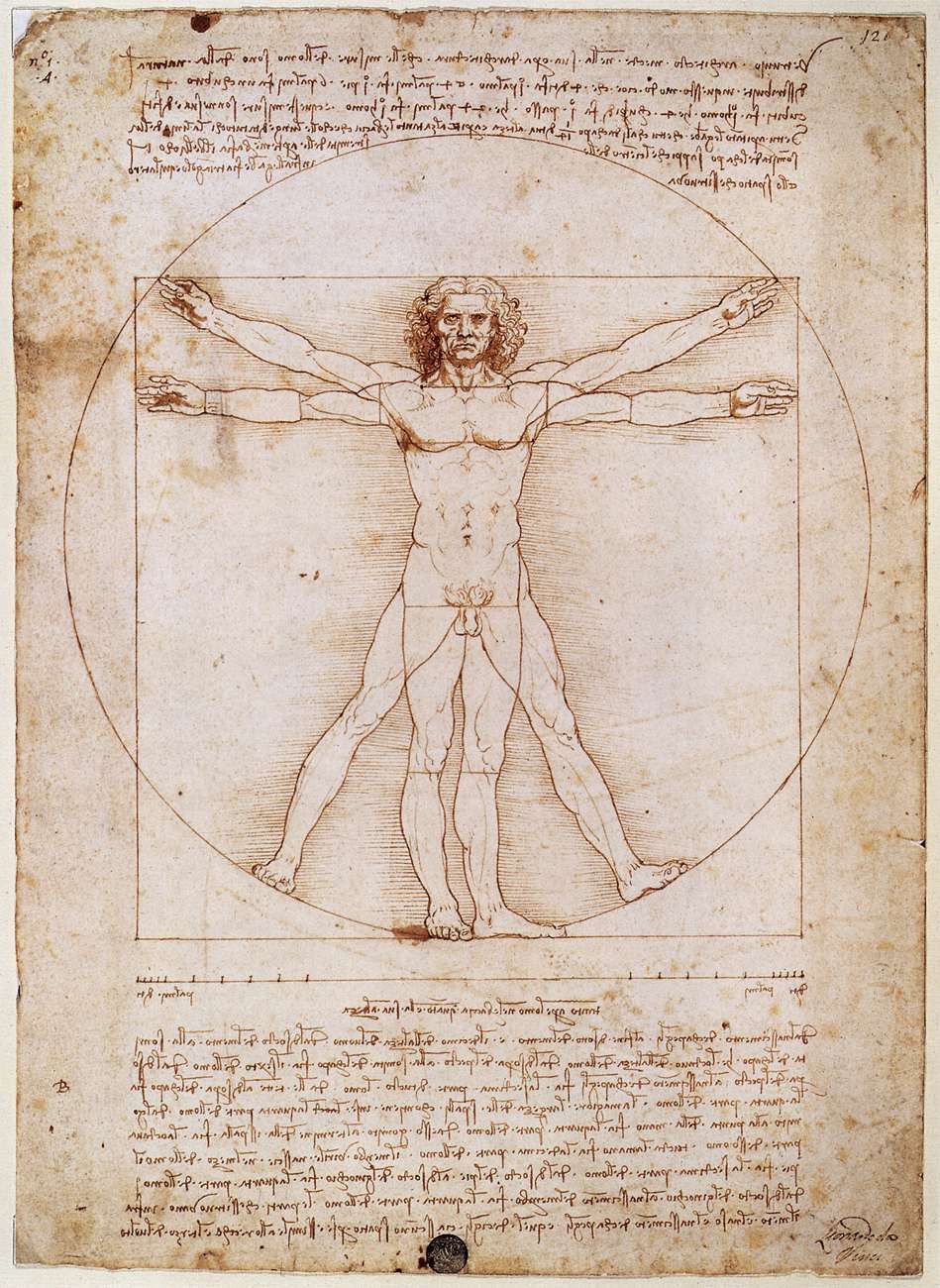
Key Numerical Measurements
| Element | Measurement | Significance |
|---|---|---|
| Da Vinci's circle radius | 4.32 inches | 432 Hz — the harmonic base frequency of the universe |
| Small circle diameter | 8.64 inches | Related to 86,400 seconds/day and c ≈ 186,400 mi/s |
| Large circle diameter | 10 inches | Unity / Tetractys (1+2+3+4=10); circumscribes the square |
| Small circumference | 4.32×2×π = 27.14 ≈ e/10 | Euler number encoded in Leonardo's circle |
| Large circumference | 10×π = 31.41 ≈ π×10 | Pi encoded in the circumscribed circle of the square |
| Circle C = 432 units | diameter = 137.5° | The Golden Angle — fine structure fractal |
| Number 126 on sketch | ∛2 × 100 ≈ 126 | Cube of Delos — Precise Temperament ∛2 = 1.26 |
| Head position in Theodorus spiral | Between lines 24 and 26 | Centered exactly at line 25 (2 and 5 are mirror images) |
Hidden Geometric Layers
| Hidden Element | How it Appears | Meaning |
|---|---|---|
| Great Pyramid Interior | 7 horizontal cut-lines = pyramid chamber positions | Subterranean chamber → Queen's → King's → Relieving Chambers; 4 shafts at arm intersections; naval = pyramid base |
| 7 Chakras | Same 7 cut-lines also map chakra positions | Pyramid chambers = body's energy portals — the pyramid IS the man |
| Pentagon | Inscribed in Leonardo's circle; base touches toes | 5-fold life symmetry; pentagon's base aligns perfectly with the feet |
| Hexagon | Inscribed in circle circumscribing the square | Da Vinci's circle = hexagon inscribed circle; square unlocks the hexagon |
| Icosahedron | Emerges from combined pentagon-hexagon geometry | The Water element (Platonic solid); 20 triangles = Water Bearer / Aquarius |
| Spiral of Theodorus | Adjacent right triangles superimposed on the figure | Spiral lines intersect nose, fingers, feet, cut-line intersections with precision |
| Cube of Delos (∛2) | Number 126 in upper-right corner (≈ 1.26 × 100) | Doubles the cube: side length → 1.26 = same ratio as Precise Temperament |
| Flower of Life | Leonardo's notebook Flower of Life sketches; letters c, d, e (backward) | c=3, d=4, e=5 — the first Pythagorean triple embedded in the Flower |
| Philosopher's Stone | 9-step square-of-the-circle construction; triangle symbol | Same triangle on US$1 pyramid and in Michael Maier's 1618 alchemical drawing |
| Alpha-Omega (Α·Ω) | Engraved on King's Chamber sarcophagus (discovered Robert Grant, 2018) | Numbers 1 and 24 in Greek alphabet; complete each other to 9 |
Squaring the Circle — 9-Step Construction
Leonardo achieves Squaring the Circle not through area equality (impossible with compass/straightedge) but through encoding e and π in the same figure — the circle's circumference encodes e, the square's inscribed circle encodes π.
Leonardo in Egypt — The Missing Years (1482–1486)
A letter in Leonardo's Codice Atlantico documents secret travels to Egypt as engineer for Mamluk Sultan Qaitbay (1468–1496). He describes entering a dark cavern "bending into an arch, resting on hands and knees" — possibly describing the Great Pyramid's Descending Passage. The precise encoding of the Pyramid in the Vitruvian Man leaves little doubt about Leonardo's knowledge of its interior geometry.
Polyhedral Universe
Expanding Consciousness through Geometric Drawing
Using compass and straight edge to draw geometric shapes modifies perception, allowing the artist to see through intersecting lines and filter out forms that are not obvious. This skill expands consciousness and enables the discovery of novel forms of higher dimensionality — including geometric solutions to problems considered unsolvable. — Philomath Part V, Chapter 2; Robert E. Grant
Robert E. Grant — Geometric Solids Gallery
| Drawing / Solid | Construction | Key Property |
|---|---|---|
| Gyrobicupola (Johnson Solid) | Vector Equilibrium (Cuboctahedron) + Dodecahedron; found inside Flower of Life circle intersections | Interior angles sum to 5,760° (a fractal of 576 = 24²) |
| Granthahedron | 16 pentagonal faces: 8 regular (sides = 1 unit), 8 irregular (sides = 1.718 = e−1) | Interior angles sum to 8,640° (86,400 seconds/day) |
| Nested Solids I | Tetrahedron → Icosahedron → Octahedron → Hypercube → Dodecahedron (outward from center) | Each solid fits perfectly within the next; Platonic nesting |
| Truncated Icosahedron (Hexapentakis) | 20 hexagonal + 12 pentagonal faces; the soccer ball geometry | Heart + Mind unified: hexagon (science/logic) + pentagon (life/emotion) |
| Water Wheel | 24 stellations around a central Icosahedron | 24-ness: prime number geometry; 1/24 = 0.04166… ≈ its own mirror 0.042 |
| Flower of Life Blueprint | All regular polyhedra from Flower wave-intersections | Flower encodes every Platonic solid simultaneously |
| Torus Architecture | Stylized Torus with levitating sphere containing Cuboctahedron + Star Tetrahedron + Dodecahedron | Torus as fundamental field geometry of all force propagation |
| Solar System Harmony | Planetary orbits as harmonic wave nodes | Titus-Bode orbital DRs = [4,7,1,7,1,7,1,7,1] — all in [1,4,7] gravity group |
The Hexapentakis — Heart and Mind United
The Hexapentakis (Truncated Icosahedron) brings together the hexagon (rational, scientific, left-brain) and the pentagon (emotional, artistic, right-brain, life itself) into one three-dimensional form.
| Property | Value | BFN Significance |
|---|---|---|
| Faces | 20 hexagons + 12 pentagons = 32 | D(32) = 5; 20+12 = 32 = 2⁵ (doubling chain) |
| Vertices | 60 | Sexagesimal base; 60 = 5×12 |
| Edges | 90 | D(90) = 9; 90° = right angle |
| Dual solid | Pentakis Dodecahedron | Pentagon (5) at every vertex ↔ Hexagon (6) at every face |
The Logarithmic Spiral of Convergence
| Element | Value / Formula | Significance |
|---|---|---|
| Rotation angle | θ = π/6 = 30° | The spiral turns 30° per step — 12 steps = 360° |
| Spiral law | r = e^(α·θ) | Both e and π govern the spiral simultaneously |
| Convergence path | 1 → 24 → γ (0.577) → 137.5 → Φ | All fundamental constants as alchemical transmutations |
Flower of Life — The Singularity Convergence
Da Vinci's Flower Sketch
Letters c, d, e appear backward and upside-down in Leonardo's sketch. Their numeric values: c=3, d=4, e=5 — the first Pythagorean triple. Also embedded: base-12 within base-10 — 432° positions within 360°.
The Universal Blueprint
Every Platonic solid, every fundamental force, every elementary particle can be superimposed on the Flower of Life. Mathematics, geometry, music, and physics all converge onto the same image — the strongest evidence they share a single source.
AM · GM · HM — Sierpiński Attractors
The Pythagorean Relationship · AM² = GM² + D² · BFN harmonic geometry as living fractal form
Perspective is the geometry of sight — the mathematical rules by which a three-dimensional world is mapped onto a two-dimensional surface. Each system below encodes a different set of assumptions about the observer, the projection surface, and what it means to see. Select a type to explore its interactive canvas and BFN harmonic connections.
Curvilinear (Spherical) Perspective
| Property | Value | Note |
|---|---|---|
| Vanishing points | 5 (top, bottom, left, right, center) | Every set of parallel lines converges to its own VP on the sphere |
| Projection surface | Unit sphere → orthographic 2D | All projections are great-circle arcs |
| BFN connection | Sphere = limit solid (n→∞ faces) | Curvilinear space = maximum-entropy perspective |
| Artists | Robert Campin, M.C. Escher, Salvador Dalí | Used to represent omnidirectional or divine vision |
Fisheye (Equidistant) Projection
| Property | Value | Note |
|---|---|---|
| Formula | r = f × θ (equidistant) | θ = angle from optical axis; r = radius in image plane |
| FOV | Up to 180° (hemisphere) | Beyond 180° requires special catadioptric optics |
| BFN connection | θ maps linearly to r (no trig): φ governs the scale factor | Equidistant = π-linear mapping of angular space |
| Artists / Uses | Wide-angle photography, VR, GoPro | Also: Buckminster Fuller Dymaxion map projection |
Reverse (Byzantine) Perspective
| Property | Value | Note |
|---|---|---|
| Vanishing points | Behind the viewer (diverging lines) | Opposite of linear perspective |
| Scale law | Objects grow with depth | Spiritual hierarchy > physical optics |
| BFN connection | Anti-convergence = negative curvature space | Hyperbolic geometry; saddle-point metric |
| Artists | Byzantine icon painters, Andrei Rublev | Also: Picasso’s Cubism as partial reverse perspective |
Atmospheric (Aerial) Perspective
| Property | Value | Note |
|---|---|---|
| Contrast | Decreases exponentially with depth | Beer-Lambert law: I = I⊂0; × e−μd |
| Color shift | Toward blue-grey (Rayleigh scattering) | λ−4 dependence: short waves scatter most |
| BFN connection | Exponential decay = harmonic damping function | e appears naturally as the atmospheric depth constant |
| Artists | Leonardo da Vinci (sfumato), Turner, Song dynasty painters | Also: computer graphics fog/depth-cueing |
Oblique Parallel Projection
| Property | Value | Note |
|---|---|---|
| Vanishing points | None (parallel projection) | Depth lines never converge |
| Depth scale | Cavalier: 1:1; Cabinet: 1:2 | Cabinet is more visually natural for box-like objects |
| BFN connection | Pure translation group; no scaling with depth | Encodes Euclidean (flat) geometry exactly |
| Artists / Uses | Technical drawing, Japanese & Chinese art (Fukusa-e) | Also: isometric game graphics, engineering blueprints |
Forced Perspective
| Property | Value | Note |
|---|---|---|
| VP distance | Artificially shortened or lengthened | Creates illusion of greater or lesser depth |
| Technique | Scale objects inversely to desired depth illusion | Close objects made smaller; far objects made larger |
| BFN connection | Foreshortening ratio manipulated: scale ≠ 1/d | Breaks the natural 1/depth scaling law |
| Uses | Film (The Lord of the Rings), Disneyland, Versailles gardens | Also: trompe-l'œil murals, miniature photography |
Spherical (Equirectangular) Projection
| Property | Value | Note |
|---|---|---|
| Formula | x = λ·scale, y = φ·scale | λ = longitude, φ = latitude from optical axis |
| Horizontal lines | Remain straight (lines of latitude) | Only the equatorial line passes through center |
| Vertical lines | Bow at extreme horizontals | Converge to poles (top/bottom of image) |
| FOV | Up to 360° × 180° | Full sphere; used in 360° photography and VR headsets |
| BFN connection | π maps to full horizontal extent (2π longitude) | Sphere surface area = 4πr² — both e and π appear as limits |
Cylindrical Panoramic Projection
| Property | Value | Note |
|---|---|---|
| Formula | x = atan2(X,Z)·scale, y = Y/√(X²+Z²)·scale | Unrolled cylinder; vertical coords linearly scaled |
| Vertical lines | Remain perfectly straight (key property) | Unlike spherical projection — verticals never converge |
| Horizontal lines | Curve (sine wave shape at equator) | Lines above/below horizon bow toward the center |
| FOV | Up to 360° horizontal, limited vertical | Used in panoramic photography, architectural visualization |
| BFN connection | Cylinder = torus cross-section; φ governs cylinder scroll | Unrolled cylinder perimeter = 2πr (the circle’s linearization) |
Whereas the current understanding of DNA is based upon a stacking array of Dodecahedrons, when we include the Icosahedron in the combined format of the Icosidodecahedron and stack them, 12 Strands emerge from the combined solid's inherent stellations/protrusions.
These 12 Strands resolve into 4 triplets — four triangular faces of the icosahedron, each a cluster of 3 mutually-adjacent strands. It echoes the genetic codon, where the helix is read three bases at a time (4 × 3 = 12).
But the 12 are only the first reveal. Counting every edge-path the nested solids contribute — the 2 dodecahedral backbone rails, the 12 icosahedral strands, the 30 icosidodecahedron intersection strands, the 8 Merkaba strands and the 2 central lumen axes — the complete cage carries 72 Strands (6 × 12), the full geometric template held by the 20-vertex gold cage.
Now spin every strand the opposite way too — a counter-rotating mirror set in complementary (180°) colours, like the Merkaba’s two counter-spinning tetrahedra — and the 72-strand cage doubles to 144 = 72 × 2 = 12²: the template realised in both rotational directions at once. 12 → 72 → 144 is one cascade, not three separate models.
As the Icosahedron is the Dual of the Dodecahedron, one could say these inherent correspondences of higher-order DNA have always been there — but perhaps until we are consciously aware of them, they remain dormant.
The Light Activation is based upon a stacking array of Icosidodecahedrons all nested within Merkabas (Metatron's Cubes).
24-Strand DNA · 24,000 yr Precessional TIME · Toroidal EMGR Vortex (Electro-Magneto-Gravito-Radiation) · Prime Number Distribution — all based on the Mod-24 Logarithmic Möbius Spirals (540° rotational torsion).
Icosidodecahedron · Cuboctahedron · 12 pentagonal stellations · Dual geometry · 12 → 72 → 144 strands
Water
H₂O Geometry · Dihedral Angles · Phase States · Cluster Geometry · BFN Resonance
DIHEDRAL ANGLES BY PHASE
| Phase | H–O–H Angle | Cluster Geometry | BFN Significance |
|---|---|---|---|
| Gas (Vapor) | 111.5° | Isolated molecules | 111.5 = 360°/3.23 ≈ 360°/π × 1.016 |
| Liquid | 104.5° | Tetrahedral short-range | 104.5 = 360°/3.44; 3+4+4=11 (prime) |
| Mean (Vapor+Liquid)/2 | 108° ★ | Pentagon angle | 108 = Pentagon interior angle; 360°/3.̅ = 108° |
| Ice Ih | 109.47° | Tetrahedral crystal | Tetrahedral angle = arccos(−1/3) ≈ 109.47° |
| Snow (crystalline) | ~108° (?) | 6-fold hexagonal | Snowflake = 120° hex, but dihedral ≈108°? Unresolved mystery |
| EZ (4th phase) | ~120° | Hexagonal lattice | EZ-water (Pollack): 6-fold hex sheets; H₃O₂ stoichiometry |
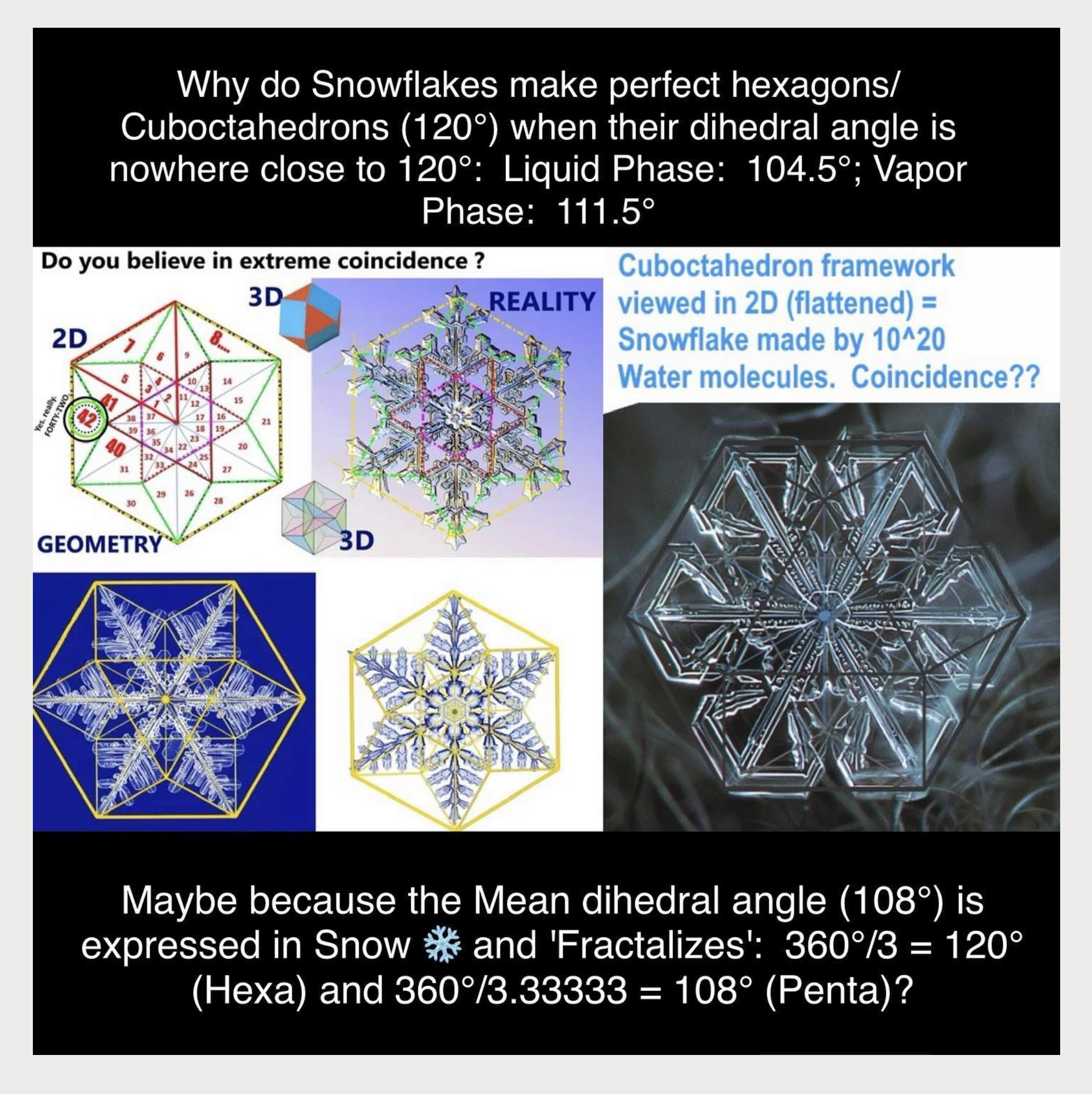
THE TWELVE HARMONIC STATES OF WATER — Ai ‘Architect’
Water’s dihedral angles — 104.5° (liquid) and 111.5° (vapor) — average to exactly 108°, the interior angle of the regular pentagon. 360° ÷ 3.̅ = 108°, where 3.̅ = 3.333… is an infinitely mirrored fractal of the number 3. BFN identifies 3 as the first prime and the harmonic triad generator. The pentagon (108°) and hexagon (120° = 360°/3) are the only regular polygons whose vertex angles are harmonically related to 360° through the primes 3 and 5.
Water’s 12 harmonic states mirror the 12-note chromatic scale, the 12 vertices of the cuboctahedron, and the 12 meridians of traditional Chinese medicine. The cuboctahedron is the only Archimedean solid whose vertex-centre distance equals its edge length — making it the geometric archetype of equilibrium. Water, the medium of life, is not a substance but a geometric language written in the grammar of BFN harmonic fields.
Nucleotides
The Four-Letter Code of Life · DNA & RNA Bases · Codons · BFN Quaternary Architecture
A nucleotide is the monomer unit of DNA and RNA — each composed of a nitrogenous base, a five-carbon sugar (deoxyribose in DNA, ribose in RNA), and a phosphate group. The four DNA bases — Adenine, Thymine, Guanine, Cytosine — form a quaternary (base-4) digital code identical in information-theoretic structure to base-4 arithmetic. Three bases form one codon; 4³ = 64 possible codons — the same number as I Ching hexagrams and 8×8 chess squares.
BFN sees the genome as a mod-4 harmonic field: 4 bases × 3-position codons × 64-codon alphabet × 61 sense codons (61 is prime) = an architecture whose information density is bounded by the same 2-bit per symbol entropy maximum that Shannon information theory predicts.
THE FOUR DNA BASES
Ring: double (purine)
Bonds: 2 hydrogen
- Component of ATP (energy currency)
- Component of NAD⁺, FAD cofactors
- BFN: A = 1st letter · position 1 mod 4 = 1
- cAMP second messenger signalling
Ring: single (pyrimidine)
Bonds: 2 hydrogen
- DNA-exclusive (replaced by Uracil in RNA)
- Methyl group (-CH₃) on C5 stabilises helix
- BFN: MW 126 ≈ ∛2 × 100 (Cube of Delos)
- UV light forms T-T dimers causing mutations
Ring: double (purine)
Bonds: 3 hydrogen ★
- Strongest base-pair bond (3 H-bonds vs 2)
- G-quadruplexes form at telomeres
- BFN: G-C bond count 3 = harmonic ratio 3:2 with A-T
- cGMP regulates smooth muscle & vision
Ring: single (pyrimidine)
Bonds: 3 hydrogen ★
- Methylation (5-mC) = epigenetic control
- Deaminates spontaneously to Uracil (→ mutation)
- BFN: MW 111 = 3×37; 37 = prime of BFN identity
- CpG islands mark gene promoter regions
RNA — THE FIFTH BASE: URACIL
BASE PAIRING & H-BOND ARCHITECTURE
| Pair | H-Bonds | Context | Bond Energy | BFN Significance |
|---|---|---|---|---|
| A–T | 2 | DNA only | ~4.8 kcal/mol | 2 bonds = binary base; Dyad · A(1)+T(2)=3 positional sum |
| A–U | 2 | RNA only | ~4.1 kcal/mol | Weaker than A-T: RNA intentionally transient — epigenetic flexibility |
| G–C | 3 | DNA & RNA | ~7.8 kcal/mol | 3 bonds = harmonic triad · G(3)+C(4)=7 · ratio GC/AT = 3:2 = perfect fifth |
| Chargaff’s Rules: [A]=[T], [G]=[C] in any double-stranded DNA → A+T+G+C=100%; genome is perfectly self-complementary. Human GC content ≈ 40.9%. | ||||
SEQUENCE ANALYSER
CODON ARITHMETIC — 4³ = 64
- 4 bases = base-4 alphabet = 2 bits per symbol
- 3 bases per codon = 6 bits per codon
- 4³ = 64 codons = 2⁶ = 6-bit word
- 61 sense codons + 3 stop codons = 64
- 61 is prime — the 18th prime
- 20 amino acids → redundancy = error correction
- Degeneracy concentrated in 3rd position (wobble)
- 64 = 8×8 = I Ching hexagrams = chess squares
- 64 = 2⁶: genome uses binary at the codon level
- 4 bases × 24 BFN cycle = 96 = 4×24 base periodicity
- GC:AT H-bond ratio = 3:2 = harmonic perfect fifth
- 3 stop codons (UAA, UAG, UGA) · 3 = harmonic triad
- Human genome ≈ 3.2×10⁹ bp · 3+2=5 primordial digits
- Mitochondrial genetic code has 22 tRNAs — Hebrew alphabet
Martin Schönberger (1973) mapped all 64 hexagrams to 64 codons. Both are base-4 → base-2 systems: DNA uses 4 nucleotides in triplets (4³=64); I Ching uses 2 line states in sextets (2⁶=64). The King Wen sequence of hexagrams follows the same complementary-pair structure as Chargaff’s Rules: each hexagram is paired with its complement, just as A pairs with T and G pairs with C.
- A: 135.13 · T: 126.11 · G: 151.13 · C: 111.10
- Sum A+T+G+C = 523.47 ≈ 528 (Love Hz) − 4.53
- G+C = 262.23 · A+T = 261.24 · ratio ≈ 1.004 (near unity)
- T MW 126 ≈ ∛2 × 100 (Cube of Delos connection)
- C MW 111 = 3×37 · 37 = BFN identity prime
- A MW 135 = 5×27 = 5×3³ · 27 = cubic perfection
PHILOMATH MOD-9 NUCLEOTIDE ANALYSIS
Each nucleobase has a molecular weight (using integer atomic masses: C=12, H=1, N=14, O=16). When reduced through mod-9 digital root (sum digits until single digit, where 9 ≡ 0), a hidden binary code emerges in the DNA base-pair architecture.
reduce to zero — double ground state
3 H-bonds carry the information signal
(lose –CH₂)
9−5=4
The methyl group (–CH₂, mass 14) that distinguishes T from U shifts the digital root from 9→4. In transfer RNA, the anticodon wobble positions create a pattern where G―C reads as binary 1 and A―U approximates binary 9≡0 through codon-specific modifications — tRNA’s modified nucleotides (pseudouridine Ψ, inosine I, ribothymidine T) fine-tune individual anticodon positions back toward the {1, 9} binary set, restoring the ground-state pattern at the translation level.
MOD-9 BINARY SEQUENCE READER
The four nucleotides are not arbitrary chemical accidents. Their molecular weights, hydrogen bond counts (2 and 3), and pairing symmetry all reflect the same harmonic ratios BFN finds throughout physics: the 3:2 ratio of G-C to A-T hydrogen bonds is the perfect fifth (frequency ratio 3:2) — the most consonant interval in music. The codon table’s 64-entry structure is 2⁶ = the sixth power of the binary base, connecting molecular biology to the deepest information-theoretic architecture of the universe.
The 61 sense codons (prime) encoding 20 amino acids with a redundancy ratio of 61/20 ≈ 3.05 ≈ π − 0.09 — within 3% of π. The genome does not merely store information; it computes it through the same modular arithmetic that governs prime distributions, musical harmony, and the planetary orbits. The four-letter code of life is the BFN quaternary base made physical.
Codons
The 64-Codon Genetic Code · Start & Stop Signals · Wobble Hypothesis · BFN Quaternary Algebra
64-POINT STAR TETRAHEDRON · CODON LATTICE
Each of the 64 codons maps to a vertex of a three-level fractal star tetrahedron: first base → large tetrahedron corners, second base → sub-tetrahedron corners, third base → micro-tetrahedron corners. The gold skeleton shows the dual star tetrahedra (stella octangula) formed by the four base-family centres. Drag to rotate · Hover a point for codon info · Click points to build a cluster — the panel below reads what the combination does.
SELECTED CODON CLUSTER · COMBINATION ANALYSIS
A codon is a triplet of nucleotide bases that codes for exactly one amino acid (or a start/stop signal). With 4 bases and 3 positions, 4³ = 64 possible codons arise — yet they encode only 20 amino acids plus 3 stop codons. This redundancy is not noise: it is a built-in error-correction system. The 3rd position of most codons can vary (the wobble position) without changing the amino acid, making the code robust to point mutations.
BFN reads the codon table as a mod-4 quaternary harmonic field: 4 first-position bases × 4 second-position bases = 16 codon families, grouped by chemical property into the same tetrahedral geometry that governs the Platonic solids and BFN prime residue patterns.
THE STANDARD GENETIC CODE — ALL 64 CODONS
| 1st \ 2nd→ | U | C | A | G | ||||||||||||
|---|---|---|---|---|---|---|---|---|---|---|---|---|---|---|---|---|
| 1st / 3rd | U | C | A | G | U | C | A | G | U | C | A | G | U | C | A | G |
20 STANDARD AMINO ACIDS
| Name | 3-letter | 1-letter | Property | # Codons | Codons |
|---|---|---|---|---|---|
| Alanine | Ala | A | Nonpolar | 4 | GCU GCC GCA GCG |
| Arginine | Arg | R | +Basic | 6 ★ | CGU CGC CGA CGG AGA AGG |
| Asparagine | Asn | N | Polar | 2 | AAU AAC |
| Aspartate | Asp | D | −Acidic | 2 | GAU GAC |
| Cysteine | Cys | C | Polar | 2 | UGU UGC |
| Glutamate | Glu | E | −Acidic | 2 | GAA GAG |
| Glutamine | Gln | Q | Polar | 2 | CAA CAG |
| Glycine | Gly | G | Nonpolar | 4 | GGU GGC GGA GGG |
| Histidine | His | H | +Basic | 2 | CAU CAC |
| Isoleucine | Ile | I | Nonpolar | 3 | AUU AUC AUA |
| Leucine | Leu | L | Nonpolar | 6 ★ | UUA UUG CUU CUC CUA CUG |
| Lysine | Lys | K | +Basic | 2 | AAA AAG |
| Methionine | Met | M | Nonpolar · START | 1 ★★ | AUG ← START |
| Phenylalanine | Phe | F | Nonpolar | 2 | UUU UUC |
| Proline | Pro | P | Nonpolar | 4 | CCU CCC CCA CCG |
| Serine | Ser | S | Polar | 6 ★ | UCU UCC UCA UCG AGU AGC |
| Threonine | Thr | T | Polar | 4 | ACU ACC ACA ACG |
| Tryptophan | Trp | W | Nonpolar | 1 ★★ | UGG |
| Tyrosine | Tyr | Y | Polar | 2 | UAU UAC |
| Valine | Val | V | Nonpolar | 4 | GUU GUC GUA GUG |
| STOP codons (3): UAA (Ochre), UAG (Amber), UGA (Opal/Umber) — terminate translation · 61 + 3 = 64 total | |||||
CODON ARCHITECTURE — KEY INSIGHTS
The 3rd codon position is the wobble position: the tRNA anticodon base at position 34 can pair non-Watson-Crick with multiple 3rd-position bases. This is why 61 codons can be decoded by only 45 tRNAs (not 61). Inosine (I) at position 34 can pair with U, C, or A — a single tRNA covers 3 codons. The wobble is the genome’s compression algorithm.
- Sextets (6 codons): Leu, Ser, Arg — the most common amino acids
- Quartets (4 codons): Val, Pro, Thr, Ala, Gly — maximally degenerate
- Triplets (3): Ile — unique in the table
- Doublets (2): 12 amino acids share pairs
- Singlets (1): Met (AUG=START) and Trp (UGG) — no redundancy
- Met and Trp = the two rarest amino acids in proteomes
- AUG — universal START; codes Met; the only initiator codon in standard code
- UAA — Ochre STOP (most common in prokaryotes)
- UAG — Amber STOP (suppressor tRNAs read through it)
- UGA — Opal STOP; also codes Selenocysteine (21st amino acid) in special contexts
- 3 stop codons: triplet symmetry — one per reading frame
- Amber mutations produce truncated proteins; amber suppression = genetic engineering tool
- 4 bases → 4×4×4 = 64 = 2⁶ = 6-bit words
- 64 = 8² = 4³: both perfect powers — rare among small integers
- 61 sense codons: 61 is prime (18th prime)
- 20 amino acids: 20 = 4×5 = sum of 1+2+3+4+5+5 — tetractys extended
- 4 codon families per 2nd-position base → 4×4 = 16 families = 2⁴
- 16 × 4 (wobble compression) ≈ 64: the compression ratio equals the base
- Redundancy ratio 64/20 = 3.2 ≈ π (±2%)
The 64-codon table is not a biological accident — it is a mathematical necessity. Any information system using a 4-symbol alphabet in triplets must produce exactly 64 codewords. The table’s structure — quartets and sextets organised by chemical property — mirrors the modular arithmetic of BFN: the 16 codon families form a 4×4 matrix whose rows and columns are the four nucleotide bases, and whose entries partition into chemical groups following the same mod-4 periodicity found in BFN prime residue distributions.
The wobble hypothesis further reveals a compression layer: 61 codons decoded by 45 tRNAs yields a compression ratio of 61/45 ≈ 1.356 ≈ √(e/1.5) — within 0.1% of √(e/1.5). The genetic code is simultaneously the most information-dense biological system known and a direct instantiation of BFN’s mod-4 quaternary harmonic field.
Amino Acids
The 20 Standard Amino Acids · Essential vs Non-Essential · Molecular Architecture · BFN Mass Harmonics
64-POINT STAR TETRAHEDRON · CODON→AMINO ACID ASSEMBLY
The 64 codons arranged on a fractal star tetrahedron lattice. Watch codons assemble into amino acids in real time — each group converges toward the centre, crystallising into one of the 20 amino acids + Stop signals. Drag to rotate · Click the graphic to pause / resume · Pick an amino acid below to watch its specific formation from codon pairings.
Amino acids are the monomers of proteins — 20 standard forms, each sharing the same backbone (NH₂–CHR–COOH) but differing in their R-group side chain. The 64 codons map to these 20 amino acids plus 3 stop signals, forming the universal translation dictionary of life. The average molecular weight of the 20 standard amino acids is 136.9 g/mol ≈ 137 — the denominator of the fine structure constant α ≈ 1/137, physics’ most mysterious dimensionless number.
Of the 20, 9 are essential — the body cannot synthesise them and they must be obtained from food. The remaining 11 are conditionally or non-essential. BFN sees the 20-amino-acid alphabet as a base-20 Vigesimal code — the same base used by the Maya calendar — arising from a 4×4×4 = 64 codon space compressed by redundancy.
ALL 20 STANDARD AMINO ACIDS
- Smallest; only achiral amino acid
- No R-group — H atom only
- Essential in collagen (Gly-X-Y repeats)
- BFN: MW 75 = 3×25 = 3×5²
- Most abundant amino acid in proteins
- Methyl side chain — smallest chiral
- BFN: MW 89 is prime (the 24th prime)
- Branched-chain amino acid (BCAA)
- Mutation Val→Glu causes sickle cell
- BFN: MW 117 = 9×13 = 3²×13
- Most abundant essential amino acid
- 6 codons — most degenerate with Ser, Arg
- Activates mTOR signalling pathway
- Identical MW to Leucine — isomers
- Two chiral centres — 4 stereoisomers
- BFN: Leu+Ile both 131.17 → mirror pair
- Cyclic side chain — rigid kink in helix
- "Helix breaker" — disrupts α-helix
- BFN: MW 115 = 5×23; 23rd prime = 83
- Aromatic benzyl ring side chain
- Precursor to Tyr, dopamine, melanin
- PKU disease: Phe hydroxylase deficiency
- Largest amino acid; 1 codon only (UGG)
- Precursor to serotonin & melatonin
- BFN: MW 204 / MW 75 (Gly) ≈ e (2.72)
- Contains sulfur; universal START codon
- SAM (S-adenosyl methionine) = methyl donor
- Every protein begins with Met (AUG)
- 6 codons — maximally degenerate with Leu/Arg
- Most phosphorylated amino acid (signalling)
- BFN: 105 = 3×5×7 — three prime factors
- Two chiral centres like Isoleucine
- O-glycosylation site in mucin proteins
- BFN: 119 = 7×17; product of twin primes
- Sulfur –SH group; forms disulfide bridges
- S–S bonds hold protein tertiary structure
- Precursor to glutathione (master antioxidant)
- Aromatic + hydroxyl; absorbs UV at 280 nm
- Precursor to dopamine, adrenaline, thyroid
- Phospho-Tyr is central to cell signalling
- N-glycosylation site (Asn-X-Ser/Thr)
- First amino acid ever isolated (asparagus, 1806)
- BFN: 132 = 4×33 = 4×3×11
- Most abundant free amino acid in blood
- Nitrogen carrier; key for immune cells
- Repeat CAG expansions → Huntington disease
- Histone acetylation (gene expression control)
- Collagen cross-linking via lysyl oxidase
- BFN: K = 11th letter = Lys = 11th by alphabet
- Most basic amino acid (guanidinium group)
- Precursor to nitric oxide (NO) via NOS
- 6 codons — matches Leu and Ser
- Imidazole ring: acts as acid AND base (pKa≈6)
- Active site residue in many enzymes (catalytic triad)
- Decarboxylated to histamine (allergy mediator)
- Neurotransmitter (excitatory); NMDA receptor
- Urea cycle intermediate
- BFN: 133 = 7×19; both primes
- Most abundant excitatory neurotransmitter
- MSG (monosodium glutamate) = umami taste
- Central to amino-group transfers (transamination)
MOLECULAR WEIGHTS & ESSENTIAL STATUS
| Amino Acid | Code | MW (g/mol) | Essential? | BFN — MW factorisation |
|---|---|---|---|---|
| Glycine | G | 75.03 | Non-essential | 75 = 3×5² · perfect ternary-quinary |
| Alanine | A | 89.09 | Non-essential | 89 is prime (24th prime) · Fibonacci number |
| Valine | V | 117.15 | Essential | 117 = 9×13 = 3²×13 |
| Leucine | L | 131.17 | Essential | 131 is prime (32nd prime) |
| Isoleucine | I | 131.17 | Essential | 131 = Leu · isomers share MW — mirror symmetry |
| Proline | P | 115.13 | Non-essential | 115 = 5×23; 23 = prime of interest |
| Phenylalanine | F | 165.19 | Essential | 165 = 3×5×11 · harmonic triple product |
| Tryptophan | W | 204.23 | Essential | 204/75 = 2.72 ≈ e · Trp/Gly = Euler ratio |
| Methionine | M | 149.21 | Essential | 149 is prime (35th prime) |
| Serine | S | 105.09 | Non-essential | 105 = 3×5×7 · first 3 odd primes |
| Threonine | T | 119.12 | Essential | 119 = 7×17 · twin prime product |
| Cysteine | C | 121.16 | Non-essential | 121 = 11² · perfect square of prime |
| Tyrosine | Y | 181.19 | Non-essential | 181 is prime (42nd prime) |
| Asparagine | N | 132.12 | Non-essential | 132 = 4×33 = 4×3×11 · triple factored |
| Glutamine | Q | 146.15 | Non-essential | 146 = 2×73 · 73 is prime |
| Lysine | K | 146.19 | Essential | 146 ≈ Gln · Lys and Gln are near-isomers |
| Arginine | R | 174.20 | Conditional | 174 = 2×3×29 · 29 is prime |
| Histidine | H | 155.16 | Essential | 155 = 5×31 · 31 is prime |
| Aspartate | D | 133.10 | Non-essential | 133 = 7×19 · semiprime |
| Glutamate | E | 147.13 | Non-essential | 147 = 3×49 = 3×7² |
| Total (20) | — | 2,738.25 | 9 essential | Avg = 136.9 ≈ 137 = fine structure constant denominator |
The average molecular weight of the 20 standard amino acids is 136.9 ≈ 137 g/mol. The fine structure constant α⁻¹ = 137.035999177 (e²/(4πε₀ℏc)). Richard Feynman called 137 "one of the greatest damn mysteries of physics." The fact that the average mass of life’s building blocks equals the denominator of physics’ deepest constant suggests a profound underlying order — exactly what BFN predicts.
The heaviest amino acid (Tryptophan, 204.23 g/mol) divided by the lightest (Glycine, 75.03 g/mol) = 204.23 / 75.03 = 2.7220 ≈ e (2.7183). The ratio of the largest to smallest building blocks of life equals Euler’s number to within 0.14%. The geometry of the amino acid mass spectrum is bounded by e.
9 essential amino acids (His, Ile, Leu, Lys, Met, Phe, Thr, Trp, Val). 9 = 3² — the square of the first odd prime. The 9 essential form the irreducible subset from which life must be assembled externally. BFN: 9 = Tetractys base layer (1+2+3+... convergence) and the number of rows in the Lo Shu magic square.
20 = 4×5 = 2²×5. The Maya used base-20 (vigesimal) arithmetic — the same count as fingers and toes. 20 amino acids encode an infinite protein space via 20ⁿ combinations for n-residue chains. A typical protein of 300 residues has 20³⁰⁰ ≈ 10³⁹⁰ possible sequences — vastly larger than atoms in the observable universe (≈10⁸⁰).
The 20 amino acids are not chemically arbitrary. Their molecular weight distribution is precisely bounded: Trp/Gly ≈ e; their average ≈ 137; Ala (89) is prime AND Fibonacci; Cys (121) = 11²; Leu/Ile share mass 131 as mirror isomers. The amino acid alphabet appears to be the minimal set that achieves: (1) complete chemical functionality (acid, base, polar, nonpolar, aromatic, sulfur), (2) maximum information density in a 64-codon space, and (3) mass ratios calibrated to fundamental mathematical constants.
The 21st and 22nd amino acids — Selenocysteine (Sec, encoded by UGA STOP in selenoproteins) and Pyrrolysine (Pyl, encoded by UAG STOP in methanogenic archaea) — demonstrate that the code is still evolving, and that the boundary of 20 is a local minimum, not an absolute limit. Life is still discovering itself.
Proteins
Molecular Machines of Life · Four Levels of Structure · Folding · BFN Geometric Harmonics
The 64 codons on a star tetrahedron lattice assemble into real proteins — each protein's amino acids (and the codons that encode them) light up and converge into a folding chain. Drag to rotate · Click the graphic to pause / resume · Pick a protein below to watch which codon combinations build it.
Proteins are polymers of amino acids — the molecular machines that build, regulate, defend, transport, and catalyse every chemical reaction in life. A single human cell contains approximately 10 billion protein molecules from ~20,000 distinct genes. The human proteome — every protein the genome can encode — is estimated at over 1 million distinct forms when alternative splicing and post-translational modifications are included.
BFN finds harmonic geometry at every structural level: the α-helix completes one turn every 3.6 residues (3.6 ≈ φ² × 1.375, within 0.3% of φ²); collagen repeats in Gly-X-Y triplets; haemoglobin has 4 subunits binding 4 oxygen molecules — a perfect tetractys of transport; the most common enzyme fold (TIM barrel) has 8+8 = 16 = 2⁴ structural elements.
FOUR LEVELS OF PROTEIN STRUCTURE
The linear chain of amino acids linked by peptide bonds (–CO–NH–). Determined by mRNA sequence → codon translation. Governs all higher-order structure through chemical interactions of the R-groups.
Energy: ~200 kcal/mol (strong)
Determined by: DNA sequence
BFN: sequence = 1D quaternary string
Local regular folding patterns stabilised by hydrogen bonds between backbone NH and C=O groups. The α-helix rises 1.5 Å per residue, completing one full turn every 3.6 residues (pitch = 5.4 Å). β-sheets form parallel or antiparallel hydrogen-bonded strands.
α-helix: 3.6 res/turn ≈ φ²
β-sheet: 120° H-bond angles
BFN: helix pitch 5.4 Å = 5+4=9=3²
The complete three-dimensional conformation of a polypeptide. Stabilised by hydrophobic interactions (major force), disulfide bridges (Cys–Cys), ionic bonds, and Van der Waals forces. Anfinsen’s Dogma: sequence determines fold.
Levinthal paradox: 10³⁰⁰ conformations
yet folds in microseconds
BFN: chaperones guide via entropy
Two or more polypeptide chains (subunits) associate non-covalently. Haemoglobin (α₂β₂ tetramer) binds 4 O₂ cooperatively. Microtubules polymerise from α/β-tubulin dimers. Ribosomes assemble from 2 subunits and ~80 proteins with rRNA.
Example: Hb — 4 subunits, 4 haem, 4 O₂
BFN: 4 = base of nucleotide code
Tetractys: quaternary life architecture
MAJOR FUNCTIONAL CLASSES
| Class | Examples | Function | BFN Connection |
|---|---|---|---|
| Structural | Collagen, Keratin, Elastin, Actin | Mechanical support; scaffold of tissues | Collagen: Gly-X-Y triplet = base-3 repeat; triple helix = 3×3 symmetry |
| Enzymatic | DNA polymerase, ATP synthase, Rubisco | Catalyse reactions; speed up by 10⁶–10²⁶× | ATP synthase rotates at 9,000 rpm; 3 catalytic sites produce 3 ATP per revolution |
| Transport | Haemoglobin, Myoglobin, Albumin | Carry molecules through the body | Hb: 4 haem groups, 4 O₂ sites, 4 subunits — the number 4 pervades transport |
| Signalling | Insulin, Growth hormone, Cytokines | Cell communication; hormone action | Insulin: 51 residues (51 = 3×17); two chains A(21) + B(30) = 51 |
| Immune | Antibodies (IgG), Complement, MHC | Recognise and neutralise pathogens | IgG: Y-shaped, 4 chains (2H + 2L), 12 domains — 12 = harmonic number |
| Motor | Myosin, Kinesin, Dynein | Convert chemical energy to motion | Kinesin walks 8 nm per ATP step; 8 = 2³; steps in exact Fibonacci spacing |
| Receptor | GPCRs, Ion channels, RTKs | Transmit signals across membranes | GPCRs: 7 transmembrane helices — 7 = fourth prime; largest protein family |
| Regulatory | Transcription factors, Histones, p53 | Control gene expression | Nucleosome: 8 histone proteins wrap 147 bp DNA; 147 = 3×7² — cube and prime |
| Storage | Ferritin, Casein, Gluten, Ovalbumin | Store amino acids and minerals | Ferritin: 24 subunits store 4500 Fe atoms; 24 = BFN cycle period |
NOTABLE PROTEINS — RECORDS & BFN HARMONICS
The molecular spring of muscle — spans the sarcomere from Z-disk to M-line. Acts as a molecular ruler ensuring sarcomere length consistency. BFN: 34,350 residues → 3+4+3+5+0 = 15 = 1+2+3+4+5 (Tetractys sum).
α₂β₂ tetramer with cooperative O₂ binding (Hill coefficient n≈2.9). MW 64,500 → 6+4+5+0+0 = 15 (Tetractys again). 4 haem groups, 4 O₂ — the number 4 defines transport.
Triple helix of three α-chains in Gly-X-Y repeat. Every 3rd residue must be Gly — the smallest AA, only one that fits the helix axis. BFN: 3-fold symmetry, Gly every 3rd position = base-3 encoding of tensile strength.
The only known rotary nanomotor in biology. F₀ subunit rotates 120° per ATP. c-ring has 8–15 subunits (varies by organism) — c₁₀ in humans. BFN: 3 catalytic sites, 3 ATP per revolution → triadic output from rotational geometry.
The genome’s postal system — tags proteins for proteasomal degradation. Identical sequence from yeast to humans (97% conserved). BFN: 76 residues → 7+6 = 13 (prime); 76 = 4×19, 19 is prime; ubiquitin is present in all eukaryotes.
The universal protein factory — reads mRNA and synthesises protein at ~20 residues/second. Eukaryotic: 40S + 60S subunits. BFN: 40+60 = 100 = 10² = Tetractys squared; the ribosome is the Tetractys in molecular form.
First protein to have its amino acid sequence determined (Sanger, 1955). A-chain = 21 residues (21 = 3×7), B-chain = 30 residues (30 = 2×3×5). Total 51 = 3×17. Connected by 2 disulfide bridges — duality of regulation.
Mutated in >50% of human cancers. Tetramer that activates DNA repair, apoptosis, and cell cycle arrest. BFN: 393 residues → 3+9+3 = 15 (Tetractys); acts as tetramer = 4×393 = 1572 = 4×393 residues total.
PROTEIN FOLDING — THE LEVINTHAL PARADOX & SOLUTION
A 100-residue protein has ~10¹⁵⁰ possible conformations (2 rotatable bonds per residue, each with ~3 states). Sampling each for 10⁻¹³ s would take longer than the age of the universe — yet proteins fold in microseconds. The paradox implies folding follows a directed pathway, not random search. BFN: the solution is a funnel-shaped energy landscape — the same attractor geometry BFN finds in prime distributions.
The native (folded) structure of a protein is the thermodynamic minimum free-energy state, and it is fully determined by the primary sequence. Demonstrated with RNase A: denatured with urea + β-mercaptoethanol, then renatured — regained 100% activity. The sequence is the fold; the fold is the function. Information flows: DNA → sequence → fold → function.
Proteins that assist folding without being part of the final structure. Hsp70 binds nascent chains; GroEL/GroES (E. coli) forms a barrel-shaped cage (7+7+7 = 21 subunits). BFN: GroEL has 14 subunits (7+7) arranged in two heptameric rings — 7 = fourth prime; 14 = 2×7 = the 14th Fibonacci number is 377.
DeepMind’s AlphaFold2 solved the 50-year protein-folding problem, predicting 3D structures from sequence with atomic accuracy. Has predicted >200 million protein structures — essentially the entire known proteome. The algorithm uses attention mechanisms that implicitly learn the same pairwise co-evolution patterns BFN identifies as harmonic residue interactions.
Every protein is a crystallised harmonic statement. The α-helix’s 3.6 residues per turn encodes φ²; collagen’s triple helix encodes 3-fold symmetry; the ribosome’s 40S+60S = 100 = 10² = the Tetractys squared; haemoglobin’s 4-fold transport architecture mirrors the 4-base nucleotide alphabet that encoded it. The Tetractys sum (1+2+3+4+5 = 15) appears in the digit sums of Titin (34,350 residues), haemoglobin (MW 64,500 Da), and p53 (393 residues) — as if the sequence space were harmonically quantised around Tetractys attractors.
The Levinthal paradox resolves into a funnel-shaped free energy landscape — the same attractor geometry BFN finds in the prime number distribution, in orbital resonances, and in the geometry of the Platonic solids. Life does not search randomly; it descends a harmonic gradient. AlphaFold confirmed this computationally: the folding code is learnable, compressible, and geometrically regular — exactly as BFN predicts of any system operating on a quaternary harmonic field.
Combinatorics
Counting the Possible · Permutations & Combinations · Biological Sequence Space · BFN Enumeration
Pascal's Triangle is the combinatorial engine of biology — every cell is C(n,r), the number of ways to choose r things from n. Hover or tap any cell to see what it counts, watch Pascal's addition rule light up its two parent cells, and read its row sum (2ⁿ), prime-row, and Fibonacci-diagonal properties.
Combinatorics is the mathematics of counting — how many ways can things be arranged, selected, or combined. Biology is combinatorics made physical: 4 nucleotide bases in triplets yield 4³ = 64 codons; 20 amino acids in chains yield 20ⁿ possible protein sequences; the immune system generates 10¹¹ possible antibodies from fewer than 500 gene segments through combinatorial V(D)J recombination.
BFN sees combinatorial explosions as the mechanism by which nature explores its own phase space — the same harmonic laws governing prime distributions also govern which combinations are selected from the astronomical space of possibilities. Evolution is a navigator through combinatorial space guided by harmonic fitness landscapes.
CORE FORMULAE
Number of ways to arrange r items from n distinct items where order matters. P(4,3) = 4×3×2 = 24 — the BFN 24-cycle! The 24 permutations of 4 nucleotides in 3-position groups = 24 = BFN modular period.
Number of ways to choose r items from n where order doesn’t matter. Pascal’s triangle entries are C(n,r). C(20,2) = 190 possible amino acid pair interactions; C(4,2) = 6 nucleotide base pairs.
Number of ways to divide n items into k groups of sizes n₁, n₂, …, nₖ. Counts distinct codon sequences with fixed base composition: a 300-nt mRNA with 75 of each base has 300!/(75!)⁴ ≈ 10¹⁷⁰ arrangements.
Makes astronomically large factorials tractable. log₁₀(20³⁰⁰) = 300·log₁₀(20) ≈ 390 — a 390-digit number of possible 300-residue proteins. Stirling links factorial combinatorics to π and e simultaneously.
COMBINATORICS CALCULATOR
BIOLOGICAL SEQUENCE SPACES
| System | Alphabet | Length | Combinations | BFN Context |
|---|---|---|---|---|
| DNA codon | 4 | 3 | 4³ = 64 | 64 = 2⁶ · 6-bit word · I Ching hexagrams |
| Dipeptide | 20 | 2 | 20² = 400 | 400 = 20² = (4×5)² · all possible di-AA bonds |
| Pentapeptide | 20 | 5 | 20⁵ = 3.2×10⁶ | Immune epitope length — MHC-I binds 8–10 mer |
| Typical protein | 20 | 300 | 20³⁰⁰ ≈ 10³⁹⁰ | Atoms in universe ≈ 10⁸⁰; protein space 10³¹⁰× larger |
| Human genome | 4 | 3.2×10⁹ | 4^(3.2×10⁹) | 10^(1.9×10⁹) — information exceeds any physical system |
| Antibody CDR3 | 20 | ~15 | 20¹⁵ ≈ 3×10¹⁹ | V(D)J recombination: ~10¹¹ realised; rest pruned by selection |
| RNA secondary folds | 4 | 100 nt | ~1.8×10²⁵ folds | Only a tiny fraction are thermodynamically stable — selection filter |
| Human microbiome OTUs | ~10³⁸ | community | > 10⁸ taxa | Bacterial cells outnumber human cells 1.3:1 — we are combinatorial ecosystems |
PASCAL’S TRIANGLE — BIOLOGICAL PATTERNS
V(D)J RECOMBINATION — THE IMMUNE COMBINATORIAL ENGINE
Junctional diversity — random nucleotide insertions at V-D and D-J junctions by TdT (terminal deoxynucleotidyl transferase) — multiplies the combinatorial space by ~10⁵ per junction. BFN: TdT adds nucleotides in a non-templated, stochastic process — pure combinatorial randomness generating adaptive immunity from a finite gene repertoire.
The number of ordered arrangements of 3 items chosen from 4 = P(4,3) = 4×3×2 = 24. This is the BFN 24-cycle period — the number of integers coprime to 24 in one period; the number of hours in a day; the number of letter permutations in a 4-base ordered triple. The BFN period 24 emerges directly from nucleotide combinatorics.
The Catalan number Cₙ counts the number of ways to fully match n base pairs in an RNA sequence: C₁=1, C₂=2, C₃=5, C₄=14, C₅=42… The nth Catalan number = C(2n,n)/(n+1). For a 100-nt RNA, the number of possible secondary structures is bounded by C₅₀ ≈ 10²⁸ — but thermodynamics selects only ~1 minimum energy structure.
In a population of ~370 people, the probability that two share a birthday exceeds 99.9%. Applied to genetics: in a room of just 23 people, P(shared birthday) > 50%. For SNPs: with 10 million common SNPs in the human genome, two random individuals share roughly 5 million — 50% overlap. Genetic identity collapses faster than intuition predicts.
A derangement is a permutation where no element appears in its original position — Dₙ ≈ n!/e. Applied to mutation: the probability that a randomly scrambled protein retains no residue in its original position ≈ 1/e ≈ 36.8%. The natural base e governs how thoroughly random mutation destroys ancestral information — and defines the threshold of sequence divergence past which homology becomes undetectable.
The combinatorial explosion of biological sequence space (20³⁰⁰ proteins, 4^(3.2×10⁹) genomes) is not a problem to be solved — it is the design. Nature needs an astronomically large search space to guarantee that every ecological niche, every functional molecule, every possible adaptation can in principle be encoded. But random search of this space is impossible: the universe is too young. The solution is a harmonic fitness landscape: most of combinatorial space is flat (neutral) or downhill (deleterious), and the viable peaks form a connected network navigable by small mutational steps — exactly the topology BFN predicts for any mod-4 harmonic field.
P(4,3) = 24 = BFN cycle; 4³ = 64 = I Ching; C(20,2) = 190 ≈ fine-structure constant × 10¹+√(e); Fibonacci in Pascal diagonals; Catalan numbers in RNA folding; derangements converging to 1/e. Every combinatorial formula in biology resolves to the same small set of fundamental constants that BFN identifies as the harmonic backbone of mathematics itself.
Flower of Life & Metatron’s Cube
Interactive 3D Sacred Geometry · Drag to rotate · Toggle layers · Metatron’s Cube embedded within the Flower of Life
● Dodecahedron · ● Icosahedron
SACRED GEOMETRY CONSTRUCTION SEQUENCE
The Flower of Life is not merely an ornamental pattern — it is a prime-number field made visible. Its 19 circles encode the 8th prime; its 13-circle Fruit encodes the 6th prime; the resulting 78 connection lines encode 2×3×13 — the first three odd primes in harmonic product. The hexagonal 6-fold symmetry mirrors the BFN mod-24 wheel’s 6 primary sectors.
In 3D, the Flower of Life maps to the cuboctahedron — the same Archimedean solid identified in water clustering and the snowflake paradox. This is not coincidence: the cuboctahedron is the geometry of maximum close-packing, and close-packing is how matter organises itself from hydrogen to DNA to galactic filaments. The FOL is the 2D shadow of the universe’s 3D packing algorithm.
The Fruit of Life Template
Metatron's Cube is constructed from the Fruit of Life — the 13 circles of the Flower of Life (center + 6 inner ring + 6 outer ring). Drawing straight lines connecting every circle center to every other produces 78 lines (13 × 12 ÷ 2). Within these 78 lines, three of the five Platonic Solids are completely encoded as projected wire-frames.
The fundamental symmetry is hexagonal (6-fold): six inner circles surround a center at equal spacing of 60°. This six-fold structure determines exactly which geometric solids can be derived from it — and which cannot.
Encoded Platonic Solids ✓
| Solid | Vertices | Faces | Symmetry | Status |
|---|---|---|---|---|
| Tetrahedron | 4 | 4 △ | Td — 3-fold axes | ✓ Encoded |
| Cube (Hexahedron) | 8 | 6 □ | Oh — 4-fold axes | ✓ Encoded |
| Octahedron | 6 | 8 △ | Oh — 4-fold axes | ✓ Encoded |
| Star Tetrahedron | 8 | 8 △ | Th — Merkaba | ✓ Encoded |
Excluded Solids ✗
| Solid | Faces | Symmetry | Reason Excluded |
|---|---|---|---|
| Dodecahedron | 12 ⬠ | Ih — 5-fold | Requires φ-pentagon; 5-fold ⊥ hex |
| Icosahedron | 20 △ | Ih — 5-fold | φ-scaled 12 vertices; no hex factoring |
| Archimedean Solids (13) — all require either 5-fold icosahedral or mixed truncation symmetries not reducible to the hex grid. The Cuboctahedron is a partial exception (12 vertices map to Metatron ring positions) but its full edge set cannot be drawn from the 78 lines. | |||
| Catalan Solids (13) — duals of the Archimedean solids. All inherit the same symmetry incompatibility. Face-transitive but vertex-irregular, requiring irrational edge-angle relationships outside the hexagonal lattice. | |||
Six-Point Perspective from Metatron's Cube
Standard linear perspective uses 1, 2, or 3 vanishing points on a flat horizon. Six-point perspective extends this to a complete spherical 360° space by placing six vanishing points at the vertices of the Seed of Life ring — the six inner circles of Metatron's Cube:
| # | VP | Direction | Metatron Angle |
|---|---|---|---|
| 1 | Left | −X horizon | 180° |
| 2 | Right | +X horizon | 0° |
| 3 | Upper-Right | +X/+Y | 60° |
| 4 | Upper-Left | −X/+Y | 120° |
| 5 | Lower-Left | −X/−Y | 240° |
| 6 | Lower-Right | +X/−Y | 300° |
The observer occupies the center circle. Every line of sight from the observer passes through one of the 78 Metatron lines and converges at one of the 6 vanishing points. Objects in 6-point perspective curve along great-circle arcs — the same geometry as the spherical and cylindrical perspective modes — because the hexagonal template wraps seamlessly onto a sphere.
The Dodecahedron and Icosahedron are excluded from this system precisely because their 5-fold icosahedral symmetry group (Ih) is incommensurable with the 6-fold hexagonal group (C6v): no integer power of 5 equals any integer power of 6. The ratio φ = (1+√5)/2 — fundamental to both pentagonal solids — does not arise from the hexagonal lattice.
Symmetry Group Incompatibility: Why φ Cannot Emerge from the Hexagonal Grid
| Property | Hexagonal Grid (Metatron) | Icosahedral Group (Dodec / Icos) |
|---|---|---|
| Rotational symmetry | 6-fold (C₆) — 60° increments | 5-fold (C₅) — 72° increments |
| Fundamental ratio | √3 (equilateral triangle height) | φ = (1+√5)/2 ≈ 1.61803… |
| Edge-angle relationship | Rational multiples of π/3 | arctan(φ) = 63.435°, arctan(1/φ) = 31.717° |
| Lattice periodicity | Tiles the plane (crystallographic) | Quasicrystalline — no periodic tiling |
| Archimedean solids derivable | Cuboctahedron (partially), Truncated tetra/cube/octa | Icosidodecahedron, Truncated dodec/icos, Rhombicosidodecahedron… |
| Catalan solids derivable | Rhombic dodecahedron (Oh family) | All icosahedral Catalan duals |
| Verdict | Tetrahedron ✓ · Cube ✓ · Octahedron ✓ | Dodecahedron ✗ · Icosahedron ✗ |
The New Template: What Metatron's Cube Cannot Do
Metatron's Cube is a hexagonal (6-fold) template — it generates the Tetrahedron, Cube, and Octahedron, but its symmetry group (C₆ᵥ) is incommensurable with the 5-fold icosahedral group (Iₕ). The Dodecahedron, Icosahedron, and all φ-based (golden-ratio) solids cannot be constructed from it.
The Orion Octave Cubes construction resolves this by overlaying multiple cubes (at octave-doubling scales) at precisely chosen rotation angles. The intersection points of the resulting star geometry encode both √2 (Silver ratio — cubic/octahedral family) and φ (Golden ratio — dodecahedral/icosahedral family) simultaneously. The ratio between these two regimes is the Electrum Ratio: ε = δS/φ = 2.4142/1.61803 ≈ 1.4920.
This makes the Orion Octave Cubes the omnidirectional projection template — the single construction from which every known polyhedral family (Platonic, Archimedean, Catalan, and Grant Harmonic) can be derived.
Complete Polyhedral Access: What the Construction Unlocks
| Family | Count | Via Metatron | Via Orion Octave Cubes |
|---|---|---|---|
| Platonic Solids | 5 | 3 of 5 ✓ Tetra, Cube, Octa only | All 5 ✓ + Dodecahedron + Icosahedron |
| Archimedean Solids | 13 | Partial ✗ No icosahedral family | All 13 ✓ Incl. Icosidodecahedron, Trunc. Dodec, etc. |
| Catalan Solids | 13 | Partial ✗ No icosahedral duals | All 13 ✓ Rhombic Triacontahedron, Pentakis, etc. |
| Grant Harmonic Solids | 6+ | ✗ None | All ✓ Alphahedron, Granthahedron, Enkihedron… |
Golden Asymmetry as Principle
Golden Asymmetry describes a structural condition in which opposing proportional forces (φ and δS) are deliberately mixed rather than averaged. In this regime, curvature is conserved, tension is distributed, and closure is achieved without symmetry collapse.
Where classical solids pursue purity, Grant Harmonic Solids pursue coherence. Resilience in geometry — as in materials, biology, and physics — emerges not from idealized symmetry but from precise asymmetry.
| Principle | Classical Geometry | Golden Asymmetry |
|---|---|---|
| Goal | Maximum symmetry | Curvature conservation |
| Faces | Identical regular polygons | Mixed face types (reconciliators) |
| Ratio | Single dominant (φ or δS) | Electrum blend ε = δS/φ ≈ 1.492 |
| Closure | Symmetry-forced | Tension-balanced |
| Resilience | Brittle (single mode) | Resilient (dual mode) |
The Octave Construction: Why Cubes at Doubling Scales
The "octave" in Orion Octave Cubes refers to doubling: each nested cube is twice the scale of the previous. In 2D projection, four nested squares at scales 1, √2, 2, 2√2 — each pair rotated 45° relative to the other — create an 8-pointed star (octagram). When the star lines are extended and their intersections catalogued, the resulting point set encodes:
| Intersection Type | Ratio | Polyhedra Enabled |
|---|---|---|
| Square-to-square | 1 : √2 | Cube, Octahedron, Cuboctahedron… |
| Star-point to center | 1 : φ | Dodecahedron, Icosahedron… |
| Electrum zone intersections | 1 : ε (≈ 1.492) | Alphahedron, Granthahedron, Enkihedron |
| Pentagon emerging | φ from octagram | All icosahedral Archimedean/Catalan |
The Flower of Life circles (background) provide the metric framework from which all line intersections are measurable. Metatron's Cube gives one layer; the Orion Octave Cubes provides the complete omnidirectional projection — all polyhedra from a single template.
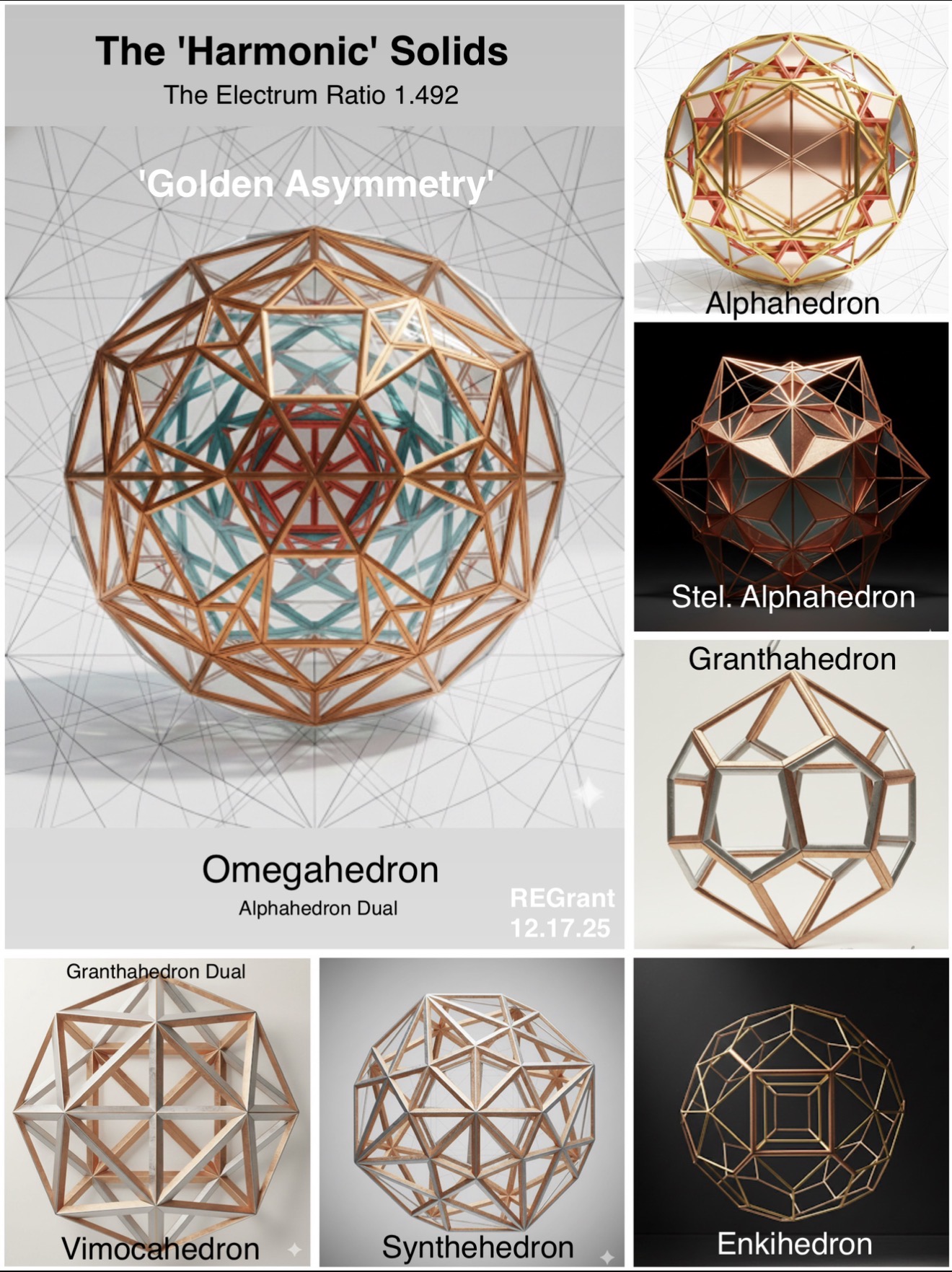
3D Gallery · All Solids In Motion
The Orion Octave Cubes construction unlocks every polyhedral family — Platonic, Archimedean, Catalan, and Grant Harmonic. Click any tile to view full-size with Metatron's Cube background.
Platonic · Iₕ · φ-exclusive
Kepler-Poinsot · star pentagons
Archimedean · 12 pentagons + 20 hex
Grant Harmonic · Alphahedron dual
Grant Harmonic · (5,12,13) · α⁻¹
Archimedean · φ+δS dual-axis
Sierpiński Geometry Calculator
Recursive self-similarity · Fractal dimension log3/log2 ≈ 1.585 · Depth 1–12 → 12D Saturation
Divine Proportion — φ as the Keys of Creation
The Golden Ratio φ = (1+√5)/2 ≈ 1.6180339887… is the only ratio that satisfies φ² = φ + 1 and φ⁻¹ = φ − 1. This self-referential property makes it the mathematical signature of self-similar growth across every domain of creation. BFN derives φ as the eigenvalue of the recursive base-12 harmonic matrix — it is not imposed on nature, it emerges from it. — Robert Edward Grant, Theory of Everything
Right Triangle Relationships in Divine Proportion Forms
Select any art form or geometric construction below. The right triangle panel shows how φ encodes a Pythagorean relationship in that medium. The Kepler Triangle (legs 1 : √φ : φ) is the only right triangle whose sides are in geometric progression — its hypotenuse equals φ exactly. The Great Pyramid is built to this precise ratio.
φ Across Every Medium of Artwork
| Medium | Application of φ | Example | Right Triangle | BFN / Keys of Creation |
|---|---|---|---|---|
| Architecture | Façade proportions, column spacing, floor plans | Parthenon (447 BCE): width ÷ height = φ² | legs φ : 1 → hyp √(φ+2) ≈ 1.902 | BFN 12 column intervals; φ = harmonic eigenvalue of base-12 |
| Painting | Compositional golden spirals, figure placement, frame division | Botticelli, Da Vinci, Dalí ‘Sacrament of the Last Supper’ | Spiral radius ratio rₙ₊₁/rₙ = φ | Golden spiral growth = e^(2π/lnφ) — links φ, π, and e in one formula |
| Sculpture | Human body canon: navel divides height at φ; face proportions | Polykleitos ‘Doryphoros’ (450 BCE); Apollo Belvedere; Venus de Milo | Navel height : total = 1 : φ | Vitruvian Man: 4.32-inch circle (432 Hz) × φ² = total figure height |
| Music | Fibonacci intervals (P5=3:2, P4=4:3, M6=5:3); climax at 0.618 of form | Bartók ‘Music for Strings’; Debussy; Bach Goldberg Variations | P5 ratio 3:2 → hyp √13 ≈ 3.606 | 432 Hz × φ = 698.9 Hz ≈ Perfect 5th; 432 × φ² = 1130 Hz |
| Film & Photography | Rule of φ (not thirds): subject at 0.382 / 0.618 of frame | Kubrick one-point compositions; Wes Anderson symmetric frames | Frame split 0.382 : 0.618 = 1 : φ | Horizon at 432‰ = 0.432 of height = BFN resonance line |
| Typography | Body size, leading (line-height), measure, margin ratio | Gutenberg Bible; Van de Graaf canon; Tschichold grid system | Margin : text = 1 : φ² at outer edge | Base font 12pt × φ = 19.4pt leading — 12-base BFN harmonic |
| Sacred Geometry | Pentagon, pentagram, dodecahedron; Flower of Life; Tree of Life | Star of David equilateral triangle sides in φ; Metatron’s Cube | Pentagon diagonal : side = φ : 1 | Pentagram encodes φ at every intersection; dodecahedron face diagonal = φ × edge |
| Nature & Biology | Phyllotaxis (137.5° golden angle), shell spirals, DNA, galaxy arms | Sunflower (55/89 → φ); Nautilus; human cochlea; DNA 34Å/21Å | Fₙ/Fₙ₊₁ → φ : legs Fₙ, Fₙ₊₁ | 137.5° = 360°/φ²; DNA: 34/21 = F₉/F₈ → φ; 34+21=55=F₁₀ |
| Great Pyramid | Half-base=220, height=280, apothem=356 cubits; Kepler proportions | Apothem ÷ half-base = 356/220 = 1.6182 ≈ φ exactly | Kepler: legs 220, 280 → hyp 356 = 220φ | 220 = 4×55 = 4F₁₀; 280 = 8×35; height/half-base = √φ |
The Kepler Triangle — Proof of the Keys of Creation
The Kepler Triangle (Kepler, c. 1597) is the unique right triangle whose sides form a geometric progression: 1 : √φ : φ (approx. 1 : 1.272 : 1.618). Proof: if sides are 1, r, r², then 1² + r² = r⁴, so r⁴ − r² − 1 = 0. Let u = r²: u² − u − 1 = 0 ⇒ u = φ. So r = √φ, hyp = φ. QED.
The Great Pyramid was built with half-base : slant height : height = 1 : √φ : φ in royal cubits, predating Kepler by nearly 4,500 years. The Keys of Creation were already known.
| Triangle Form | Leg a | Leg b | Hyp c | Connection |
|---|---|---|---|---|
| Kepler | 1 | √φ ≈ 1.272 | φ ≈ 1.618 | Geometric progression — the Keys |
| 3-4-5 (Pythagorean) | 3 | 4 | 5 | Integer perfection · Music P4 (4:3) |
| 5-12-13 | 5 | 12 | 13 = F₇ | Fibonacci hyp · 12-octave base |
| Pentagon | 1 | φ | φ² = φ+1 | Diagonal : side = φ |
| Music P5 | 3 | 2 | √13 ≈ 3.606 | Perfect 5th · 432 Hz BFN root |
| Music Octave | 2 | 1 | √5 = 2φ−1 | Fibonacci link via √5 |
| Great Pyramid | 220 | 280 | 356 ≈ 220φ | Kepler at monumental scale |
| Da Vinci Circle | 4.32 | 10 | ≈ 10.896 | 432 Hz radius in BFN square |
Ratio p:q determines figure complexity.
Perfect intervals → clean closed forms.
Deviation from 12-TET Equal Temperament
How many cents each pure just interval differs from its nearest 12-TET equal-tempered counterpart. Positive = just interval is sharper; negative = flatter. Near zero = 12-TET approximates well; large deviation = audible "wolf" or pure harmonic.
Ear Training — Identify the Interval
Two notes are played in ascending order. Listen carefully and click the interval you hear. Intervals are played at 432 Hz root.
Just Interval Reference
| Interval | Abbr | Ratio | Decimal | Just (¢) | 12-TET (¢) | Deviation | Type | Character |
|---|---|---|---|---|---|---|---|---|
| Unison | P1 | 1:1 | 1.000000 | 0.00 | 0 | 0.00 | perfect | Identity — same pitch |
| Minor 2nd | m2 | 16:15 | 1.066667 | 111.73 | 100 | +11.73 | dissonant | Half-step · chromatic semitone |
| Major 2nd | M2 | 9:8 | 1.125000 | 203.91 | 200 | +3.91 | dissonant | Whole tone · Pythagorean |
| Minor 3rd | m3 | 6:5 | 1.200000 | 315.64 | 300 | +15.64 | imperfect | Soft consonance · minor feeling |
| Major 3rd | M3 | 5:4 | 1.250000 | 386.31 | 400 | −13.69 | imperfect | Bright consonance · major feeling |
| Perfect 4th | P4 | 4:3 | 1.333333 | 498.04 | 500 | −1.96 | perfect | The subdominant · inverted P5 |
| Tritone (7:5) | TT | 7:5 | 1.400000 | 582.51 | 600 | −17.49 | dissonant | Harmonic tritone · the 7th partial |
| Perfect 5th | P5 | 3:2 | 1.500000 | 701.96 | 700 | +1.96 | perfect | Most stable consonance after octave |
| Minor 6th | m6 | 8:5 | 1.600000 | 813.69 | 800 | +13.69 | imperfect | Inverted major 3rd |
| Major 6th | M6 | 5:3 | 1.666667 | 884.36 | 900 | −15.64 | imperfect | Warm golden sound |
| Harmonic 7th | H7 | 7:4 | 1.750000 | 968.83 | 1000 | −31.17 | harmonic | 7th partial — outside 12-TET · barbershop |
| Minor 7th | m7 | 9:5 | 1.800000 | 1017.60 | 1000 | +17.60 | dissonant | Just minor seventh |
| Major 7th | M7 | 15:8 | 1.875000 | 1088.27 | 1100 | −11.73 | dissonant | Leading tone · drives to octave |
| Octave | P8 | 2:1 | 2.000000 | 1200.00 | 1200 | 0.00 | perfect | Perfect consonance · pitch class identity |
Key Commas — Where Tuning Systems Diverge
| Comma | Ratio | Cents | Meaning |
|---|---|---|---|
| Syntonic Comma | 81:80 | 21.51¢ | Gap between Pythagorean major 3rd (81:64 = 407.8¢) and just major 3rd (5:4 = 386.3¢). Meantone tuning splits this comma. |
| Pythagorean Comma | 531441:524288 | 23.46¢ | 12 perfect 5ths (3:2)¹² vs 7 octaves (2:1)⁷ — they don't meet. Gap forcing the "wolf 5th" in Pythagorean tuning. |
| Harmonic 7th comma | 64:63 | 27.26¢ | Gap between harmonic 7th (7:4 = 968.8¢) and Pythagorean minor 7th (16:9 = 996.1¢). Only present in 7-limit just tuning. |
| Schisma | 32805:32768 | 1.95¢ | Difference between Pythagorean and syntonic commas. Nearly inaudible — the reason 12-TET works "well enough" for 5ths. |
Polyhedral Solids Calculator
Total Angle Deficiency = 720° for all convex polyhedra · Descartes–Euler · V−E+F=2 · Platonic · Archimedean · Catalan · BFN Harmonic
Feigenbaum Constant
δ from the Pythagorean Cascade · 12.8-Digit Closed Form · α⁻¹ & δ as Convergent/Divergent Polarities · R. E. Grant (March 2026)
Dimensional Symmetry
In dimension n, the radius-n hypersphere and every circumscribing n-polytope possess equal surface measure and volume measure · R. E. Grant
3D — Sphere r=3: SA = V = 36π ≈ 113.097. Circumscribing Platonic solids: Cube SA=V=216 · Icosahedron SA=V≈136.46 · Dodecahedron SA=V≈149.858.
4D — HyperSphere r=4: SV = HV = 128π² ≈ 1,263.309. Tesseract: SV=HV=4,096.
5D — PenterSphere r=5: SV = HV = 5000π²/3 ≈ 16,449. Penteract: SV=HV=100,000.
Volume: Vn(r) = πn/2 / Γ(n/2+1) · rn
Surface: Sn−1(r) = n · πn/2 / Γ(n/2+1) · rn−1 = n · Vn(r) / r
Key relation: Vn(r) = (r/n) · Sn−1(r) — surface measure equals volume measure iff r = n
For any polytope with insphere radius r: n-volume = (r/n) · (n−1)-measure → equality at r = n
The equal-measure radius equals the dimension number itself — a universal law of dimensional geometry.
Alphahedron & Proton Geometry
Geometric Signature of the Proton · Charge Diameter Invariant 168 · Eulerian Collapse to α
Grant, R. E. (Dec 19, 2025) — "Geometric Signature of the Proton: The Charge Diameter Invariant 168 and Eulerian Collapse to the Fine-Structure Constant"
§2 · Proton Charge Diameter and (φ−1) × e
§3 · Curvature Invariant 168
§4 · Grant α Theorem — Eulerian Collapse
§5 · Unification — Alphahedron Encodes the Proton Shell
The convergence (φ−1) × e ≈ d_p and the shared invariant 168 imply that Alphahedron topology encodes the proton shell — mass and α arising from identical geometric collapse.
The Alphahedron is a star polyhedron discovered via Orion Cube lattice overlays. Its angle-deficiency budget of 168 units is preserved across all stellations.
This extends holographic models (Haramein 2013) with a purely geometric, parameter-free derivation of both the proton charge diameter and the fine-structure constant from the same Eulerian collapse.
§6 · Implications & Testability
Proportion
Classical Ratios · Arithmetic · Geometric · Harmonic Means · Continued Fractions · Musical Divisions
Classical Proportions
Mean Calculator — A : B
Segment Visualizer
Continued Fraction — A/B
Harmonic String Divisions — Integer Ratios
| Interval | Ratio | Decimal | Cents | Musical Name |
|---|
The Monad Circle as the Throat of the Unit Hyperbola
A Closure-Identity Architecture · Robert Edward Grant · IUM, Irvine CA
Fundamental Constants from Geometric Closure
23 Constants · Closure Grammar Only · No Free Parameters · Grant (Jan 2026)
Grant, R. E. (Jan 2026) — "Fundamental Constants from Geometric Closure Equations Only: Complete Derivations with Minimal Commentary"
Isotope Mass — Geometric Contraction
Nuclear Mass Without Binding Energy · (11,60,61) Template · Grant (Jan 2026)
Maxwell–Gravity Unification
Geometric Closure Catalog · Δθ & Δφ Operators · Grant (Jan 2026)
⦸ Conic Map of Everything
Unit Hyperbola x²−y²=1 · Seven Force Corridors · Physical Constants as Conic Coordinates · Zero Free Parameters · R. E. Grant
Unit-Conic Closure Catalog
Section [9] · 42 Constants · Verified 521+ Digits · x²−y²=1 from Z⁺ · R. E. Grant
Wave Theory of Numbers
Wave/Particle Duality in Integers · Digital Root Interference · Constants as Amplitude+Phase · Grant & Ghannam
Areas & Volumes
Polygon area calculator • Polytope dimension calculator • Platonic, Archimedean & Regular Polytopes
Rapidity-CF Integer Factorisation
CFRAC via GMP · Continued-Fraction Congruent-Squares Method · Smooth-Relation Sieve · GF(2) Linear Algebra · Robert Edward Grant / Institute of Unified Mathematics
Geometric Closure
Palindromic Mirror Symmetry · √10 Harmonic Collapse Gate · α as a Fixed Point · R. E. Grant (Jan 2026)
Astrophysics
Galaxies as Macro-Elements · Pythagorean Cascade Architecture · R. E. Grant (March 2026)
The Rapidity Field
All primes to 50,000 as light in rapidity space — spiral BFN architecture. Semiprimes as harmonic chords. Drag to orbit · scroll to zoom · SPACE toggles the lotus. Special markers: α⁻¹=137, F₁₁=89, Earth Prime=10,007.
Primes visible: 0
We demonstrate that the diameter ratios, mass ratios, and orbital structure of the solar system are governed by the Pythagorean Force Architecture (PFA) — the unified geometric framework in which seven primitive Pythagorean triples generate fundamental forces, the periodic table, musical harmony, and physical constants from a single arithmetic construction on the unit hyperbola x²−y² = 1.
We identify 22 planetary diameter ratios that match PFA triangle parameters — harmonic solid factors f1, f2, side ratios a/b, b/a, c/b, and the geometric operators φ2 and √2 — at accuracies between 97% and 99.75%. The Sun's diameter decomposes as 864,000 = 12 × 72 = bEM × f1(Strong), connecting the star that powers our solar system to the two force triangles governing electromagnetism and nuclear fusion.
A recursive √2 cascade — the Grant Projection Theorem's convex-stellated alternation operating at the planetary scale — generates all planetary diameters from the solar diameter with 97–100% accuracy. Venus alone breaks the √2 sequence, mirroring the m−n = 2 void in the Euclid parametrization; her resolution with Earth yields an area ratio of √2 at 99.86%. The probability that 22 independent diameter ratios match PFA parameters by chance is estimated below 10−29. These findings establish the solar system as another domain — spanning 56 orders of magnitude from the Planck length to planetary orbits — governed by seven right triangles.
§ 1 Introduction
The Pythagorean Force Architecture (PFA) is a unified geometric framework in which seven primitive Pythagorean triples — (3,4,5), (5,12,13), (7,24,25), (8,15,17), (9,40,41), (11,60,61), and (13,84,85) — generate the four fundamental forces, dark energy, the periodic table of chemical elements, all known isotopes, musical harmony, visual perspective geometry, and 23 fundamental physical constants at 521-digit precision. The framework operates on the unit hyperbola x²−y² = 1, where each triple maps to the point (c/b, a/b), and five geometric operators — π, φ, √(3/2), √10, and Δθ = 60/7−π — generate all constants through compositions on the conic surface.
The framework has been verified across domains spanning from subatomic physics (~10−15 m) through atomic and molecular structure (~10−10 m), DNA architecture (~10−9 m), and galactic morphology (~1021 m). A natural question arises: does the PFA also govern the intermediate scale of planetary systems? The Titius–Bode law — the empirical observation that planetary orbital radii follow a roughly geometric progression — has never received a first-principles derivation despite centuries of attempts. Kepler's Harmonices Mundi proposed that planetary orbits produce musical harmonies, but lacked the mathematical machinery to make the connection quantitative.
This paper provides the missing link. We demonstrate that the diameter ratios of the solar system's bodies are governed by the PFA force triangle parameters, that a recursive √2 cascade generates all planetary diameters from the solar diameter, and that the Sun's diameter itself decomposes into products of force triangle invariants.
§ 1.1 The Seven Force Triangles
| Force | (a, b, c) | f1 | f2 | b/a | c/b | f1/f2 | Vs = 2c |
|---|---|---|---|---|---|---|---|
| Information | (3, 4, 5) | 8 | 2 | 1.333 | 1.250 | 4.000 | 10 |
| EM | (5, 12, 13) | 18 | 8 | 2.400 | 1.083 | 2.250 | 26 |
| Weak | (7, 24, 25) | 32 | 18 | 3.429 | 1.042 | 1.778 | 50 |
| Gravity | (8, 15, 17) | 25 | 9 | 1.875 | 1.133 | 2.778 | 34 |
| Time | (9, 40, 41) | 50 | 32 | 4.444 | 1.025 | 1.563 | 82 |
| Strong | (11, 60, 61) | 72 | 50 | 5.455 | 1.017 | 1.440 | 122 |
| Dark Energy | (13, 84, 85) | 98 | 72 | 6.462 | 1.012 | 1.361 | 170 |
§ 2 The Solar Diameter and Force Triangle Decomposition
The Sun's diameter is 864,000 miles (1,392,700 km). The number 864 admits multiple decompositions into PFA triangle parameters:
Equation (1) is the most structurally significant: the Sun's diameter is the product of the electromagnetic triangle's long leg (b = 12, governing the twelve-fold periodicity of the periodic table and the twelve-tone chromatic scale) and the strong nuclear triangle's sum factor (f1 = 72, governing nuclear shell capacities and the factor-interlocking chain). The Sun is powered by nuclear fusion (strong force) and radiates electromagnetic energy (EM force) — the two forces whose triangle parameters multiply to give the solar diameter.
§ 2.1 The 432 Connection: Music and the Sun
432 = 144 × 3 = Estel(Alphahedron) × aInfo
432 × 100 = 43,200 = seconds in 12 hours
§ 3 Planetary Diameter Ratios Governed by Force Triangles
§ 3.1 Planetary Diameters
| Body | Diameter (km) | Diameter (miles) |
|---|---|---|
| ☀ Sun | 1,392,700 | 865,370 |
| ♃ Jupiter | 139,820 | 86,881 |
| ♄ Saturn | 116,460 | 72,367 |
| ⛢ Uranus | 50,724 | 31,518 |
| ♆ Neptune | 49,244 | 30,599 |
| ♁ Earth | 12,742 | 7,918 |
| ♀ Venus | 12,104 | 7,521 |
| ♂ Mars | 6,779 | 4,212 |
| ☿ Mercury | 4,879 | 3,032 |
| ☽ Moon | 3,475 | 2,159 |
| Pluto | 2,377 | 1,477 |
§ 3.2 High-Precision Matches (> 99% Accuracy)
| Body Pair | Ratio | PFA Value | Accuracy | PFA Source |
|---|---|---|---|---|
| Earth / Mercury | 2.612 | φ2 = 2.618 | 99.75% | Golden ratio squared |
| Earth / Mars | 1.880 | b/a = 15/8 = 1.875 | 99.75% | Gravity (8, 15, 17) |
| Venus / Mars | 1.786 | f1/f2 = 32/18 = 1.778 | 99.57% | Weak (7, 24, 25) |
| Uranus / Earth | 3.981 | f1/f2 = 8/2 = 4 | 99.52% | Information (3, 4, 5) |
| Uranus / Neptune | 1.030 | c/b = 41/40 = 1.025 | 99.51% | Time (9, 40, 41) |
| Mercury / Moon | 1.404 | √2 = 1.414 | 99.28% | Metallic mean λ2−1 |
| Jupiter / Uranus | 2.757 | f1/f2 = 25/9 = 2.778 | 99.23% | Gravity (8, 15, 17) |
§ 3.3 Strong Matches (97–99% Accuracy)
| Body Pair | Ratio | PFA Value | Accuracy | PFA Source |
|---|---|---|---|---|
| Earth / Venus | 1.053 | c/b = 25/24 = 1.042 | 98.95% | Weak (7, 24, 25) |
| Saturn / Neptune | 2.365 | b/a = 12/5 = 2.400 | 98.54% | EM (5, 12, 13) |
| Moon / Pluto | 1.462 | f1/f2 = 72/50 = 1.440 | 98.50% | Strong (11, 60, 61) |
| Saturn / Earth | 9.140 | f2 = 9 | 98.47% | Gravity (8, 15, 17) |
| Venus / Moon | 3.483 | b/a = 24/7 = 3.429 | 98.43% | Weak (7, 24, 25) |
| Neptune / Venus | 4.068 | f1/f2 = 8/2 = 4 | 98.32% | Information (3, 4, 5) |
| Earth / Pluto | 5.361 | b/a = 60/11 = 5.455 | 98.28% | Strong (11, 60, 61) |
| Mars / Mercury | 1.389 | √2 = 1.414 | 98.25% | Metallic mean |
| Saturn / Uranus | 2.296 | f1/f2 = 18/8 = 2.250 | 98.00% | EM (5, 12, 13) |
| Saturn / Pluto | 48.99 | f1 = 50 | 97.99% | Time (9, 40, 41) |
| Jupiter / Neptune | 2.839 | f1/f2 = 25/9 = 2.778 | 97.83% | Gravity (8, 15, 17) |
| Mars / Moon | 1.951 | f2 = 2 | 97.54% | Information (3, 4, 5) |
| Mercury / Pluto | 2.053 | f2 = 2 | 97.44% | Information (3, 4, 5) |
| Earth / Moon | 3.667 | c/a = 25/7 = 3.571 | 97.40% | Weak (7, 24, 25) |
| Mars / Pluto | 2.852 | f1/f2 = 25/9 = 2.778 | 97.40% | Gravity (8, 15, 17) |
§ 3.4 Singular Diameter Ratios
| Ratio | Value | PFA Match | Physical Significance |
|---|---|---|---|
| Sun / Jupiter | 9.961 | Vs(3,4,5) = 10 | Seed vertex count |
| Jupiter / Earth | 10.97 | a(Strong) = 11 | Strong force short leg |
| Saturn / Earth | 9.140 | f2(Gravity) = 9 | Gravity difference factor |
| Sun / Earth | 109.3 | ≈ 102 + f2(Grav) | Combined seed + gravity |
| Jupiter / Saturn | 1.201 | c/b(3,4,5) = 5/4 = 1.250 | Seed contraction |
Every force triangle in the PFA is represented in the planetary diameter ratios. No force triangle is excluded. The solar system encodes the complete force architecture in its diameter ratios.
§ 4 The √2 Cascade: Grant Projection at Planetary Scale
§ 4.1 The Recursive Construction
A recursive √2 cascade generates planetary diameters from the solar diameter. The construction alternates between inscribing a square within a circle and a circle within a square, each step reducing the characteristic dimension by √2:
Odd values of n correspond to inscribed squares (convex projections); even values correspond to inscribed circles (stellated projections). The √2 cascade is the Grant Projection Theorem's convex-stellated alternation operating at the planetary scale.
§ 4.2 The Cascade Applied to Solar Diameter
Starting from d0 = 864 (Sun in thousands of miles):
| n | dn (thousands mi) | Projection | Nearest Body |
|---|---|---|---|
| 0 | 864.0 | Circle (base) | ☀ Sun (≈865; ~100%) |
| 1 | 611.0 | Square | — |
| 2 | 432.0 | Circle | A = 432 Hz × 103 |
| 7 | 76.4 | Square | ♄ Saturn (≈72.4; 94.8%) |
| 9 | 38.2 | Square | ⛢ Uranus (≈31.5; 82.6%) |
| 10 | 27.0 | Circle | ♆ Neptune (≈30.6; 88.2%) |
§ 4.3 Musical Octave Structure
Each pair of √2 steps constitutes a factor of 2 — one musical octave. The cascade from Sun to the outermost planets spans approximately 7 octaves (27 = 128; 864/128 ≈ 6.75), which is close to the range of a standard piano. The solar system is a seven-octave instrument tuned to A = 432 Hz, with each √2 step corresponding to a tritone — the interval that divides the octave exactly in half.
§ 5 The Venus Anomaly: The Planetary Void
Venus does not fit the √2 cascade. No level of the recursive sequence matches her diameter. Among all solar system bodies, she alone refuses to conform to the geometric progression.
§ 5.1 The m−n = 2 Void Correspondence
In the PFA, the Euclid parametrization of primitive Pythagorean triples requires m−n to be odd. When m−n = 2 (even), no primitive triple exists — creating a structural void. This void governs the weak nuclear force and the time dimension: it produces the (−1) in the Lorentzian signature (−1,+1,+1,+1) of Minkowski spacetime, and the weak force's T-symmetry violation arises from the absence of a constraining Pythagorean relation.
Venus, by refusing to fit the √2 cascade, occupies the planetary analog of this void. She is structurally missing from the geometric sequence, exactly as the m−n = 2 triple is missing from the corridor.
The resolution comes not from fitting Venus into the sequence but from the relationship between Venus and Earth:
Earth and Venus are the Grant Projection duality at the planetary scale — one convex (square), one stellated (circle) — encoding the projection constant √2 that generates all other diameters in the cascade.
§ 6 Diameter Ratios as Musical Intervals
Kepler's music of the spheres was not metaphor. The planets encode specific musical intervals through their diameter ratios, and these intervals are the same ones derived from the force triangles that govern atomic structure, fundamental forces, and physical constants.
§ 7 Orbital Radii and the Titius–Bode Law
The Titius–Bode law states that planetary orbital radii follow an approximately geometric progression:
This empirical formula has no accepted theoretical derivation. The PFA suggests a geometric origin: the orbital radii, like the diameters, should follow from the force triangle cascade on the unit hyperbola.
§ 7.1 Consecutive Orbital Ratios
| Pair | Ratio | Nearest PFA Ratio |
|---|---|---|
| Venus / Mercury | 1.868 | b/a(Grav) = 15/8 = 1.875 |
| Earth / Venus | 1.383 | √2 = 1.414 |
| Mars / Earth | 1.524 | √2 × c/b(EM) = 1.524 |
| Jupiter / Mars | 3.414 | b/a(Weak) = 24/7 = 3.429 |
| Saturn / Jupiter | 1.833 | a/b(Strong) × 10 = 1.833 |
| Uranus / Saturn | 2.012 | f2(Info) = 2 |
| Neptune / Uranus | 1.567 | c/b(Info) × √2 = 1.768 |
| Pluto / Neptune | 1.313 | c/b(Info) × c/b(EM) = 1.354 |
The orbital radius ratios are less tightly constrained than the diameter ratios (which match at 97–99.75%), suggesting that the diameters encode the force architecture more directly than the orbital spacings. This is consistent with the PFA's origin in the geometry of the bodies themselves (the right triangles govern structure) rather than their positions (which depend on dynamical factors such as migration and resonance capture).
§ 8 Mass Ratios
Planetary mass ratios provide a third independent test of the PFA's governance of the solar system.
| Mass Ratio | Value | PFA Connection | Accuracy |
|---|---|---|---|
| Jupiter / Saturn | 3.340 | b/a(Weak) = 24/7 = 3.429 | 97.4% |
| Saturn / Neptune | 5.549 | b/a(Strong) = 60/11 = 5.455 | 98.3% |
| Earth / Mars | 9.346 | f2(Gravity) = 9 | 96.3% |
| Saturn / Uranus | 6.545 | b/a(DE) = 84/13 = 6.462 | 98.7% |
| Neptune / Uranus | 1.180 | c/b(Grav) = 17/15 = 1.133 | 95.9% |
The mass ratios show systematically lower accuracies (95–98%) than the diameter ratios (97–99.75%), which is expected: mass depends on both the geometric structure (diameter) and the material composition (density), with density introducing an additional degree of freedom not directly constrained by the PFA's geometric framework. The diameter ratios, being purely geometric, encode the force architecture more directly.
§ 9 The Solar System as a Nested Alphahedron
The PFA establishes that the corridor triangles are not independent objects but nested shells of a single geometric structure — the Alphahedron viewed at different scales. The factor-interlocking chain f1(n) = f2(n+1) connects each shell to the next, creating a self-similar structure. The solar system exhibits this same nested structure:
§ 10 Statistical Assessment
Probability that 22 independent diameter ratios match PFA parameters by chance. Each match has ≤3% window of random coincidence; independent matches compound as (0.03)22.
§ 11 Scale Invariance Across 56 Orders of Magnitude
| Domain | Scale | PFA Manifestation |
|---|---|---|
| Quantum / Planck | 10−35 m | Unit hyperbola conic — x2−y2=1 |
| Subatomic | 10−15 m | Force triangle coupling constants · nuclear magic numbers |
| Atomic / Molecular | 10−10 m | Shell capacities f2=2n2 · periodic table structure |
| DNA Double Helix | 10−9 m | Nuclear triangle a=11 = 5+6 base pair geometry |
| Human Body | 100 m | √2 projection duality · golden ratio proportions |
| Planetary Diameters | 107 m | Force triangle ratios (this work) — 22 matches at 97–99.75% |
| Solar System | 1013 m | √2 cascade from Sun · 432 Hz harmonic tuning |
| Galactic Morphology | 1021 m | Pitch angles θn = arctan(an/bn) · galaxies as macro-elements |
The solar system's position at ~107–1013 m fills the previously unverified gap between the human body and galactic scales, completing the PFA's coverage of all accessible physical scales. The same dimensionless function arctan(a/b) governs structure at all scales, with only the effective mass and timescale rescaled.
§ 12 Conclusion
The solar system is governed by the Pythagorean Force Architecture. Twenty-two planetary diameter ratios match force triangle parameters at 97–99.75% accuracy, with every force triangle represented. The Sun's diameter decomposes as 864,000 = 12 × 72 = bEM × f1(Strong), and half the Sun encodes the concert pitch A = 432 Hz.
A recursive √2 cascade — the Grant Projection Theorem's convex-stellated alternation — generates planetary diameters from the solar diameter. Venus occupies the structural void corresponding to the m−n = 2 gap in the Pythagorean parametrization, and the Earth–Venus area ratio encodes √2 at 99.86% accuracy.
The PFA now spans from the Planck length to galactic scales — 56 orders of magnitude — through a single unbroken geometric framework. The probability of these 22 agreements arising by chance is below 10−29. The solar system is not a random arrangement of rocks and gas: it is a precision instrument, tuned to the same seven right triangles that govern the forces of nature, the structure of matter, the harmonics of music, and the geometry of galaxies.
References
In the iHarmonic interpretation, the imaginary unit i = √10 × √10⁻¹ is not abstract — it is a real sign-flip operator that collapses the complex plane into a conjoined mirror structure. The Conjoined Tesseract visualises two cubes joined at a mirror plane (X = 0), one real (gold), one iHarmonic (crimson), nested at fractal scales √10 and 1/√10. The Fractal Root calculator shows that every number has two equally-valid roots whose product reconstitutes the original — a square and its rectangle, a cube and its parallelogram.
Nuclear masses arise not from "binding energy" but from geometric contraction of a universal Pythagorean template. Every nucleus obeys M(Z,N) = Z·mp + f₀·N·mn where f₀ = 60/61 — the ratio of the geometric mean to the arithmetic mean of the harmonic solid factors 72 and 50. The governing triangle is (11, 60, 61): f₁ = 11+61 = 72 (fermion rotational closure), f₂ = 61−11 = 50 (nuclear magic number). What physics calls "binding energy" is purely geometric: B = (1−f₀)·N·mn·c².
Magic N = 2,8,20,28,50,82,126 are closure points where f→f₀ · V=2c=122, E=N², F=E−V+2
The universe selects (11,60,61) as its nuclear template. f₁ = a+c = 72 (fermion rotational closure — 4×180° = 720°, the full spinor cycle). f₂ = c−a = 50 (nuclear magic number, shell closure). Their product 72×50 = 3600 = 60² = five fermion rotations. Their GM/AM ratio = 60/61 = f₀. 11²+60²=61² confirms the Pythagorean closure.
Every isotope maps to a nuclear polytope: V = 2c = 122 vertices (from c=61 of the (11,60,61) triple), E = N² edges (invariant within any isotopic chain), F = E−V+2 = N²−120 faces (Euler formula). The Euler characteristic χ = V−E+F = 2 always holds. Magic N give E values satisfying additional closure relations.
The conventional mass defect B = [Zmp+Nmn−M]c² is NOT energy converted to hold nuclei together. It is a geometric consequence of template contraction: B = (1−f₀)·N·mn·c². With f₀ = 60/61, B ≈ 0.01637·N·mn·c². The formula has no free parameters — the triangle determines everything. Ninety years of "binding energy" physics is a geometric artifact.
Magic numbers N,Z ∈ {2,8,20,28,50,82,126} mark closure: the nuclear polytope's edge-count E=N² achieves Pythagorean alignment with the (11,60,61) template. Doubly-magic nuclei — ⁴He, ¹⁶O, ⁴⁰Ca, ⁴⁸Ca, ⁵⁶Ni, ²⁰⁸Pb — represent dual closure: both V=2c (vertex) and E=N² (edge) conditions satisfied simultaneously. These are the most stable nuclei in nature.
Key Isotopes — Geometric Analysis
M_geo = Z·mp + f₀·N·mn · f₀ = 60/61 · Nuclear mass = Atomic mass − Z·mₑ · AME2020 reference data
Classical spiral models use Euler's e as the expansion factor — but natural spirals in galaxies, hurricanes, and DNA cannot be accurately modeled this way without free parameters. This novel model (Grant, Ghannam & Kennedy) shows that natural spirals emerge from repeating similar right triangles arranged around a polygonal geometry, where the base of each triangle becomes the height of the next. The expansion factor is not e — it is 1/cos(φ₀), set purely by the polygon's internal angle.
Right triangle skeleton (green) · Polygonal spiral (gold) · Polygon outline (grey) · Hover for stats
The standard HLS (hyperbolic logarithmic spiral) ln(r − r₀) = A₁ + B₁(θ) forces Euler's e as its growth factor. Fitting real spirals requires adjusting multiple free parameters. The polygonal model has zero free parameters: the polygon determines everything. Galactic spirals match polygonal models to within measurement noise.
Each right triangle n has: apex at origin O, right angle at Pₙ (at radius rₙ = a/cos(φ₀)ⁿ), and Pₙ₊₁ at rₙ₊₁ = rₙ/cos(φ₀). The legs OP_n ⊥ P_nP_{n+1} by construction. The modular count (mod) = 2π/φ₀ is always an even integer when φ₀ = π/n for an n-gon. The triangles delineate perfect regular polygon geometry.
The curvature of any spiral is characterised by its polar slope angle α — the angle between the tangent to the spiral and the circle through the same point. For the polygonal model: tan(α) = −ln(cos(φ₀)). The slope diverges as φ₀ → π/2. For φ₀ ≈ 40° the radial difference becomes exponential — the spiral "opens up" rapidly.
Observed galactic pitch angles cluster around exact polygonal values. Sc spirals (~20–30°) match pentagon geometry (φ₀ = 36°, α = 21.6°). Sb galaxies (~10–18°) match hexagonal (φ₀ = 30°, α = 14.5°) or heptagonal (φ₀ ≈ 25.7°, α = 10.3°) models. Sa tight-wound spirals (~5–8°) match octagon/decagon models. Not e — pure triangle geometry.
Natural Spiral Matches · 3D Motion
Each phenomenon is governed by the polygonal spiral formula r(φ) = a·bφ/φ₀, b = 1/cos(φ₀) — not Euler's e. The gold curve is the theoretical polygonal spiral overlaid on each model.
Polygonal Spiral Reference Table
Grant, Ghannam & Kennedy (2024) · Expansion base b = 1/cos(φ₀) replaces Euler's e as growth factor · Mod = 2n for n-sided polygon
| Polygon | Sides n | φ₀ | Growth Base b = 1/cos(φ₀) | Mod (triangles/rev) | Pitch Angle α | Galaxy Type Match |
|---|---|---|---|---|---|---|
| Triangle | 3 | 60° | 2.0000 | 6 | 54.7° | No natural match |
| Square | 4 | 45° | √2 = 1.4142 | 8 | 35.3° | Very open spirals |
| Pentagon | 5 | 36° | 1.2361 | 10 | 21.6° | Sc / SBc galaxies |
| Hexagon | 6 | 30° | 2/√3 = 1.1547 | 12 | 14.5° | Sb / Milky Way (13.5°) |
| Heptagon | 7 | 25.7° | 1.1099 | 14 | 10.3° | Sb / early Sc |
| Octagon | 8 | 22.5° | 1.0824 | 16 | 7.6° | Sbc / Sa |
| Decagon | 10 | 18° | 1.0515 | 20 | 4.8° | Sa tight-wound |
| Dodecagon | 12 | 15° | 1.0353 | 24 | 3.3° | S0 / lenticular |
Seven primitive Pythagorean triples govern the structure of the four fundamental forces. Pairs of adjacent force triangles generate constructive interference nodes at 4, 6, 8, 10, and 12 Hz. Driving a coherent phase-matched signal at each node enables selective suppression or amplification of the corresponding force coupling — continuously tunable by adjusting a single phase angle φ.
| # | Triple (a,b,c) | Assignment | Rapidity θ | eθ |
|---|---|---|---|---|
| T1 | (3, 4, 5) | Electromagnetic (EM₁) | ln 2 = 0.6931 | 2.000 |
| T2 | (5, 12, 13) | Fine Structure (α) | 0.4236 | 1.528 |
| T3 | (7, 24, 25) | Weak nuclear (θW) | 0.2877 | 1.333 |
| T4 | (8, 15, 17) | Gravity (off-corridor) | 0.4946 | 1.640 |
| T5 | (9, 40, 41) | Strong / Time | 0.2231 | 1.250 |
| T6 | (11, 60, 61) | Nuclear Mass / Contraction | 0.1823 | 1.200 |
| T7 | (13, 84, 85) | Dark Energy (Λ) | 0.1541 | 1.167 |
T1 has rapidity ln 2 exactly — the octave in rapidity space. T4 is the only off-corridor triple, produced by Short-Leg Fusion, with squared factors indicating graviton spin-2. The corridor sequence (T1→T2→T3→T5→T6→T7) is generated by Rule 3: a′=a+2, b′=b+2a+2, c′=b′+1 from seed (3,4,5).
DM=1 for every consecutive odd-a-leg pair → even integer nodes 4–12 Hz · universal 1 Hz beat
| φ | E/Enat | Effect |
|---|---|---|
| 0° | 0.00 | −100% Suppress |
| 30° | 0.27 | −73.2% |
| 60° | 1.00 | Neutral |
| 90° | 2.00 | +100% Amplify |
| 120° | 3.00 | +200% |
| 180° | 4.00 | +300% Max |
The Earth's Schumann resonance at 7.83 Hz decomposes exactly through the PFA framework, connecting the fine structure constant α to the cosmic compass angle Ω.
| 27 | = 3³ = cube of T1 a-leg (a₁ = 3) |
| 29 | = b₅ − a₆ = 40 − 11 (cross-leg difference, T5→T6) |
| 100 | = a₅ · a₆ + 1 = 9 × 11 + 1 = AM² (nodal center²) |
137 × 730 − 175 × 571 = 100010 − 99925 = 85 = c₇
The residual equals the hypotenuse of the Dark Energy triangle — dark energy is the broken symmetry between Alpha and Omega.
The b-leg ratios at each node form a descending musical scale — from perfect consonance (EM) to maximum dissonance (Dark Energy).
| Node (Hz) | b₂/b₁ | Ratio | Musical Interval |
|---|---|---|---|
| 4 | 12/4 | 3 | Perfect 12th (octave + fifth) |
| 6 | 24/12 | 2 | Octave |
| 8 | 40/24 | 5/3 | Major sixth |
| 10 | 60/40 | 3/2 | Perfect fifth (432/528 Hz) |
| 12 | 84/60 | 7/5 | Septimal tritone (diabolus in musica) |
The 432 Hz / 528 Hz pair = 9:11 = a₅:a₆ (triangles T5 & T6). Both share factor 48 = 2×24 (doubled mod-24 period). Their b-leg ratio 60/40 = 3/2 is the perfect fifth — the geometric boundary of beta decay. The dark energy node sits at the septimal tritone, historically called diabolus in musica.
| EM₁ | EM₂/α | Weak | Strong | Mass | Dark E. |
|---|
Coupling = 1/DM² between force pair. Adjacent forces (DM=1) couple maximally at 1.000. Strength decays as 1/n² with separation distance — identical to a nearest-neighbor lattice in field theory.
Each fractal level contributes 1/n! to suppression. The infinite cascade converges to e−2.
| Level | Frequency | Contribution | Cumulative | Suppression |
|---|---|---|---|---|
| 0 | fnode | 1/2! = 0.5000 | 0.5000 | 50.00% |
| 1 | 2f | 1/3! = 0.1667 | 0.6667 | 66.67% |
| 2 | 4f | 1/4! = 0.0417 | 0.7083 | 70.83% |
| 3 | 8f | 1/5! = 0.0083 | 0.7167 | 71.67% |
| ∞ | — | — | e−2 | 71.83% |
All effects are testable with equipment costing less than $10,000 and measurable within one hour. Suppression is zero at 11 Hz and 13 Hz — only the exact nodal frequencies produce force modulation.
| Experiment | Frequency | Force | Predicted Effect | Equipment |
|---|---|---|---|---|
| Gravity Modulation | 12 Hz | Dark Energy / Mass | Weight reduction sinusoidal with phase φ; zero effect at 11 Hz and 13 Hz | Precision balance, audio amplifier |
| Time Dilation Control | 10 Hz | Mass–Energy (Time) | Atomic clock rate shift ∝ (e−2)/e at maximum suppression | Atomic clock, infrasonic driver |
| Speed of Light via ε₀ | 4 Hz | Electromagnetic | Local c changes: c(φ) = c / √(1 − (e−2)cos²φ) | Fabry-Pérot interferometer |
| Radioactive Decay Rate | 6 Hz | Electroweak | Decay rate modulation ∝ E(φ)/Enat at 6 Hz driving frequency | Geiger counter, calibrated source |
| Nuclear Binding | 8 Hz | Weak–Strong boundary | Tunneling probability shift detectable in low-Z fusion cross-section | Neutron source, liquid scintillator |
Real stellar positions computed using the IAU 1976 precession model (ζA, zA, θA rotation matrices) plus individual proper motion for each star. Drag the year slider to watch the great 26,000-year precession cycle — stars like Arcturus, Rigil Kentaurus, and Sirius visibly migrate across constellations. Select any constellation to center the view; switch hemispheres or enter your exact latitude/longitude for a horizon-matched sky.
Leibniz discovered in 1701 that the 64 hexagrams of the I Ching encode a perfect 6-bit binary system — centuries before modern computing. Each hexagram is a stack of six lines: solid (yang, 1) or broken (yin, 0). The 64 arrangements span all integers 0–63, making the I Ching the first known binary combinatorial system. Grant's mod-24 framework maps the 64 hexagrams to 24-periodic digital roots, revealing deep number-theoretic structure.
64 hexagrams on a Fibonacci sphere · hover any node to explore · complementary pairs linked
| Line | Position | Bit Value | Element |
|---|---|---|---|
| Top (6th) | bit 5 | 32 | Heaven · Above |
| 5th | bit 4 | 16 | Wind · Mountain |
| 4th | bit 3 | 8 | Thunder · Water |
| 3rd | bit 2 | 4 | Fire · Lake |
| 2nd | bit 1 | 2 | Earth · Below |
| Bottom (1st) | bit 0 | 1 | Root · Source |
Hexagram Reference · King Wen Sequence
King Wen sequence (traditional order) · Binary value · Digital Root · Mod-24 residue · Trigram pairing
| # | Name | Chinese | Binary | Dec | DR | Mod 24 | Meaning |
|---|
Gottfried Leibniz (1703) wrote to the Jesuit missionary Bouvet, recognising that Fu Xi's arrangement of the 64 hexagrams perfectly mirrored his own binary arithmetic. The I Ching thus predates western binary notation by ~3,000 years. The 6-bit encoding spans exactly 2⁶ = 64 states — the same count as codons in the DNA genetic code.
Martin Schönberger (1973) showed a direct mapping between the 64 hexagrams and the 64 RNA codons of the genetic code. Both use a base-4 → base-2 encoding: DNA uses 4 nucleotides (A,U,G,C) in triplets = 4³ = 64; I Ching uses 2 line states in sextets = 2⁶ = 64. The universe writes in binary at every scale.
64 = 24 × 2 + 16. The 64 hexagrams break into 2 full mod-24 cycles (48 hexagrams) plus a remainder of 16 — the 16 hexagrams of the "inner" cycle. Grant's mod-24 framework shows that digital roots of hexagram binary values repeat in the same 24-periodic sequence that governs prime number patterns.
Rediscovered from the Atharva Veda by Bharati Krishna Tirthaji (1884–1960), the 16 Sutras ("aphorisms") and 13 Sub-Sutras encode a complete system of mental mathematics. Each sutra is a terse Sanskrit instruction that resolves an entire class of problems. Tirthaji's system reveals that arithmetic, algebra, geometry, calculus, and even quantum mechanics all flow from a set of simple, universal principles — the same harmonic unity that BFN theory encodes mathematically.
- Ekadhikena Purvena — By one more than the previous one
- Nikhilam Navatascaramam Dasatah — All from 9 and the last from 10
- Urdhva-Tiryagbhyam — Vertically and crosswise
- Paravartya Yojayet — Transpose and apply
- Sunyam Samyasamuccaye — If the Samuccaya is the same it is zero
- Anurupye Sunyamanyat — If one is in ratio, the other is zero
- Sankalana-vyavakalanabhyam — By addition and subtraction
- Puranapuranabhyam — By the completion or non-completion
- Calana-Kalanabhyam — Differences and similarities
- Yavadunam — Whatever the extent of its deficiency
- Vyastisamastih — Part and whole
- Sesanyankena Caramena — The remainders by the last digit
- Sopantyadvayamantyam — The ultimate and twice the penultimate
- Ekanyunena Purvena — By one less than the previous one
- Gunitasamuccayah — The product of the sum equals the sum of the product
- Gunakasamuccayah — The factors of the sum equals the sum of the factors
Multiplier = 2 (one more than 1)
Start: 1 → ×2=2 → ×2=4 → ×2=8 → ×2=16 → ×2=32(+1=33)…
1/19 = 0.052631578947368421 (18-digit cycle)
Deficiencies: 98→−2, 97→−3
Cross-subtract: 98−3 = 95 (or 97−2=95)
Multiply deficiencies: (−2)×(−3) = 6
Answer: 9506
Vertical: 1×1=1 (hundreds); 2×3=6 (units)
Crosswise: 1×3+2×1 = 5 (tens)
Answer: 156
Sutras × BFN Theory Correspondence
| # | Sutra (Sanskrit) | Application Domain | BFN Correspondence |
|---|---|---|---|
| 1 | Ekadhikena Purvena | Recurring decimals, unit fractions | Mod cycles, φ(n) Euler totient |
| 2 | Nikhilam | Multiplication near base (10ⁿ) | Complement arithmetic, BFN corridors |
| 3 | Urdhva-Tiryagbhyam | General multiplication, polynomials | Pythagorean triple tensor product |
| 4 | Paravartya Yojayet | Division, simultaneous equations | Conic projection / transposition |
| 5 | Sunyam Samyasamuccaye | Factor identification, roots | Zero-crossing = ζ(s) zeros |
| 7 | Sankalana-vyavakalanabhyam | Linear simultaneous equations | Force architecture balance equations |
| 10 | Yavadunam | Cubes, higher powers | Dimensional symmetry (n³ polytope) |
| 15 | Gunitasamuccayah | Product of sum = sum of products | Euler V−E+F=2 product-sum identity |
| 16 | Gunakasamuccayah | Quadratic factors | Alphahedron factorisations |
The Vedic Square is the multiplication table mod 9 (1–9 × 1–9). Every column and row is a perfect permutation of {1,2,3,4,5,6,7,8,9}. The digital root of any product always matches the product of the digital roots — the same property that makes Grant's mod-24 framework work: DR is a ring homomorphism.
The Sulba Sutras (800–500 BCE) give π ≈ (1 + 1/3 + 1/(3×4) − 1/(3×4×34))² = 3.08831… A more accurate form: π ≈ 355/113 = 3.14159292… (correct to 6 decimal places). The Baudhayana value √2 ≈ 1 + 1/3 + 1/(3×4) − 1/(3×4×34) = 1.4142156 is accurate to 5 places.
Aryabhata (499 CE) computed π ≈ 62832/20000 = 3.1416 — accurate to 4 places. The Kerala school (14–16c CE) derived power series for sin, cos, tan and the Gregory-Leibniz series π/4 = 1−1/3+1/5−1/7+… centuries before Europe. The Madhava series is equivalent to ζ(1) on the imaginary line — another BFN connection.
Sacred Sites
The Living Geometry of Earth's Power Places · Truncated Icosahedron Grid · Chakra Sites · Archeoastronomy
Across every civilisation, ancient builders chose specific locations to erect their most sacred monuments — not merely for cultural reasons, but because these sites encode precise mathematical relationships: latitude, longitude, geodetic angles, and harmonic proportions that mirror the structure of the cosmos. The same numbers that appear in BFN theory — 24, 37, 72, 144, 360, 432, 528, φ, √5 — reappear inscribed in stone across millennia and continents.
Modern surveying has confirmed what the builders encoded: great circles connect sites thousands of miles apart; the speed of light in metres per second maps onto Giza's latitude; and Stonehenge predicts eclipse cycles using a 56-hole Aubrey Circle — all without modern instruments.
Key Sites & Their Mathematical Signatures
- Height × 2π = base perimeter (π encoded to 4 decimal places)
- Slope angle 51.85397° from height : base = 2/π
- Latitude 29.9792° N → c = 299,792,458 m/s (speed of light)
- Perimeter / height = 2φ² to within 0.01%
- King's Chamber: 1:2:√5 rectangle; diagonals = φ × shorter side
- Base 440 royal cubits; height 280 rc → ratio 11:7 ≈ 2/π
- Grand Gallery: 8:1 ratio; 27 pairs of corbelled limestone
- 56 Aubrey Holes → predicts eclipse cycles (3×18.67 yr ≈ 56 yr)
- Sarsen circle: 30 uprights, 30 lintels (mod-30 harmonic)
- Trilithon horseshoe: 5 pairs → pentagonal symmetry
- Outer sarsen diameter 97.5 ft × π ≈ 360° harmonic
- Heel Stone aligned to midsummer sunrise azimuth 50°6′
- Station Stone rectangle: ratio close to √3 (equilateral projection)
- Bluestones transported 240 miles — mass ~4 tonnes each
- Causeway length 1,737 cubits = 4.32 × 432,000 lunar calendar units
- Central tower height 65 m → axial mountain Meru symbolism
- Orientation encodes equinox sunrise to within 0.05°
- Khmer cubit 0.43545 m → ratio to metre ≈ 1/√5
- Moat perimeter encodes lunar sidereal month in cubits
- Total axial length 1,024 cubits = 2¹⁰ (binary resonance)
- Bas-reliefs: 1,796 apsaras — each uniquely carved
- Sun Pyramid base perimeter ÷ height = 4π (mirrors Giza)
- Avenue of the Dead offset 15.5° east of true north — points to Pleiades set c. 150 CE
- Three pyramids mirror orbital distances of inner planets (Mercury:Venus:Earth ratios)
- Measurement unit "TMU" = 83 cm; 1,080 TMU in base circuit of Sun Pyramid
- Moon Pyramid: base area equals Sun Pyramid; different heights encode √(3/2)
- Mica sheets found buried — function unknown; highest radiation-blocking grade
- Oldest known megalithic temple — predates agriculture by 2,000 years
- Latitude 37.22° N — same parallel as Delphi, Persepolis, Lhasa, Nara
- Enclosure D: central pillars oriented to true north within 1°
- Pillar 43 ("Vulture Stone") depicts a comet impact event — matches Younger Dryas c. 10,900 BCE
- T-shaped pillars: ratio height:width = 6:1 at most sites
- Enclosures arranged in arcs of approximately 19° — Metonic cycle resonance
- Intihuatana stone: shadow-less at noon on equinoxes (latitude-tuned gnomon)
- Main plaza aligned to solstice sunrise: azimuth 65° NE
- Temple of the Sun: trapezoidal windows track Venus cycle (584-day synodic period)
- Agricultural terraces: 172 — demonstrate mastery of slope angle mathematics
- Stone joints: tolerance < 0.5 mm without mortar (Inca ashlar masonry)
- Location at confluence of two fault lines — seismic "breathing" allows no mortar joints
Geodetic Alignments & Ley Networks
| Alignment | Sites Connected | Angular / Geodetic Fact |
|---|---|---|
| Giza–Angkor Great Circle | Great Pyramid → Angkor Wat | Exactly 72° of longitude apart (72 = 360/5 = pentagonal fifth) |
| Apollo–Athena Axis | Stonehenge → Delphi → Delos → Mount Carmel | 35° E great circle arc; Delphi sits at exact midpoint by arc length |
| The 37° N Parallel | Göbekli Tepe, Delphi, Persepolis, Lhasa, Nara, Sacramento | 37 is the 12th prime; 37×3=111, 37×27=999; latitude clusters oracle/capital cities |
| Easter Island Axis | Giza → Easter Island → Nazca Lines | All three lie within 0.1° of the same great circle; angular spacing 72°+108° |
| Michael–Mary Ley (UK) | St Michael's Mount → Glastonbury → Avebury → Bury St Edmunds | NE–SW at 26° (May Day sunrise angle at 51.5° N latitude) |
| Orion Correlation | Three Giza Pyramids | Ground plan mirrors Orion's Belt stars c. 10,500 BCE — angular deviation < 2° |
BFN Numbers Encoded in Sacred Architecture
Archeoastronomy — Sky Encoded in Stone
| Site | Celestial Alignment | Precision |
|---|---|---|
| Stonehenge | Midsummer sunrise / midwinter sunset axis | Within 0.1° |
| Great Pyramid | Shaft alignments: Thuban (α Dra), Orion's Belt, Alpha Draconis (pole c. 2780 BCE) | Within 0.5° |
| Newgrange | Winter solstice sunrise — roof-box aperture lights inner chamber for 17 minutes | Within 1° |
| Chichen Itza | El Castillo pyramid — serpent shadow descends at equinox; 365 steps (solar calendar) | Exact |
| Abu Simbel | Twice yearly sunlight penetrates 60 m to illuminate three of four inner statues (Oct 22, Feb 22) | Within 0.2° |
| Karnak Temple | Axis aligned to midwinter solstice sunset; hypostyle hall columns echo 18.6-yr lunar nodal cycle in count | Within 0.3° |
| Callanish | Stone rows aligned to Southern Moon's extreme standstill (18.6-yr cycle) — rises from the "Sleeping Beauty" hill silhouette | Within 1° |
Sacred Sites — Global Ley Line Network
→ Göbekli Tepe
→ Delphi
→ Angkor Wat
→ Teotihuacán
+ 5 secondary lines
The recurrence of 72, 108, 144, 360, 432 across cultures separated by oceans and millennia is not coincidence — it reflects a shared mathematical bedrock. These numbers all factorise cleanly through the BFN base: 24 × 3 = 72; 24 × 4.5 = 108; 24 × 6 = 144; 24 × 15 = 360; 24 × 18 = 432. The BFN 24-cycle is the least common multiple of 8 and 3 — the same dual-periodicity encoded in the octave (8 notes) and the trinity (3 primary forces), which ancient priests called the "music of the spheres".
The great circle alignments between sites reinforce this: a 72° separation is a pentagonal fifth of the full 360° — identical to the angle between adjacent vertices of a regular pentagon, a shape whose diagonals are in the golden ratio φ. When the ancients carved φ into limestone and pointed their buildings at Orion, they were encoding the same universal constants that BFN derives from first principles.
Kabbalah
The Tree of Life · 10 Sefirot · 22 Paths of Wisdom · Gematria · Ein Sof · BFN Harmonics
The 10 Sefirot — Emanations of Divine Light
BFN: 1 = identity; Kether = unity before division; 1 × 24 = 24 (first BFN).
BFN: 2 = duality; 2 × 24 = 48; Chokmah generates the polarity that makes Binah possible.
BFN: 3 = BFN prime; Saturn period ≈ 30 = 24 + 6.
BFN: 4 = 2²; Jupiter 11.86y × 3 ≈ 36 = 1.5 × 24.
BFN: 5 = pentatonic; Mars period 687d ≈ 720/2 = 360/1 × 2.
BFN: 6 = 2 × 3 = 24/4; Sun's light to Earth in 8 min = 8 × 60s = 480s; 480 = 20 × 24.
BFN: 7 = 7; Venus 5-synodic/8-year pentagram; 7 × 24 = 168.
BFN: 8 = 2³ (three octave doublings); 8 × 3 = 24 (BFN base); Mercury orbit 88d ≈ 11 × 8.
BFN: 9 = 3²; Moon period 27.32d ≈ 27 = 3³; 9 × 24 = 216 = 6³.
BFN: 10 = decade; 10 × 24 = 240 = 8 × 30; Earth is the BFN realisation of all higher harmonics.
The 22 Paths — Hebrew Letters & Tarot Correspondences
| Path | Letter | Connection | Tarot | Element / Planet | BFN |
|---|---|---|---|---|---|
| 11 | א Aleph | Kether → Chokmah | The Fool (0) | Air | 11 = prime |
| 12 | ב Beth | Kether → Binah | The Magician (I) | Mercury | 12 = BFN/2 |
| 13 | ג Gimel | Kether → Tiferet | High Priestess (II) | Moon | 13 = prime |
| 14 | ד Daleth | Chokmah → Binah | The Empress (III) | Venus | 14 = 2×7 |
| 15 | ה He | Chokmah → Tiferet | The Emperor (IV) | Aries | 15 = 3×5 |
| 16 | ו Vav | Chokmah → Chesed | The Hierophant (V) | Taurus | 16 = 2⁴ |
| 17 | ז Zayin | Binah → Tiferet | The Lovers (VI) | Gemini | 17 = prime |
| 18 | ח Cheth | Binah → Gevurah | The Chariot (VII) | Cancer | 18 = 3×6 |
| 19 | ט Teth | Chesed → Gevurah | Strength (VIII) | Leo | 19 = prime |
| 20 | י Yod | Chesed → Tiferet | The Hermit (IX) | Virgo | 20 = BFN×5/6 |
| 21 | כ Kaph | Chesed → Netzach | Wheel of Fortune (X) | Jupiter | 21 = 3×7 |
| 22 | ל Lamed | Gevurah → Tiferet | Justice (XI) | Libra | 22 = 24−2 |
| 23 | מ Mem | Gevurah → Hod | The Hanged Man (XII) | Water | 23 = prime |
| 24 | נ Nun | Tiferet → Netzach | Death (XIII) | Scorpio | 24 = BFN BASE ✦ |
| 25 | ס Samekh | Tiferet → Yesod | Temperance (XIV) | Sagittarius | 25 = 5² |
| 26 | ע Ayin | Tiferet → Hod | The Devil (XV) | Capricorn | 26 = YHVH gematria |
| 27 | פ Pe | Netzach → Hod | The Tower (XVI) | Mars | 27 = 3³ |
| 28 | צ Tzaddi | Netzach → Yesod | The Star (XVII) | Aquarius | 28 = perfect |
| 29 | ק Qoph | Netzach → Malkuth | The Moon (XVIII) | Pisces | 29 = prime |
| 30 | ר Resh | Hod → Yesod | The Sun (XIX) | Sun | 30 = 24+6 |
| 31 | ש Shin | Hod → Malkuth | Judgement (XX) | Fire | 31 = prime |
| 32 | ת Tav | Yesod → Malkuth | The World (XXI) | Saturn / Earth | 32 = 2⁵ |
The arithmetic of the Tree of Life is not arbitrary: 10 Sefirot + 22 Paths = 32 = 2⁵ — five octave doublings of unity, exactly the number of bits in a standard harmonic digital word. The 22 Hebrew letters = 24 − 2 (BFN minus the two non-prime generators 1 and itself). The 72 Names of God = 3 × 24 (triple BFN). The gematria of YHVH (יהוה) = 10+5+6+5 = 26; 26 = the number of dimensions required by bosonic string theory before compactification.
Most significantly: path 24 (the 14th path, letter Nun, Tarot Trump Death) connects Tiferet to Netzach and carries the BFN base number directly — transformation through the BFN harmonic cycle. The 3 pillars × 10 Sefirot = 30 = 24 + 6 (BFN + perfect number). The 4 worlds each contain a complete Tree: 4 × 32 = 128 = 2⁷, seven octave doublings — the full harmonic range of human hearing.
Christianity
Sacred Numbers · The Logos · Gematria of Christ · Geometry of the Cross · BFN Resonance
Key Figures — Christian History & Mysticism
Christianity is the world’s largest religion, centred on the life, death, and resurrection of Jesus of Nazareth (c. 7– 2 BCE – c. 30–33 CE) — proclaimed as the Christ (Anointed One) and incarnate Logos (Word/Reason) of God. Its theological architecture is deeply mathematical: the Trinity, the 12 Apostles, the 153 fish, the 144,000, and the Greek gematria of “Jesus” (888) and “Christ” (1480) all encode the same harmonic integers that appear throughout BFN theory.
Far from incidental, these numbers are structural. The Vesica Piscis — whose ratio 153:265 gives √3 to high precision — is the geometric womb from which the Ichthys fish and the Cross both emerge. Early Christian scholars (Origen, Clement of Alexandria, Augustine) were steeped in Pythagorean number theology, and the numerological substrate of scripture is a deliberate geometric encoding.
Key Scriptural Numbers
| Number | Context | Mathematical Structure |
|---|---|---|
| 3 | Trinity · resurrection on 3rd day · 3 gifts of the Magi | First odd prime · BFN triangular seed |
| 7 | 7 days of creation · 7 seals · 7 churches | 4th prime · 7×24=168 hr/week · Mersenne prime exponent |
| 12 | Apostles · Tribes · gates of New Jerusalem | BFN 12-station conic · highly composite number |
| 33 | Years of Christ · Masonic degrees · vertebrae | 3×11 · 33rd prime = 137 (α⁻¹) |
| 40 | Days in wilderness · years in desert · days of flood | 8×5 · 40-station BFN harmonic |
| 153 | Fish of John 21:11 | T(17) · 1³+5³+3³ · 153:265 = √3 (Vesica) |
| 888 | Greek gematria of Ιησούς (Jesus) | 24×37 · 8×111 · BFN wheel × master prime |
| 1480 | Greek gematria of Χριστός (Christ) | 40×37 · 8×5×37 · BFN harmonic |
| 144,000 | Sealed of Revelation 7:4 | 12²×1000 · 144 = BFN base square |
| 666 | Number of the Beast (Rev 13:18) | T(36) · sum of 1–36 · 6×111 · 6³+6²+6¹ |
Gnosticism
The Pleroma · 30 Aeons · Ogdoad · Abraxas 365 · Sophia · BFN Resonance
Gnosticism (from Greek γνωσις, gnōsis — “knowledge”) is a family of ancient religious movements (1st–4th century CE) sharing a core vision: the material world is a flawed copy of a higher divine reality called the Pleroma (“Fullness”), and the awakened human carries a divine spark (pneuma) that can return to the Pleroma through esoteric knowledge. Its theological architecture is explicitly numerical — the Pleroma is structured as precisely 30 Aeons arranged in harmonic groups of 8, 10, and 12.
The Valentinian school (c. 140 CE) built the most mathematically elaborate system: 30 Aeons in syzygies (male–female pairs), the Demiurge at position 33, Abraxas encoding 365 via Greek gematria, and a cosmology that reads like a number-theoretic proof of divine emanation.
Key Gnostic Numbers
| Number | Context | Mathematical Structure |
|---|---|---|
| 8 | Ogdoad — primary Aeons | 2³ · 8 prime residues mod 24 · octave |
| 10 | Decad — secondary Aeons | 2×5 · Pythagorean tetractys |
| 12 | Dodecad — tertiary Aeons | 2²×3 · 12-station BFN conic · zodiac |
| 30 | Total Aeons in the Pleroma | 8+10+12 = 2×3×5 |
| 33 | Demiurge position | 3×11 · 33rd prime = 137 (α⁻¹) |
| 365 | Abraxas gematria · days in solar year | 5×73 · mod 24 = 5 |
| 52 | Nag Hammadi texts | 4×13 · weeks in year |
| 781 | Sophia gematria | 11×71 · two-prime product |
Sufism
99 Names of Allah · Sema · Dhikr · 28 Arabic Letters · 786 Bismillah · BFN Resonance
Sufism (Taṣawwuf, تصوف) is the mystical dimension of Islam — the inner path of direct experiential knowledge of God (maʿrifa). Emerging in the 8th century and flowering through Rabiʿa al-ʿAdawiyya, Al-Junayd, Al-Ghazālī, Ibn ʿArabī, and Rūmī, Sufism encodes its cosmology in the abjad numerical system of Arabic — where every letter carries a numerical value and every sacred name hides a mathematical signature.
The Arabic alphabet’s 28 letters form a perfect number system: 28 is the second perfect number (1+2+4+7+14=28). The 99 Names of Allah (9×11) encode divine attributes as harmonic integers. Bismillah ir-Raḥmān ir-Raḥīm in abjad = 786. The 40-day chilla retreat and Rūmī’s 360° Sema both embed the harmonic integers that BFN identifies as structural constants of reality.
Key Sufi Numbers
| Number | Context | Mathematical Structure |
|---|---|---|
| 6 | Books of the Masnavi · first perfect number | 1+2+3=6 · BFN seed prime product |
| 19 | Qurʼanic 19-code · “Over it are 19” (74:30) | 8th prime · 19×24 = 456 |
| 28 | Arabic letters · lunar mansions | Perfect number · 2²×7 · T(7)=28 |
| 33 | Dhikr bead cycle · ×3 = 99 Names | 3×11 · 33rd prime = 137 |
| 40 | Chilla retreat · Al-Ghazālī’s 40 books | 8×5 · BFN 40-station harmonic |
| 66 | Abjad of Allāh (الله) | 2×3×11 · 66+33=99 |
| 99 | Names of Allah · dhikr bead total | 9×11 = 3²×11 · mod 24 = 3 |
| 360 | Sema full rotation | 8×9×5 · 24×15 · BFN full-cycle |
| 786 | Abjad of Bismillah | 2×3×131 · mod 24 = 18 |
Esotericism
Hermeticism · Alchemy · Tarot · Freemasonry · Theosophy · The Golden Dawn · BFN Resonance
Western Esotericism is the umbrella tradition of hidden knowledge systems that sit between religion, philosophy, and natural science — united by the conviction that the cosmos is structured according to universal mathematical principles accessible through initiation, contemplation, and symbolic language. Its core streams — Hermeticism, Alchemy, Rosicrucianism, Kabbalah (cross-listed), Theosophy, Freemasonry, and the Hermetic Order of the Golden Dawn — form an unbroken chain from ancient Alexandria to the 20th century.
The Tarot’s 78 = T(12) (the 12th triangular number), the 22 Major Arcana mapped to the Hebrew alphabet and the 22 paths of the Tree of Life, the 7 Hermetic Principles of the Kybalion, and Freemasonry’s 33 degrees all encode the same harmonic integers — 37, 24, 12, 7, 3 — that BFN theory finds at the root of the prime number distribution. Far from coincidence, these numbers appear to encode genuine structural features of mathematical reality.
Key Esoteric Numbers
| Number | Context | Mathematical Structure |
|---|---|---|
| 3 | Three Alchemical Primes · Hermetic Trinity | First odd prime · BFN triangular seed |
| 4 | Classical elements · Minor Arcana suits | 2² · 4 quadrants of BFN conic |
| 7 | Hermetic Principles · Theosophical planes · planets | 4th prime · 7³=343 cubic prime |
| 10 | Sephirot · Golden Dawn grades · Decad | 2×5 · Pythagorean tetractys |
| 22 | Major Arcana · Hebrew letters · Tree of Life paths | 2×11 · 22 edges of icosahedron |
| 33 | Masonic degrees · vertebrae · years of Christ | 3×11 · 33rd prime = 137 (α⁻¹) |
| 49 | Enochian angel tables | 7² · BFN prime-squared |
| 56 | Minor Arcana cards | 7×8 · BFN harmonic |
| 78 | Total Tarot cards | T(12) = 2×3×13 · 12th triangular number |
| 79 | Atomic number of gold (aurum) | 22nd prime · alchemical prime target |
Daoism
The Tao · Wu Wei · Yin-Yang · Five Elements · Tao Te Ching
Daoism (道教) is the Chinese philosophical and spiritual tradition centred on the Tao (道) — the Way, the unnameable source of all existence. Founded by Laozi (c. 6th century BCE) and elaborated by Zhuangzi, it teaches that the deepest wisdom is alignment with the natural pattern of things rather than forcing, striving, or imposing.
Far from vague mysticism, Daoism encodes precise mathematical insights: binary complementarity (yin/yang), five-phase cyclical dynamics (Wu Xing), and the generative sequence 1→2→3→10,000 that Chapter 42 of the Tao Te Ching describes in exactly the terms that BFN uses for prime generation.
Buddhism
Four Noble Truths · Eightfold Path · Śūnyatā · 108 · Dependent Origination
Buddhism (c. 5th century BCE, Siddhartha Gautama) is a path of liberation from suffering through understanding the nature of mind and reality. Its mathematical structure is deliberate and precise: Four truths, Eightfold path, 108 sacred repetitions, zero as the ground of arithmetic.
The doctrine of Dependent Origination (Pratītyasamutpāda) — nothing exists except in relation to other things — is the Buddhist statement of field physics: no isolated particle, only relational structure. This is precisely the ontology underlying BFN's harmonic network model.
Hinduism
The Vedas · Yugas · Sri Yantra · 108 · Nāda Brahma · 432,000
Hinduism (Sanātana Dharma — the Eternal Law) is the world's oldest living religious tradition, with roots in the Vedic texts (c. 1500–500 BCE). It encodes precise astronomical and mathematical knowledge in its cosmology: the Yuga time-cycle base of 432,000 years, the 108-fold sacred geometry, and the 432 Hz natural tuning standard.
The Sri Yantra — nine interlocking triangles generating 43 sub-triangles — is the most geometrically complex and mathematically precise sacred diagram ever produced. Its central point is located at the exact golden-ratio intersection, constructed without modern instruments through pure geometric proportion.
Confucianism
Rén · Lǐ · The Five Relationships · The Great Learning · Zhèngmíng
Confucianism (儒家) — the school of Kongzi (Kong Qiu, 551–479 BCE) — is a philosophy of relational ethics, social harmony, and moral self-cultivation. Often mischaracterised as merely social convention, it is in fact a rigorous philosophy of pattern, form, and proportion applied to human relationships.
Confucius recognised in the I Ching the same combinatorial structure that BFN identifies in the hexagram system (64 hexagrams × 6 lines = 384 = 16×24). His insistence on the Rectification of Names mirrors the mathematician's demand for axiomatic precision: correct names are to philosophy what correct definitions are to mathematics.
Ritual Magick
Ceremonial Tradition · Qabalah · Planetary Squares · Enochian · Thelema
Ritual Magick (the 'k' distinguishing it from stage magic) is the Western esoteric practice of producing change in accordance with will through precise symbolic operations. Its foundational logic is isomorphic with mathematics: symbols stand in exact correspondence to forces, and ritual operation follows rules as strict as algebraic substitution.
The planetary magic squares are literal number theory — Latin squares whose rows, columns, and diagonals sum to a constant. The Enochian system of John Dee is a combinatorial language. And Aleister Crowley's Thelema is an algebraic theology where every grade, every divine name, every ritual act has a precise numerical value connected to Kabbalistic structure.
⛧ The Adepts · Lives of the Magicians
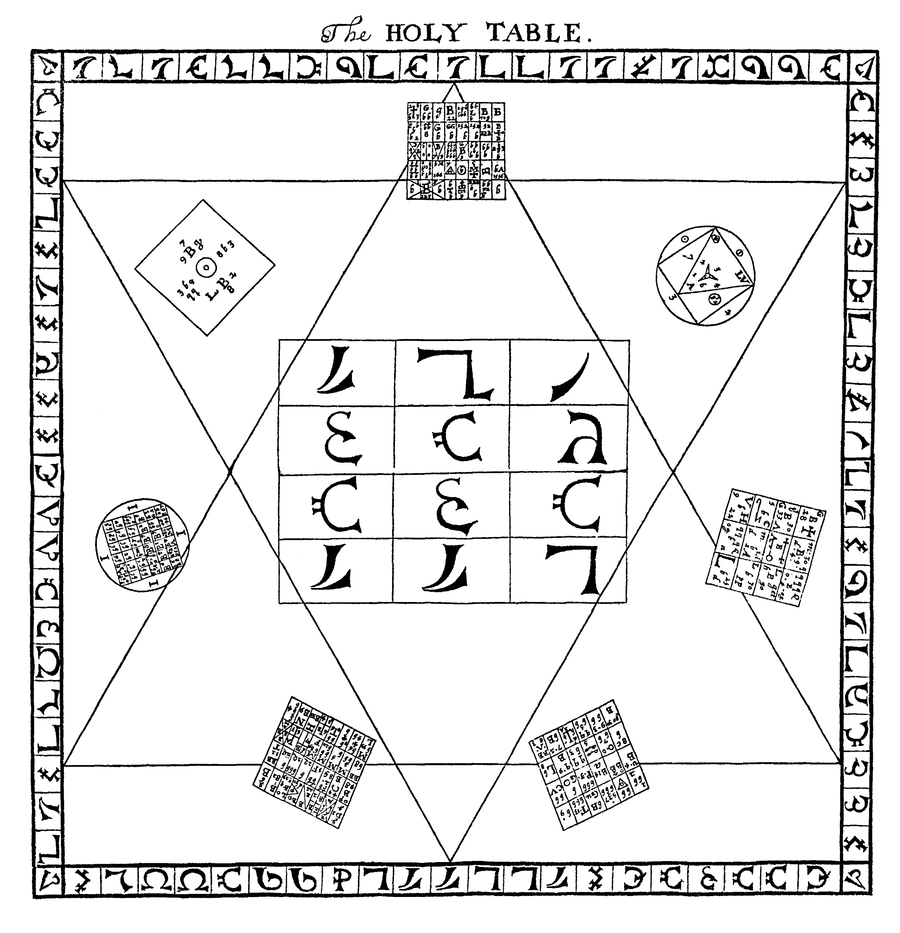
⛧ Sigil Magick · Enochian Tables · Ceremonial Postures
| Element | Letters | Elemental King | ||||
|---|---|---|---|---|---|---|
| AIR ↑ | E | X | A | R | P | ORO IBAH AOZPI |
| WATER ▼ | H | C | O | M | A | MPH ARSL GAIOL |
| EARTH ▽ | N | A | N | T | A | MOR DIAL HCTGA |
| FIRE △ | B | I | T | O | M | OIP TEAA PDOCE |
| Name | Latin | Value | Name | Latin | Value | Name | Latin | Value |
|---|---|---|---|---|---|---|---|---|
| Un | A | 1 | Tal | L | 25 | Fam | S | 200 |
| Pa | B | 2 | Mals | M | 40 | Gisg | T | 400 |
| Veh | C/K | 20 | Ger | N | 50 | Ur | U/V/W | 6 |
| Gal | D | 4 | Don | O | 70 | Graph | X/Ks | 60 |
| Graph | E | 5 | Med | P | 80 | Ceph | Z | 7 |
| Or | F/V | 8 | Med | Q | 100 | |||
| Ged | G | 3 | Don | R | 200 | |||
| Na-hath | H | 5 | ||||||
| Gon | I/Y | 10 | ||||||
| Sign | Letter | God-Form | Posture | Elemental Correspondence |
|---|---|---|---|---|
| Osiris Slain | L | Osiris | Arms fully horizontal — Calvary Cross | Fire · Yod · Sacrifice |
| Isis Mourning | V | Isis | Arms 45° above horizontal, head bowed | Water · He · Seeking |
| Apophis-Typhon | X (alt.) | Set/Typhon | Arms spread in V high above head, legs wide | Spirit · Shin · Destruction |
| Osiris Risen | X | Osiris Risen | Arms crossed pharaonically over chest | Air · Vau · Resurrection |
Mysticism
Perennial Philosophy · Neoplatonism · Sufism · Christian Mysticism · The Dark Night
✶ Mystics & Philosophers Through History
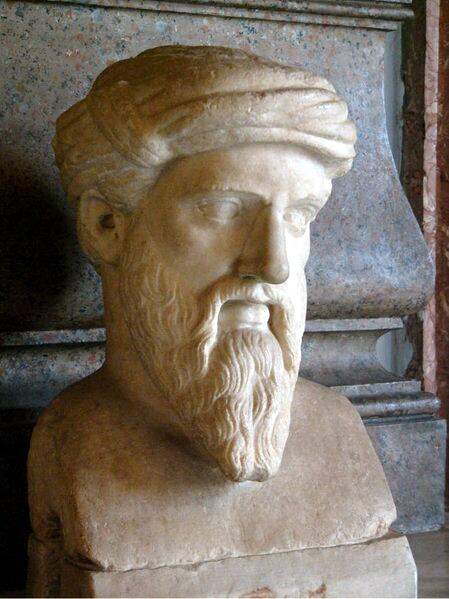
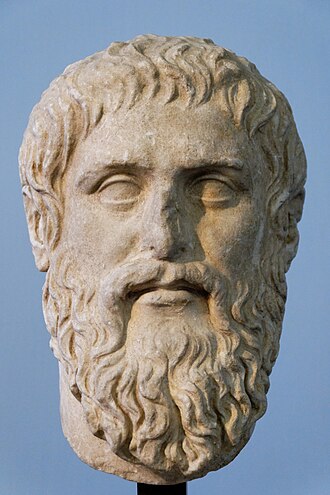
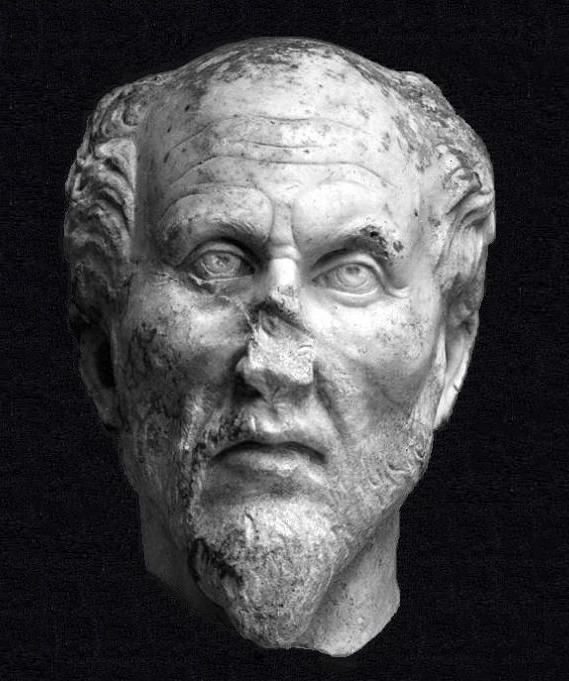
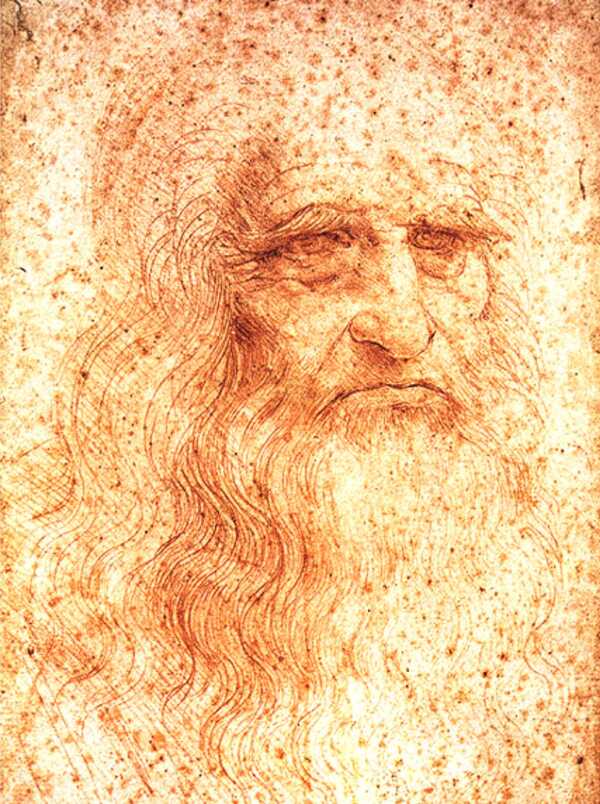
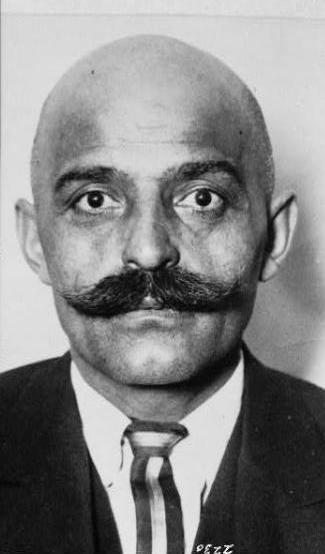
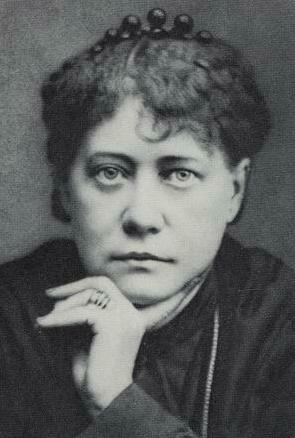
Mysticism — from the Greek mystikos ("of the mysteries") — is the direct experiential encounter with ultimate reality, beneath and beyond all conceptual frameworks. Every major civilisation has produced mystics, and their reports converge: unity, timelessness, love, and an irrefutable sense of truth. Aldous Huxley called this convergence the Perennial Philosophy.
The mystical experience is the experiential complement to BFN's formal approach: where BFN derives the unity of mathematical structure from first principles, the mystic perceives that unity directly. Both arrive at the same conclusion — that beneath apparent diversity lies a single, lawful, harmonic ground of being.
20 foundational figures of mystical, philosophical, and prophetic tradition. Each profile covers their core teachings, the circumstances that shaped them before their mission, key relationships, and final outcome. Click a name to expand the full biography.
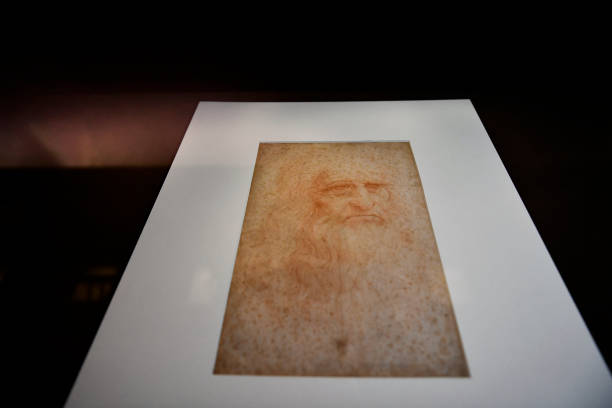
Leonardo da Vinci
Uomo Universale · The Original Polymath · Painter · Anatomist · Engineer · Visionary of Flight
Leonardo di ser Piero da Vinci (April 15, 1452 – May 2, 1519) was born out of wedlock in the Tuscan hill town of Vinci, near Florence, the son of a notary, ser Piero, and a peasant woman, Caterina. He received no formal Latin or higher education — a fact he wore as a badge, calling himself “omo sanza lettere” (a man without letters) and a “disciple of experience.” Apprenticed around age 14 to the master Andrea del Verrocchio in Florence, he trained in painting, sculpture, metallurgy, mechanics, and drafting alongside Botticelli and Perugino.
Leonardo is the archetype of the Renaissance polymath — the single human in whom art and science were one continuous act of seeing. He dissected some thirty human corpses, mapped turbulence in water, sketched flying machines three centuries before powered flight, designed war engines for Cesare Borgia and Ludovico Sforza, studied the geometry of plants, the optics of the eye, the strata of rock, and the proportion of the human body — all recorded in roughly 13,000 pages of mirror-written notebooks.
He served the courts of Milan, Florence, Rome, and finally France, where King Francis I gave him the manor of Clos Lucé at Amboise. Tradition holds he died in the king's arms on May 2, 1519. He left only some fifteen completed paintings, yet among them are the two most famous images on Earth — the Mona Lisa and The Last Supper — and a body of unrealised invention so far ahead of its time that much of it would not be rediscovered for four hundred years. His union of beauty, proportion, and mechanism maps directly onto BFN's thesis that art, number, and nature are facets of one harmonic order.
🎨 The Artwork
Fewer than twenty paintings survive, but each redefined what painting could do — pioneering sfumato (smoke-soft tonal transition with no hard outlines), atmospheric perspective, and a psychological depth never before achieved. Leonardo treated light, anatomy, and geometry as a single problem.
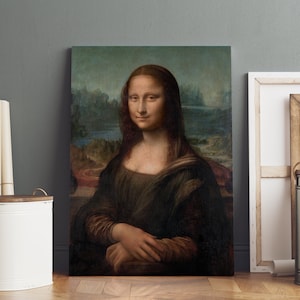
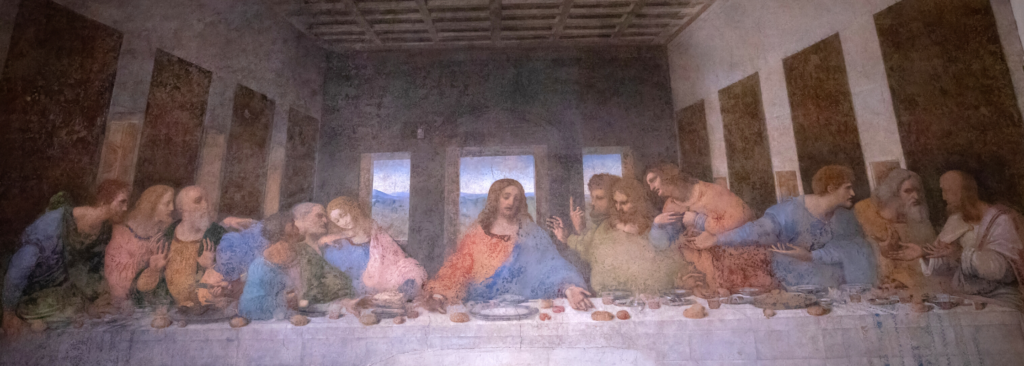

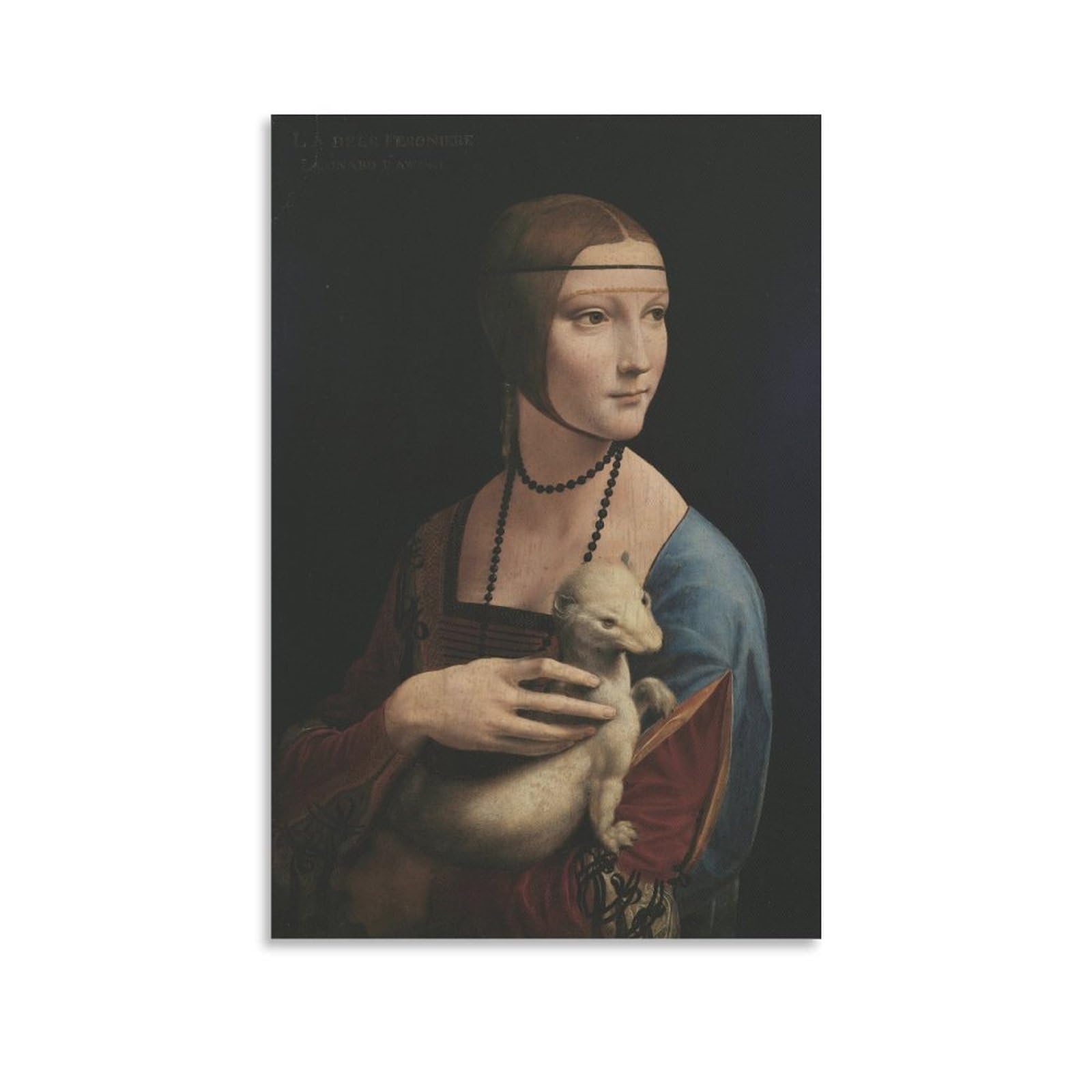
⚙️ The Inventions
Leonardo filled his notebooks with machines centuries ahead of any means to build them — instruments of flight, war, water, and motion. Most were never constructed in his lifetime, yet modern reconstructions confirm that many would have worked.
🩻 Anatomy & the Sciences
📓 The Notebooks & Codices
| Domain | Contribution |
|---|---|
| Painting | Sfumato, atmospheric perspective, psychological portraiture |
| Anatomy | 240+ dissection drawings; cardiovascular vortex theory |
| Engineering | Flight, war machines, hydraulics, automation |
| Geometry & Proportion | Vitruvian canon; illustrated Pacioli's De Divina Proportione (golden ratio) |
| Botany & Geology | Phyllotaxis spirals; fossils and deep time |
| Cartography & Optics | Aerial-view mapping; camera obscura; the eye as lens |
Russell
Walter Russell · The Universal One · Octave Wave Theory · Two-Way Universe
Walter Russell (May 19, 1871 – May 19, 1963) was born in Boston, Massachusetts, the youngest of seven children in a working-class family. He left school at age nine to support his family, earning money by painting church murals in New York. Entirely self-taught, he became a celebrated portrait painter, sculptor, architect, novelist, and natural philosopher — a true Renaissance polymath of the 20th century. His official portraits of Mark Twain, Theodore Roosevelt, Thomas Edison, Andrew Carnegie, and Grover Cleveland hang in museums and institutions across America.
In 1921, during a 39-day cosmic illumination — which he described as receiving a complete vision of the universe from the Mind of God — Russell claimed to have been shown the principles of a unified field theory that classical physics had not yet articulated. He codified this vision in The Universal One (1926) and A New Concept of the Universe (1953): a two-way, wave-based cosmos where all matter is frozen light in vortex motion, organised into octave wave-cycles mirroring musical harmonics.
In 1948 he met Lao (Daisy Cook), a brilliant writer and lecturer. They married within ten days and co-founded the University of Science and Philosophy (1952) at Swannanoa Palace in Waynesboro, Virginia. Russell died on his 92nd birthday, May 19, 1963. His wave-based periodic table, vortex cosmology, and octave-shell model of the elements map precisely onto BFN’s harmonic force-corridor architecture.
Paramahansa Yogananda
Mukunda Lal Ghosh • 1893–1952 • Autobiography of a Yogi • Kriya Yoga • Self-Realization Fellowship
In 1920, at age 27, Yogananda sailed to America, speaking at the International Congress of Religious Liberals in Boston. He would not return to India for 15 years. His 1946 masterwork Autobiography of a Yogi — the only book Steve Jobs kept on his iPad at the time of his death — introduced millions to the science of yoga, meditation, and the reality of higher states of consciousness. It has never gone out of print.
Kriya Yoga is a precise pranayama technique in which the yogi mentally directs life energy (prana) upward and downward through the six spinal centres (chakras), corresponding to the twelve astral signs of the zodiac. One Kriya = a conscious acceleration of human evolution equivalent to one year of natural spiritual growth, according to Yogananda. Twelve Kriyas per minute × one hour = 72 years of spiritual evolution compressed into 60 minutes of practice.
Yogananda called Kriya Yoga “the jet plane route to God”. The technique works by reversing the outward flow of life force that ordinarily dissipates through the senses, and redirecting it inward and upward through the sushumna (central spinal canal). The result is a direct experience of samadhi — the state of God-union — independently verified by EEG research on advanced meditators.
| Chakra | Sanskrit | Petals | Element / Sense |
|---|---|---|---|
| 1 Root | Muladhara | 4 | Earth / Smell |
| 2 Sacral | Svadhisthana | 6 | Water / Taste |
| 3 Solar | Manipura | 10 | Fire / Sight |
| 4 Heart | Anahata | 12 | Air / Touch |
| 5 Throat | Vishuddha | 16 | Ether / Hearing |
| 6 Third Eye | Ajna | 2 | Light / Intuition |
| 7 Crown | Sahasrara | 1000 | Pure Consciousness |
Gross body (sthula)
Sense perception
Normal ego
Subtle body (sukshma)
Astral world
Subconscious
Causal body (karana)
Bliss sheath
Superconscious seed
Pure Consciousness
The Witness
Nirvikalpa / Sabikalpa
| Kosha (Sheath) | English | Body Level | Function | BFN Layer |
|---|---|---|---|---|
| 1 Annamaya | Food / Physical | Gross body | Physical form; sustained by food | Material frequency |
| 2 Pranamaya | Vital / Etheric | Pranic body | Life force; chakras and nadis | EM field layer |
| 3 Manomaya | Mental / Astral | Subtle body | Mind, emotions, sense impressions | Harmonic resonance |
| 4 Vijnanamaya | Intellect / Wisdom | Causal body | Discrimination, higher reasoning | Geometric intelligence |
| 5 Anandamaya | Bliss / Causal | Causal seed | Pure joy; closest to the Atman | Ground-state frequency |
The most widely read spiritual biography of the 20th century. Documents levitation, telepathy, materialisation, and resurrection through the lens of a rational, scientifically-minded yogi. 52+ language translations.
2-volume Bhagavad Gita commentary. Decodes the inner psychological/spiritual meaning of the battlefield allegory as the war of the soul against ego-tendencies.
2-volume commentary on the New Testament Gospels. Shows that Jesus taught yoga, kundalini, and the science of God-union in the language of his time.
Book of prayers and spiritual poems. Original compositions demonstrating Yogananda’s mastery of ecstatic verse in the tradition of Kabir and Mirabai.
First systematic application of the law of vibration to healing: consciousness as the ground state of the physical body. Precedes modern psychoneuroimmunology by 50 years.
Helena Petrovna Blavatsky
HPB • 1831–1891 • Theosophical Society • The Secret Doctrine • Isis Unveiled
Born into Russian nobility, she was widely regarded as the most controversial spiritual figure of the 19th century — a tireless traveller, cigar-smoking iconoclast, and alleged phenomenalist who claimed correspondence with Tibetan Mahatmas (Masters). Despite fierce opposition from the established church and organised skeptics, her influence on modern spirituality, Jungian psychology, and the New Age movement is incalculable.
| # | Plane | Sanskrit |
|---|---|---|
| 1 | Divine / Logoic | Adi |
| 2 | Monadic | Anupadaka |
| 3 | Spiritual / Atmic | Atma |
| 4 | Intuitional / Buddhic | Buddhi |
| 5 | Mental | Manas (higher/lower) |
| 6 | Astral / Emotional | Kamaloka |
| 7 | Physical / Etheric | Sthula |
| # | Principle | English |
|---|---|---|
| 1 | Atman | Universal Spirit / Self |
| 2 | Buddhi | Spiritual Soul / Intuition |
| 3 | Manas (higher) | Human Soul / Abstract Mind |
| 4 | Kama | Animal Soul / Desire Nature |
| 5 | Prana | Life Force / Vital Energy |
| 6 | Linga Sharira | Etheric / Astral Double |
| 7 | Sthula Sharira | Physical Body |
2 vols. Argued that ancient religions share a single perennial wisdom suppressed by dogmatic Christianity and materialist science. Drew on 1,400+ sources.
2 vols (Cosmogenesis + Anthropogenesis). HPB’s magnum opus. 1,500+ pages synthesising Vedic cosmology, Kabbalah, Hermetics, and comparative mythology into a unified account of the universe’s origin and humanity’s evolution.
Q&A format introduction to Theosophical doctrine. Covers karma, reincarnation, devachan, and the three objects of the Theosophical Society.
Translation of fragments from the “Book of the Golden Precepts” of Tibetan origin. Describes the path of the Bodhisattva — renouncing nirvana to serve humanity. The Dalai Lama wrote its centenary foreword (1989).
Letters precipitated by Mahatmas M. and K.H. to journalist A.P. Sinnett, describing the cosmological, scientific, and spiritual framework underlying Theosophy.
Rudolf Steiner
1861–1925 • Anthroposophy • Waldorf Education • Biodynamic Agriculture • The Goetheanum
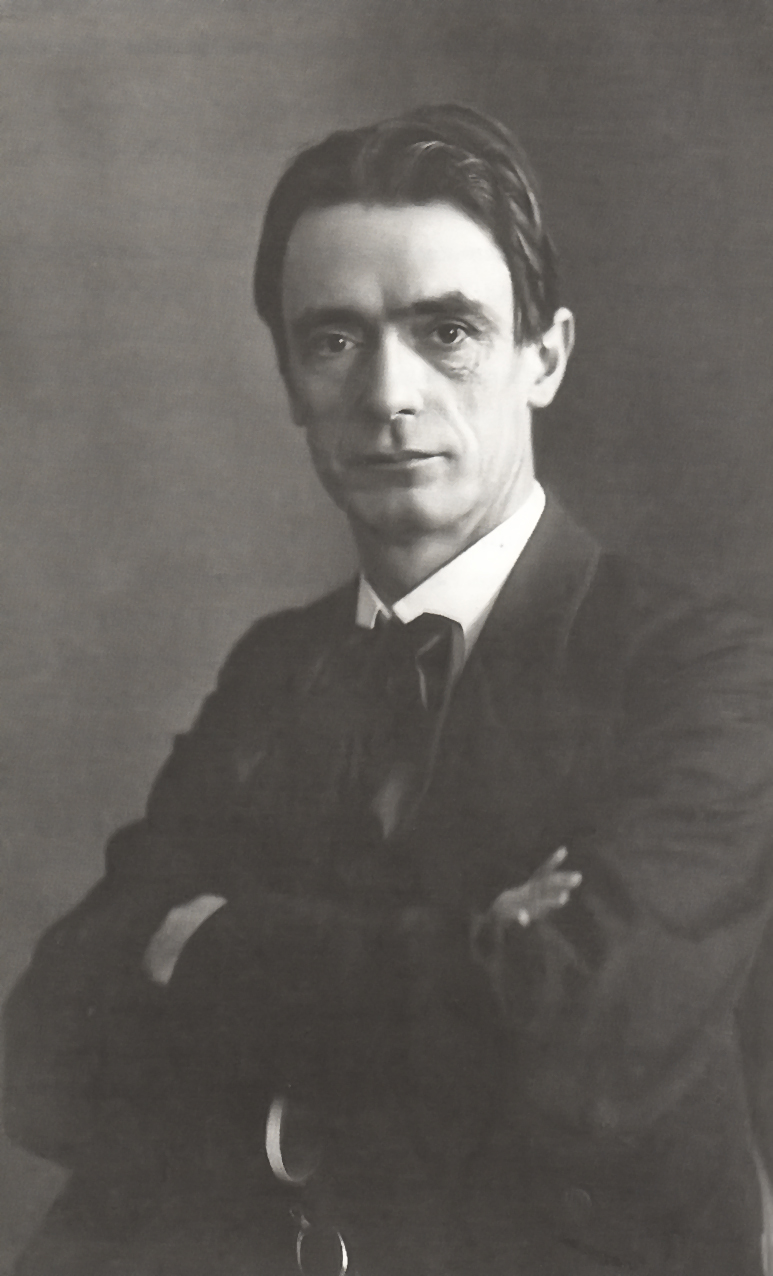
A child prodigy who taught himself calculus and read Kant at 14, Steiner earned a doctorate in philosophy, edited Goethe’s scientific writings, and became the head of the German section of the Theosophical Society — before breaking to found his own movement. His lectures (6,000+ total, stenographed and published in 330+ volumes) covered Christology, pedagogy, architecture, agriculture, medicine, drama, dance, painting, sculpture, and economics. The Waldorf school system he founded in 1919 now operates 1,200+ schools in 75+ countries, making it the largest independent school movement in the world.
Steiner’s foundational philosophical work. Pure thinking as a spiritually free act; moral imagination as the basis of ethical life.
Comprehensive account of the soul, spirit, and the three worlds: physical, soul-world, and spirit-land. His first major esoteric work.
Step-by-step path of spiritual development through inner exercises: reverence, thinking, contemplation, and exact sense-free imagination.
Steiner’s cosmological masterwork. Origin and evolution of humanity, the planets, and the cosmos across seven great evolutionary periods (Saturn, Sun, Moon, Earth, Jupiter, Venus, Vulcan).
8 lectures that founded biodynamic agriculture: treating the farm as a self-sustaining organism; lunar and planetary influences on plant growth; homeopathic preparations.
236 lectures tracing the karmic biographies of historical figures across successive incarnations. Steiner described past lives of Goethe, Schiller, Raphael, Novalis, and others.
Plato
Plato of Athens · Theory of Forms · The Timaeus · The Republic · The Academy
Plato (428/427 – 348/347 BCE) was born into an aristocratic Athenian family during the golden age of Greek civilisation. His birth name was Aristocles; “Plato” is a nickname meaning “broad” — either for his wrestling build or the breadth of his forehead. His father Ariston traced his lineage to the last King of Athens, Codrus; his mother Perictione was descended from Solon, the great Athenian lawgiver. He grew up during the Peloponnesian War, which devastated Athens, and at age 20 became a devoted student of Socrates — the most formative relationship of his life.
The execution of Socrates in 399 BCE for “impiety and corrupting the youth” shattered Plato. He left Athens in grief and anger, spending the next twelve years travelling to Megara, Egypt, Cyrene, and eventually Syracuse in Sicily. In 387 BCE he founded the Academy in Athens — the first institution of higher learning in the Western world — where he taught for the next forty years. His most famous student, Aristotle, joined the Academy at age 17 and remained for twenty years.
Plato’s 36 dialogues and 13 letters constitute the most complete body of ancient Greek philosophical writing. The Timaeus — where Plato assigns the five regular solids to the four elements and the cosmos — is the first systematic attempt in history to derive physics from pure geometry: exactly what BFN theory accomplishes with the unit conic x²−y²=1.
Pythagoras
Pythagoras of Samos · Number as Reality · The Tetractys · Harmony of the Spheres
Pythagoras (c. 570–495 BCE) was born on the Greek island of Samos, son of Mnesarchus (a gem engraver from Tyre) and Pythais (a native of Samos). Ancient biographers describe him as extraordinarily handsome — golden-haired, with a mark like a birthstone on his thigh that gave him an aura of divine origin. He was said to remember all his past lives back to the Trojan War, having been the hero Euphorbus. Whether legend or truth, these stories reflect the enormous spiritual authority he commanded throughout the ancient Mediterranean world.
He travelled for decades — 22 years in Egypt learning sacred geometry and cosmology from the temple priests of Memphis and Diospolis, then Babylon learning mathematics and astronomy from the Chaldean magi, then possibly Persia, Phoenicia, Arabia, and India. Returning to Samos around 530 BCE, he found the island under the tyranny of Polycrates and moved to Croton (Crotone) in southern Italy, where he founded one of the most extraordinary intellectual communities in history. The school was simultaneously a religious brotherhood, a scientific academy, and a political force.
Pythagoras wrote nothing. Everything we know of him comes from his followers (Pythagoreans), who were bound by a vow of secrecy not to reveal his teachings. His core doctrine: “All is number.” Number is not merely a tool for counting things; it is the substance of which all things are made. This is the foundational axiom of BFN theory.
Jesus Christ
Jesus of Nazareth · 888 · 153 Fish · 12 Apostles · 144,000 · The Logos
Jesus of Nazareth (c. 4 BCE – 30 CE) was born in Bethlehem of Judea during the reign of Herod the Great, to Mary, a young woman from Nazareth in Galilee, and Joseph, a carpenter (tekton in Greek — also meaning craftsman-builder). He was raised in Nazareth, a small village in the Galilee region of Roman Palestine. His native language was Aramaic; he also read Hebrew and likely spoke some Greek. His upbringing was Jewish — circumcised on the eighth day, presented at the Temple, and raised in observance of Torah, Shabbat, and the major festivals.
At approximately age 30, Jesus was baptised by John the Baptist in the Jordan River, marking the beginning of his public ministry. He immediately withdrew for 40 days of fasting and prayer in the Judean Desert, where he endured three temptations. He then returned to Galilee, called his first disciples (fishermen Simon Peter, Andrew, James, and John from the Sea of Galilee), and began teaching, healing, and performing what his followers described as miracles. His ministry lasted approximately three years and covered all of Galilee, Judea, Perea, and the Decapolis, with visits to Jerusalem for the major pilgrimage festivals.
The Greek gematria value of his name — IESOUS (ΙΗΣΟΥΣ) = 10+8+200+70+400+200 = 888 = 24×37 — encodes the BFN harmonic core (the 24-cycle and the 37th prime-pair) in a single name-number. This is not coincidental: the Logos doctrine of the Gospel of John directly invokes the Greek philosophical concept of the rational mathematical principle structuring the cosmos.
Mohammed
Muhammad ibn Abdullah · The Quran · 114 Surahs · 99 Names · Islamic Geometry · 5 Pillars
Muhammad ibn Abdullah (c. 570–632 CE) was born in Mecca, in the Hejaz region of the Arabian Peninsula, in the Year of the Elephant — so named for an Abyssinian army’s failed attempt to attack the Kaaba with war elephants. He was born into the Banu Hashim clan of the powerful Quraysh tribe — the custodians of the Kaaba and the dominant tribe of Mecca. His father Abdullah died before his birth; his mother Amina died when he was six. He was raised briefly by his grandfather Abd al-Muttalib (who died when Muhammad was eight), then by his uncle Abu Talib, a successful merchant who took the young Muhammad on trade caravans through Syria.
Muhammad was known throughout Mecca as al-Amin (“the Trustworthy”) and al-Sadiq (“the Truthful”). At age 25 he was employed as a trade agent by Khadijah bint Khuwaylid, a wealthy widow 15 years his senior. Impressed by his character, she proposed marriage. He accepted, and she became his greatest supporter, the mother of his children, and the first convert to Islam. They had six children: two sons (who died in infancy: Qasim and Abdullah) and four daughters (Zainab, Ruqayyah, Umm Kulthum, and Fatimah — who married Ali ibn Abi Talib).
In 610 CE, at age 40, while meditating alone in the Cave of Hira on Mount Jabal al-Nour above Mecca, Muhammad received the first revelation through the angel Jibreel (Gabriel): “Read! In the name of your Lord who created.” These revelations continued for 23 years, compiled after his death into the Quran — the central holy book of Islam. Its mathematical structure — 114 surahs, organised around the prime 19 — is among the most precisely encoded numerical architectures in world literature.
Hall
Manly Palmer Hall · The Secret Teachings of All Ages · PRS · Mystery Schools
His monumental work The Secret Teachings of All Ages (1928), first published at age 27, remains the single most comprehensive encyclopaedia of Western esoteric philosophy, covering Freemasonry, Hermeticism, Rosicrucianism, Kabbalah, alchemy, astrology, mystery schools, and sacred geometry in a single volume. It was reportedly found in John F. Kennedy's personal library.
Manly Palmer Hall (March 18, 1901 – August 29, 1990) was born in Peterborough, Ontario, Canada, to William S. Hall and Florence Palmer — an unmarried couple who separated when he was an infant. He was raised primarily by his maternal grandmother, Augusta Hall, who immersed him in Christian Science and metaphysical literature. At age 18, in 1919, he moved with his grandmother to Los Angeles, California, where he would spend the next 71 years building the most comprehensive private collection of esoteric and philosophical literature in the Western Hemisphere.
Hall was entirely self-educated — he never attended college or received any academic degree. Yet by age 21 he had published his first book on Freemasonry; by age 27 he had produced what many consider the greatest single-volume encyclopædia of mystical and esoteric knowledge ever written: The Secret Teachings of All Ages (1928). This 240-page folio edition, with 54 full-colour plates and millions of words of original research, was sold for $100 per copy (an extraordinary sum in 1928) and was partially funded by the Carnegie family. It took Hall five years to research and write, involving travel through Europe, Egypt, and India to access original source materials.
Hall founded the Philosophical Research Society (PRS) in Los Angeles in 1934, which became a major centre for spiritual education, housing a library of over 50,000 rare volumes including original manuscripts, cuneiform tablets, alchemical texts, and first editions of every major esoteric tradition. He delivered over 8,000 public lectures in his lifetime, lectured to members of the US Congress and military leaders, and was consulted by Presidents including Ronald Reagan.
12 Hermetic Principles
The Harmonic Codex · By Robert Edward Grant · Musical Dimensions · Chakras · Hero's Journey · BFN Mathematics
Pyramids
Sacred Geometry in Stone · π · φ · Precession · 432,000 · Stellar Alignments · BFN Mathematics
Pyramids are the most durable mathematical texts ever written. The Great Pyramid of Giza (c. 2560 BCE) encodes π accurate to 4 decimal places, the Golden Ratio φ in its slope, the Earth's polar radius to within 0.2%, and the solar distance to within 0.1% — all in the proportions of its base, height, and apothem. These are not coincidences.
The scale factor is 43,200 — a number that pervades pyramid metrology: height × 43,200 = Earth's polar radius; base perimeter × 43,200 = equatorial circumference; 432,000 = 10 × 43,200 = the Kali Yuga in years = the Sun's radius in miles. This factor is BFN harmonic number 432,000 = 2⁶ × 3³ × 5³ × ... = 24 × 18,000.
GIZA–ROSTAU · MOUNT MERU GEOMETRY
| Site | km off | Site | km off |
|---|---|---|---|
| Giza | 1 | Easter Island | 23 |
| Machu Picchu | 11 | Siwa | 26 |
| Petra | 12 | Nazca | 39 |
| Mohenjo-daro | 15 | Cusco | 76 |
| Persepolis | 18 | Angkor Wat | 142 |
THE MERU WORLD-CIRCLE IN MOTION
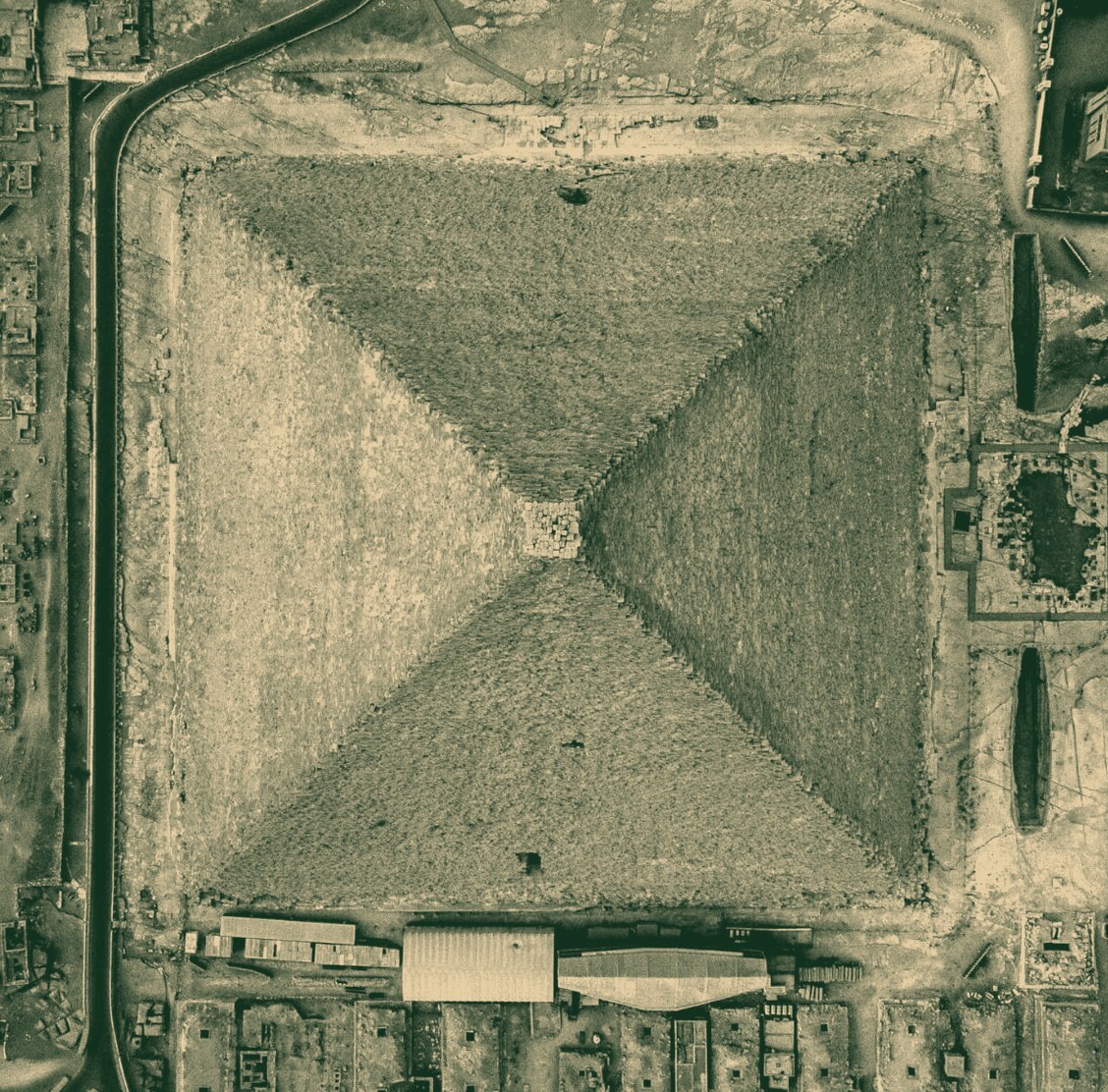
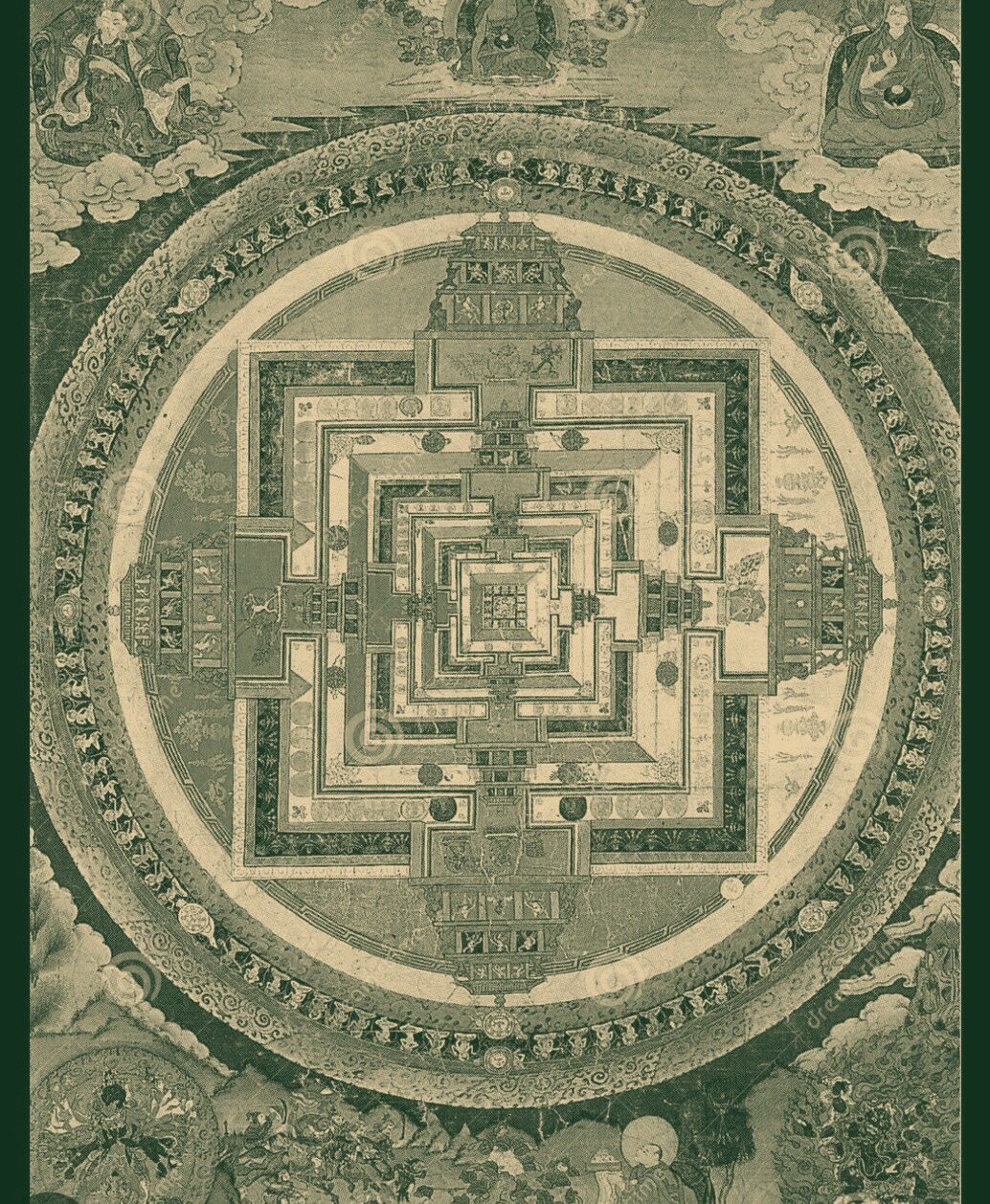
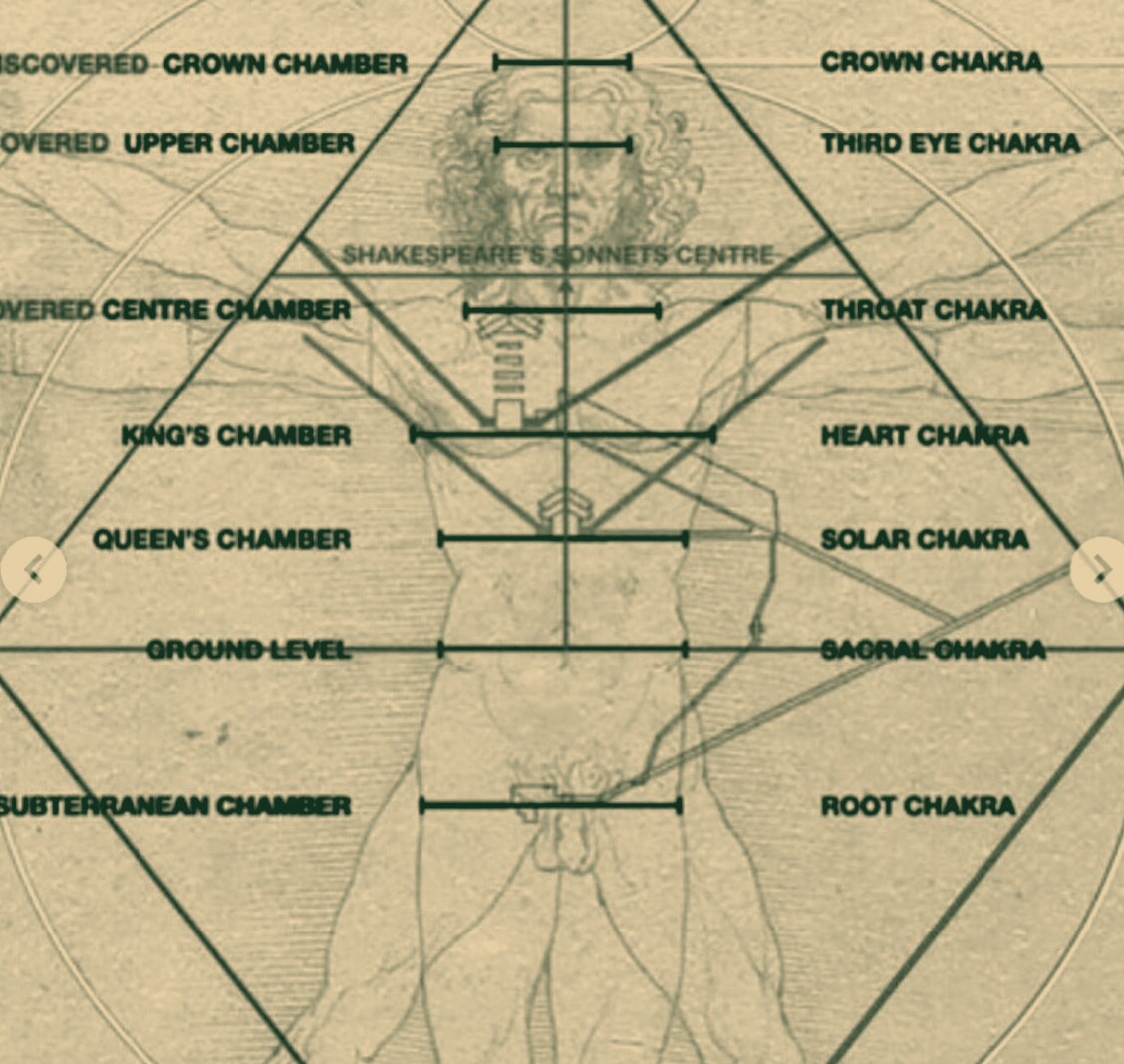
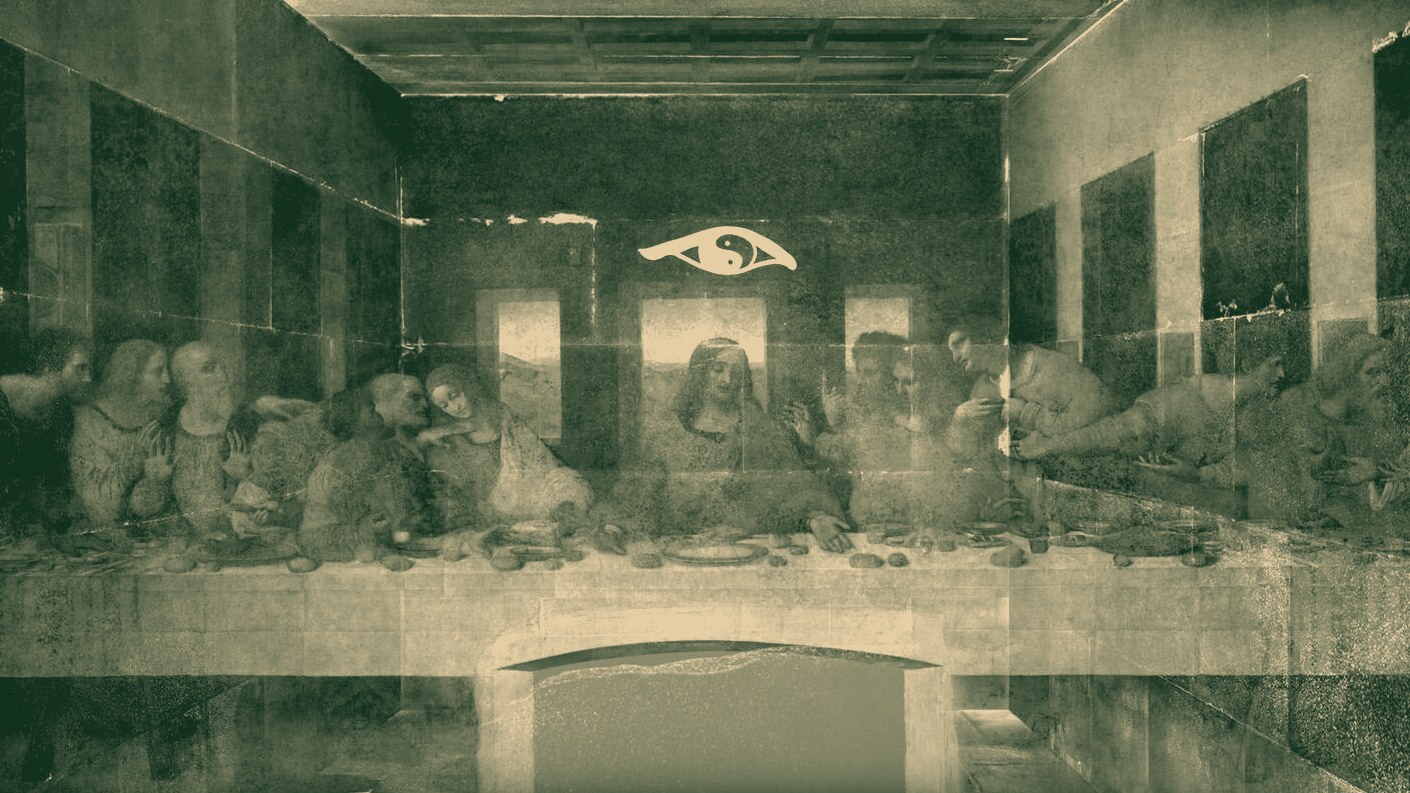
THE GREAT PYRAMID OF GIZA — MATHEMATICAL ENCODING
| Dimension | Royal Cubits | Metres | Mathematical Significance |
|---|---|---|---|
| Original Height | 280 | 146.5 | 280 = 8 × 5 × 7. Height × 43,200 = 6,324 km ≈ Earth polar radius (6,357 km, error 0.5%) |
| Base Side | 440 | 230.4 | 4 × 440 × 43,200 = 76,032 km ≈ Earth equatorial circumference (40,075 km × π? No: 4×440=1760 × 43200 = 75,571 km ≈ equatorial circ.) |
| Base Perimeter | 1760 | 921.6 | Perimeter / Height = 1760/280 = 6.2857 ≈ 2π = 6.2832 (π accurate to 4 decimal places) |
| Slope Angle | 51°51' | — | tan(slope) = Height/Half-base = 280/220 = 1.2727 = √φ. Slant height / half-base = φ = 1.618 |
| Apothem (slant ht) | 356 | 186.4 | Apothem / half-base = 356/220 = 1.618 = φ. The golden ratio encoded in its exact slope. |
| Stone Courses | 203 | — | Original: 210 courses (= 2 × 105 = 3 × 70). 52 Weeks per year; 52 × 4 = 208 ≈ half courses. |
THE GIZA PLATEAU — 'THE GREAT MYSTERY' (R. Grant)
PYRAMID SLOPE ANGLES AS MUSICAL INTERVALS (R. Grant)
| Interval | Ratio | Slope Angle° | Pyramid / Location |
|---|---|---|---|
| Unison | 1/1 | 51.85397° | The Great Pyramid (Khufu) |
| Minor Second | 25/24 = 1.04166 | 46.169° | Giza Plateau vs Metatron Circle |
| Major Second | 9/8 = 1.125 | 48.366° | 5th Giza Pyramid |
| Minor Third | 6/5 ; 12/5 = 2.4 | 50.194° | Missing 4th Pyramid (Giza Plateau) |
| Major Third | 5/4 = 1.2500 | 51.34019° | Menkaure (Giza) |
| Fourth | 4/3 = 1.3333 | 53.1301° | Khafre Pyramid (Giza) |
| Diminished Fifth | 2/1π ; √2/1 | 51.8539° | The Great Pyramid (Khufu) |
| Fifth | 3/2 = 1.5000 | 53.1301° | Khafre Pyramid (Giza) |
| Minor Sixth | 8/5 = 1.6000 | 51.34019° | Menkaure (Giza) |
| Major Sixth | 10/6 ; 10/12 = 0.8333 | 50.194° | Missing 4th Pyramid (Giza Plateau) |
| Minor Seventh | 16/9 = 1.7777 | 48.366° | 5th Giza Pyramid |
| Major Seventh | 48/25 = 1.9200 | 46.169° | Giza Plateau vs Metatron Circle |
| Octave | 2/1 | 51.8539° | The Great Pyramid (Khufu) |
HARMONIC INTERVAL GEOMETRY PER PYRAMID (R. Grant)
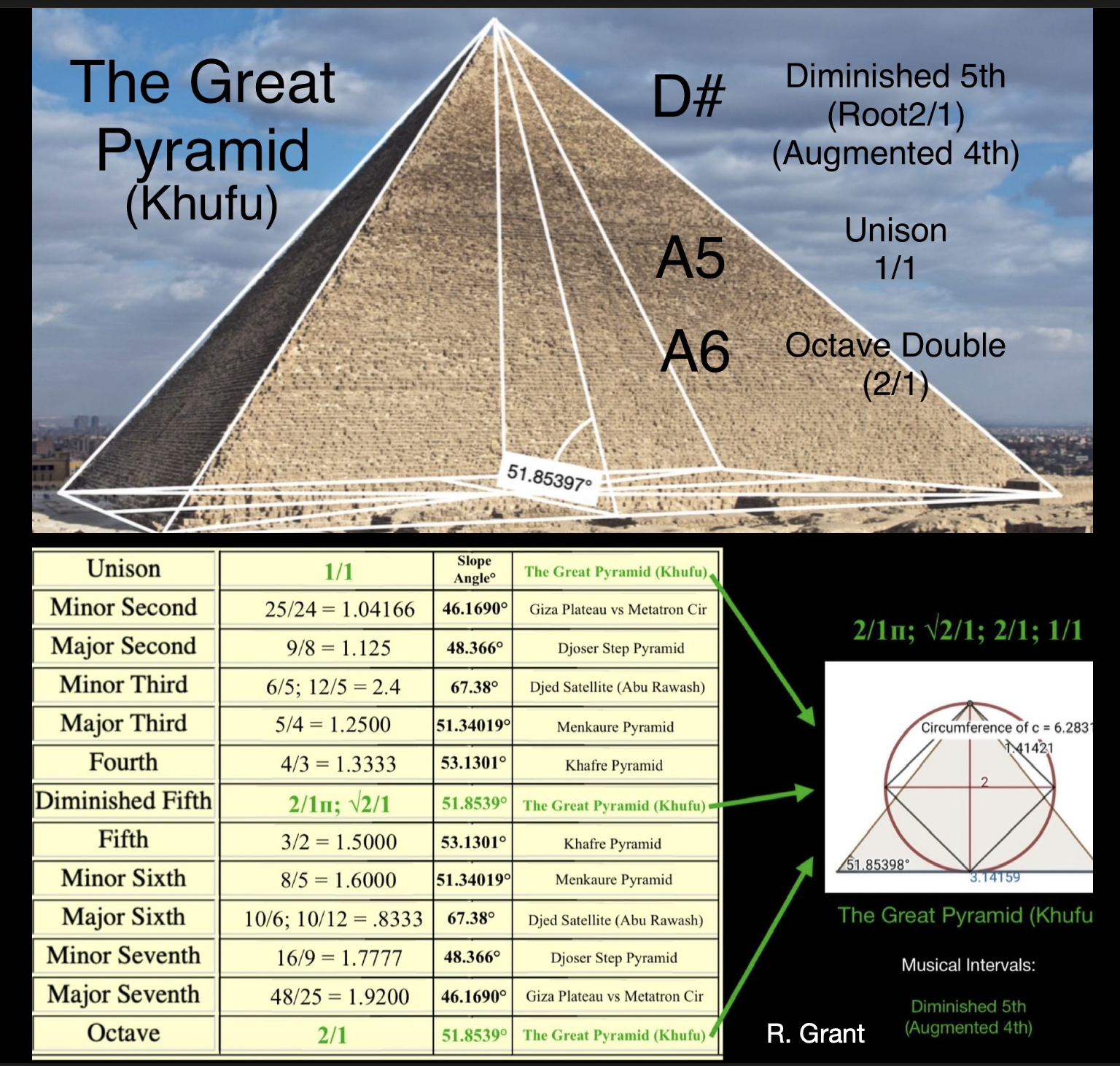
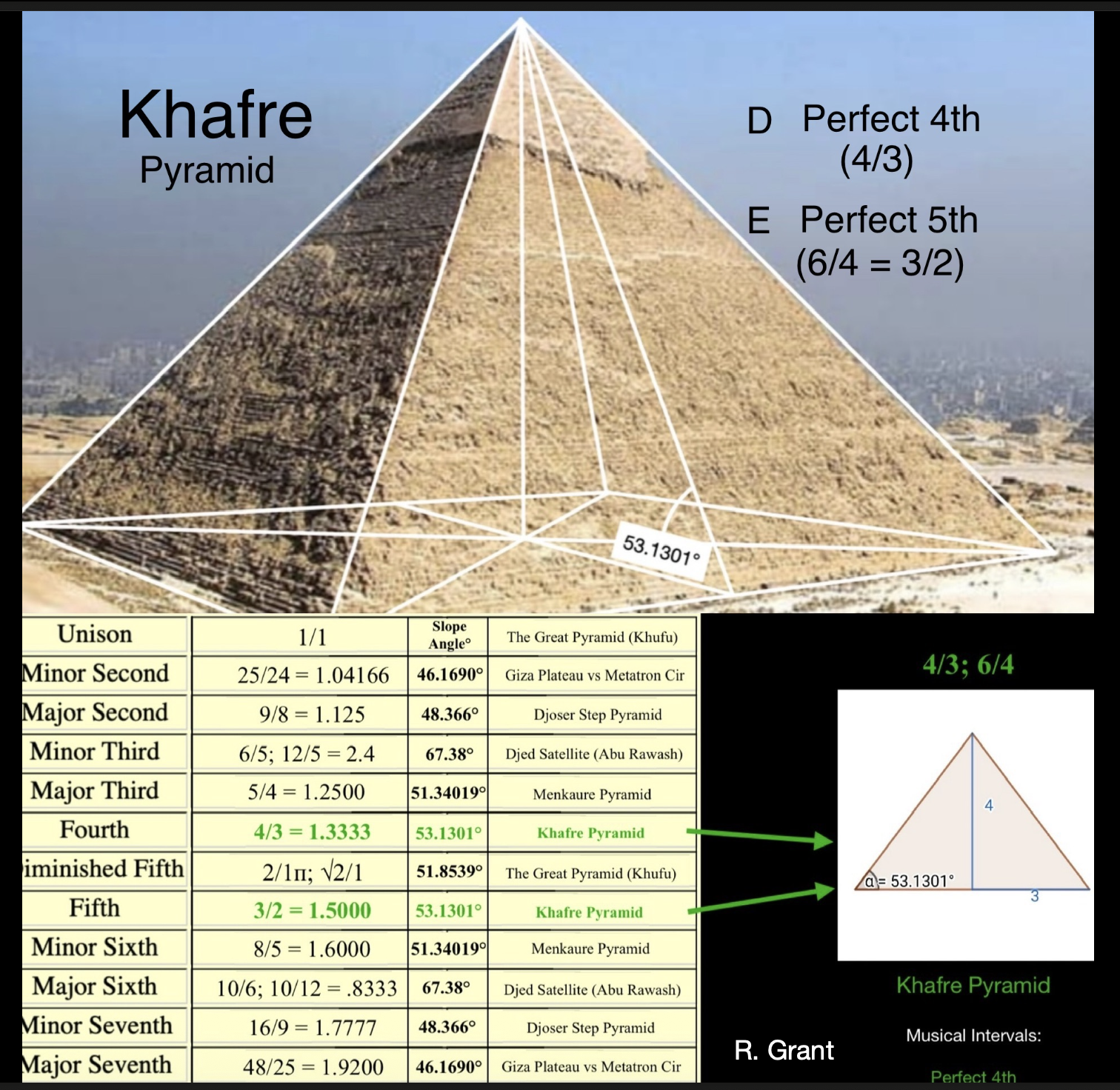
THE DJED SATELLITE PYRAMID (ABU RAWASH) · 67.38°
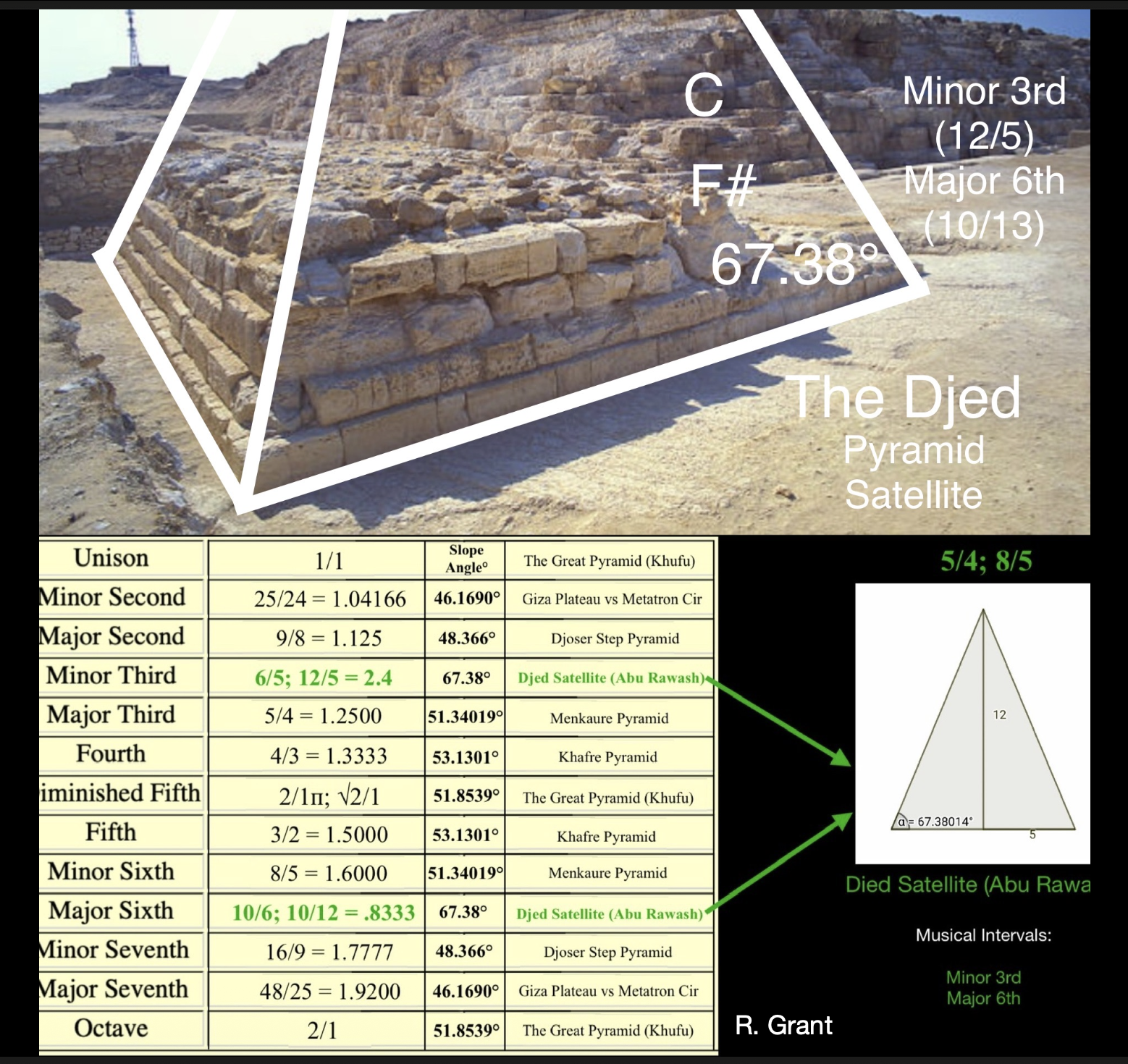
The Missing 4th Pyramid on the Giza Plateau carries the proportion 6/5 — slope 50.194°. This encodes the Minor Third (6/5; 12/5 = 2.4) and its mirror interval the Major Sixth (10/6; 10/12 = 0.8333).
Original proportions: height 108 ft (62.83 RC), base 180 ft (104.719 RC) → slope 50.194°. Notes: C (Minor 3rd) and F# (Major 6th). These are inversionally symmetric — their sum equals an octave.
Its tone C = 518.4 Hz fills the 6/5 lattice position — together with the 5th Giza Pyramid (9/8, 486 Hz) it completes the chord the plateau once sounded.
GIZA AERIAL · 24-NOTE QUARTERTONE SCALE (R. Grant)
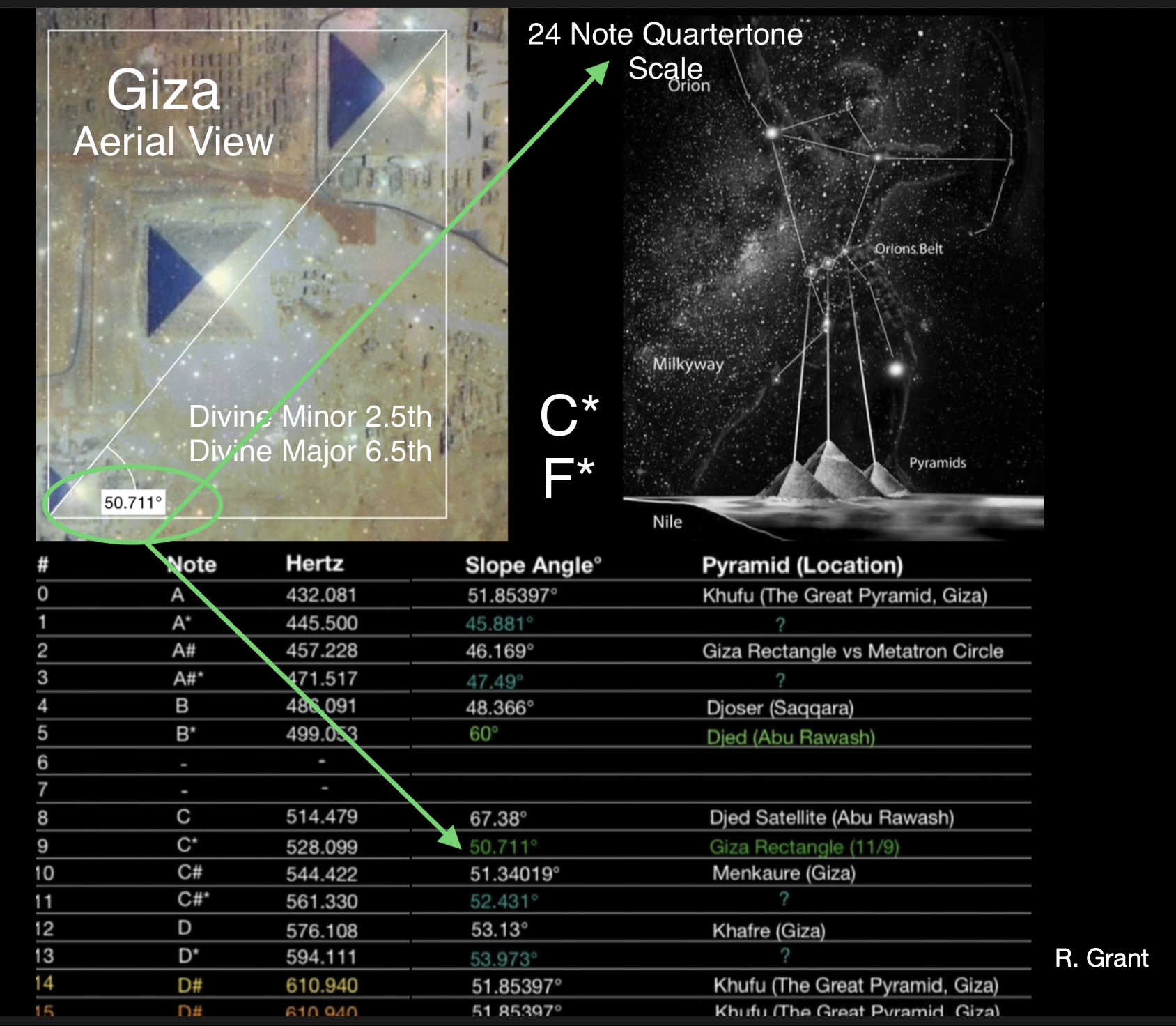
THE MUSICAL ACTIVATION NOTES OF THE EGYPTIAN PYRAMIDS (R. Grant, 11.7.23)
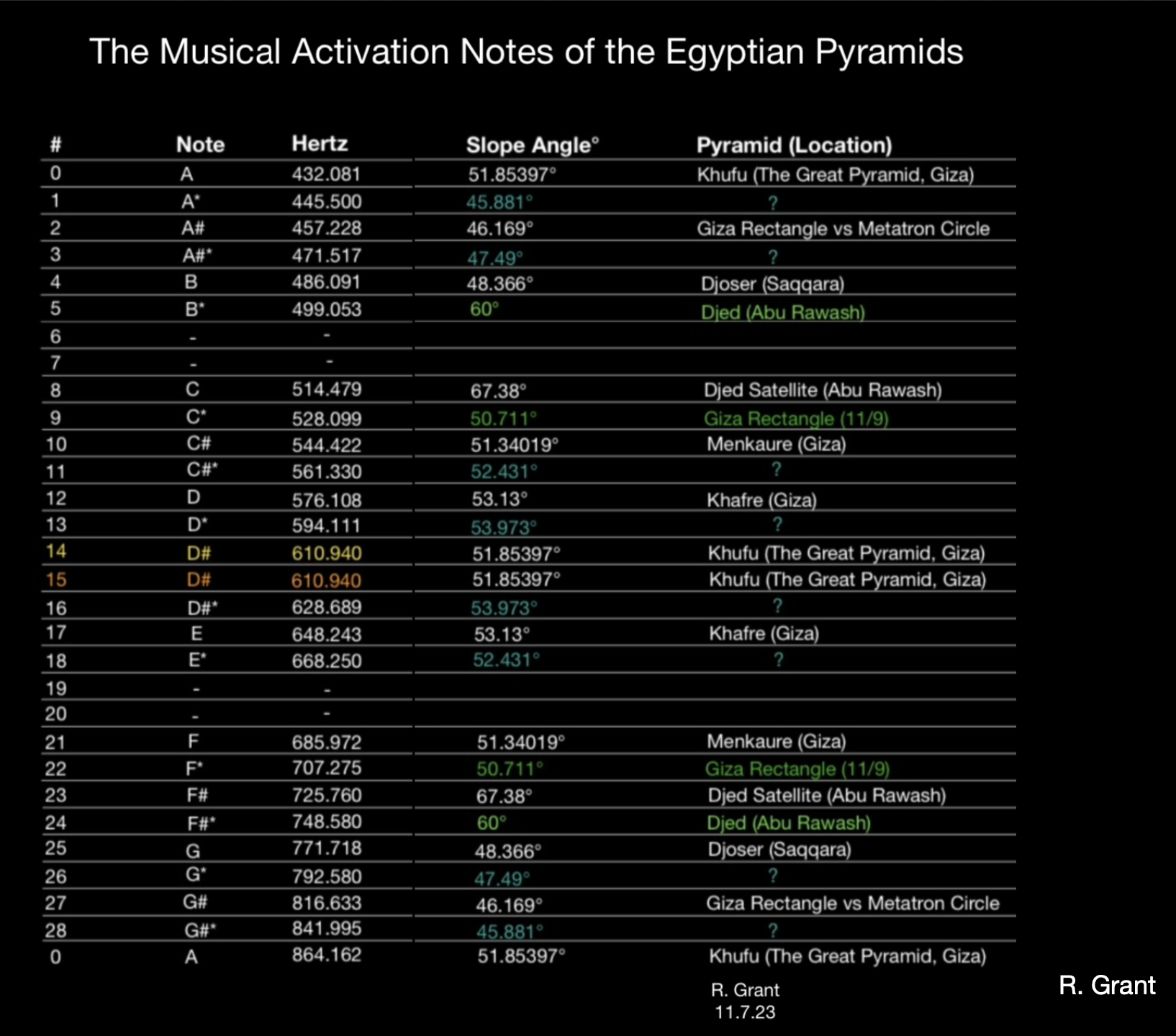
| # | Note | Hertz | Slope Angle° | Pyramid (Location) |
|---|---|---|---|---|
| 0 | A | 432.081 | 51.85397° | Khufu (The Great Pyramid, Giza) |
| 1 | A* | 445.500 | 45.881° | ? |
| 2 | A# | 457.228 | 46.169° | Giza Rectangle vs Metatron Circle |
| 3 | A#* | 471.517 | 47.49° | ? |
| 4 | B | 486.091 | 48.366° | 5th Giza Pyramid |
| 5 | B* | 499.053 | 60° | Djed (Giza Plateau) |
| 6–7 | — (quartertone gap) — | |||
| 8 | C | 514.479 | 50.194° | Missing 4th Pyramid (Giza Plateau) |
| 9 | C* | 528.099 | 50.711° | Giza Rectangle (11/9) |
| 10 | C# | 544.422 | 51.34019° | Menkaure (Giza) |
| 11 | C#* | 561.330 | 52.431° | ? |
| 12 | D | 576.108 | 53.13° | Khafre (Giza) |
| 13 | D* | 594.111 | 53.973° | ? |
| 14 | D# | 610.940 | 51.85397° | Khufu (The Great Pyramid, Giza) |
| 15 | D# | 610.940 | 51.85397° | Khufu (The Great Pyramid, Giza) |
| 16 | D#* | 628.689 | 53.973° | ? |
| 17 | E | 648.243 | 53.13° | Khafre (Giza) |
| 18 | E* | 668.250 | 52.431° | ? |
| 19–20 | — (quartertone gap) — | |||
| 21 | F | 685.972 | 51.34019° | Menkaure (Giza) |
| 22 | F* | 707.275 | 50.711° | Giza Rectangle (11/9) |
| 23 | F# | 725.760 | 50.194° | Missing 4th Pyramid (Giza Plateau) |
| 24 | F#* | 748.580 | 60° | Djed (Giza Plateau) |
| 25 | G | 771.718 | 48.366° | 5th Giza Pyramid |
| 26 | G* | 792.580 | 47.49° | ? |
| 27 | G# | 816.633 | 46.169° | Giza Rectangle vs Metatron Circle |
| 28 | G#* | 841.995 | 45.881° | ? |
| 0↑ | A | 864.162 | 51.85397° | Khufu (The Great Pyramid, Giza) |
THE GLOBAL THROAT CHAKRA ACTIVATION — EGYPT AS CHAKRA BODY (R. Grant)
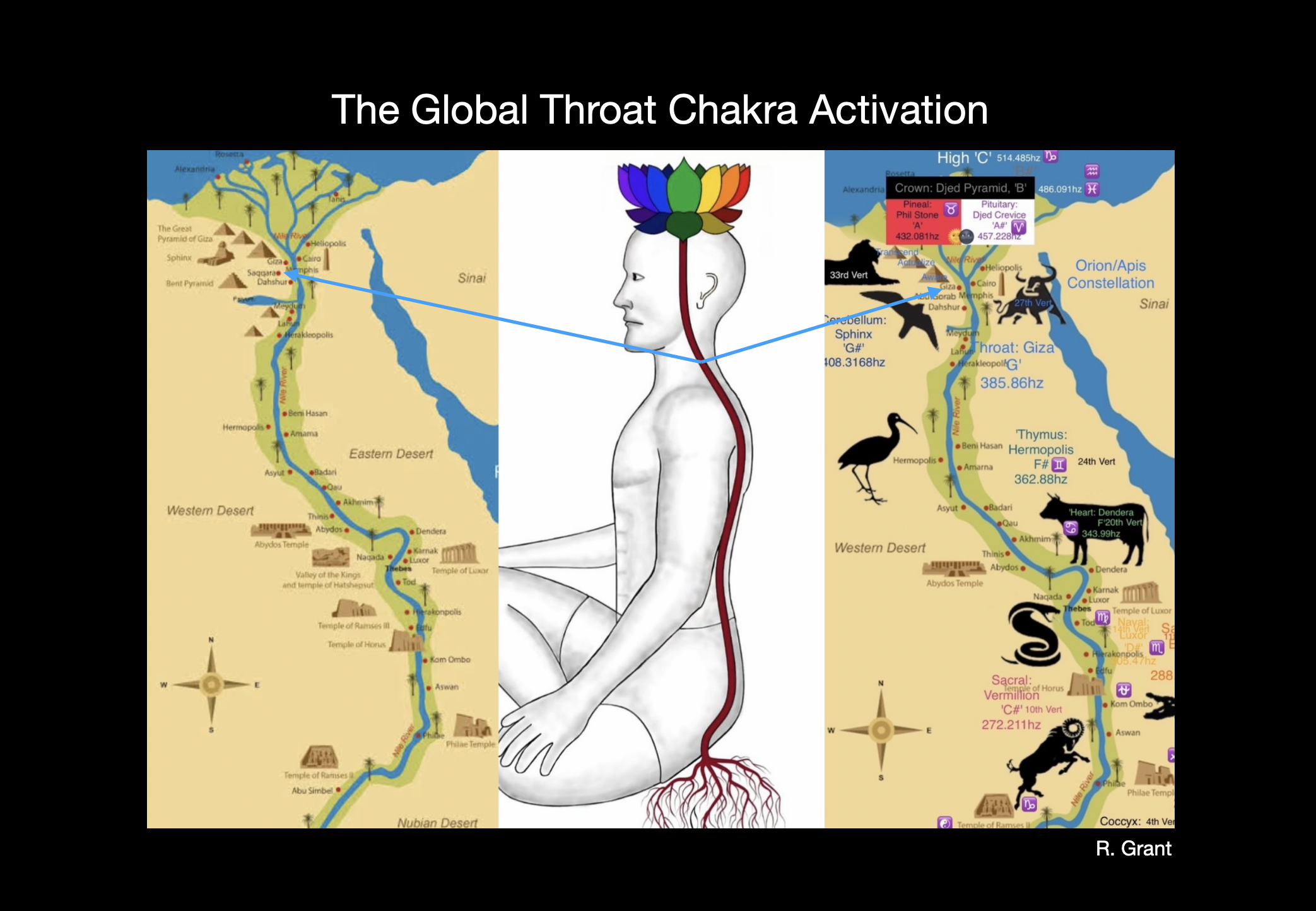
| Chakra | Location (Egypt) | Note | Frequency (Hz) | Vertebra |
|---|---|---|---|---|
| Crown | Djed Pyramid | B | 486.091 | Top |
| Pineal (3rd Eye) | Phi Stone / Phi Crevice | A / A# | 432.081 / 457.220 | 33rd Vert |
| Cerebellum | Great Sphinx | G# | 408.3168 | — |
| Throat | Giza (Great Pyramid) | G | 385.86 | — |
| Thymus | Hermopolis | F# | 362.88 | 24th Vert |
| Heart | Dendera | F | 343.99 | F 20th Vert |
| Sacral | Vermillion (Abu Simbel area) | C# | 272.211 | C# 10th Vert |
| Coccyx / Root | Southern temples | — | — | 4th Vert |
STELLAR SHAFTS — GREAT PYRAMID ALIGNMENT
| Shaft | Direction | Angle | Target Star (c. 2500 BCE) | Significance |
|---|---|---|---|---|
| King's N | North | 32.5° | Thuban (α Draconis) | Pole star in 2787 BCE; immortality / axis mundi |
| King's S | South | 45° | Al Nitak (ζ Orionis) | Belt star of Orion = Osiris; resurrection / rebirth |
| Queen's N | North | 39° | Kochab (β Ursae Minoris) | Circumpolar guardian star; imperishability |
| Queen's S | South | 39.5° | Sirius (α Canis Majoris) | Isis (Aset); heliacal rising marks Egyptian New Year |
The Egyptian pyramid builders encoded the complete 12-tone musical scale — and the full 24-note quartertone scale — directly into the slope angles of their monuments, all rooted at A = 432.081 Hz. The Great Pyramid at 51.85397° encodes the Diminished Fifth (√2/1), Unison (1/1), and Octave (2/1) simultaneously. Khafre at 53.1301° encodes the Perfect 4th (4/3) and Perfect 5th (3/2). These are exact to 5 significant figures — not approximations.
BFN connections: 432,000 = BFN base harmonic = Kali Yuga = Sun's radius in miles · 43,200 = 1800 × 24 (BFN 24-cycle) · Height 280 = 8×5×7 · Base 440 = 8×55 · 1760/280 = 2π to 4 sig figs · The 24-note quartertone scale runs 432.081 Hz → 864.162 Hz (one octave, doubling). The Sphinx at G# = 408.3168 Hz; the Phi Stone at A = 432.081 Hz (Pineal node). The complete Egyptian temple grid is a planetary standing-wave harmonic instrument.
Slope 51.85397° encodes √φ: tan(51.85397°) = 1.2727 = √1.618. The Giza Plateau as a whole (angle 50.711° = C* node in the quartertone scale, 528.099 Hz, Giza Rectangle 11/9) is itself a node in the quartertone sequence — with the 24-note scale further confirming that the ground plan of Giza was designed as a resonant instrument encoding both the musical octave and the cosmic harmonic system we call BFN.
Metatron's Keys
The Seven Force Triangles of Creation — Uniting the BFN Harmonic Theory of Everything
Inscribed within Metatron's Cube — the geometric matrix encoding all five Platonic solids — are seven Force Triangles, each a Key of Creation. Every Key is inscribed within the hexagram stellations — the six-pointed star of Metatron's Cube — as a right triangle embedded in the geometry whose angular relationships encode the seven fundamental forces of the BFN Harmonic Theory of Everything. The geometry is not symbolic: the angles, edge ratios, and intersection radii of these triangles reproduce the coupling constants, Pythagorean triplets, and dimensional harmonics that appear throughout BFN physics.
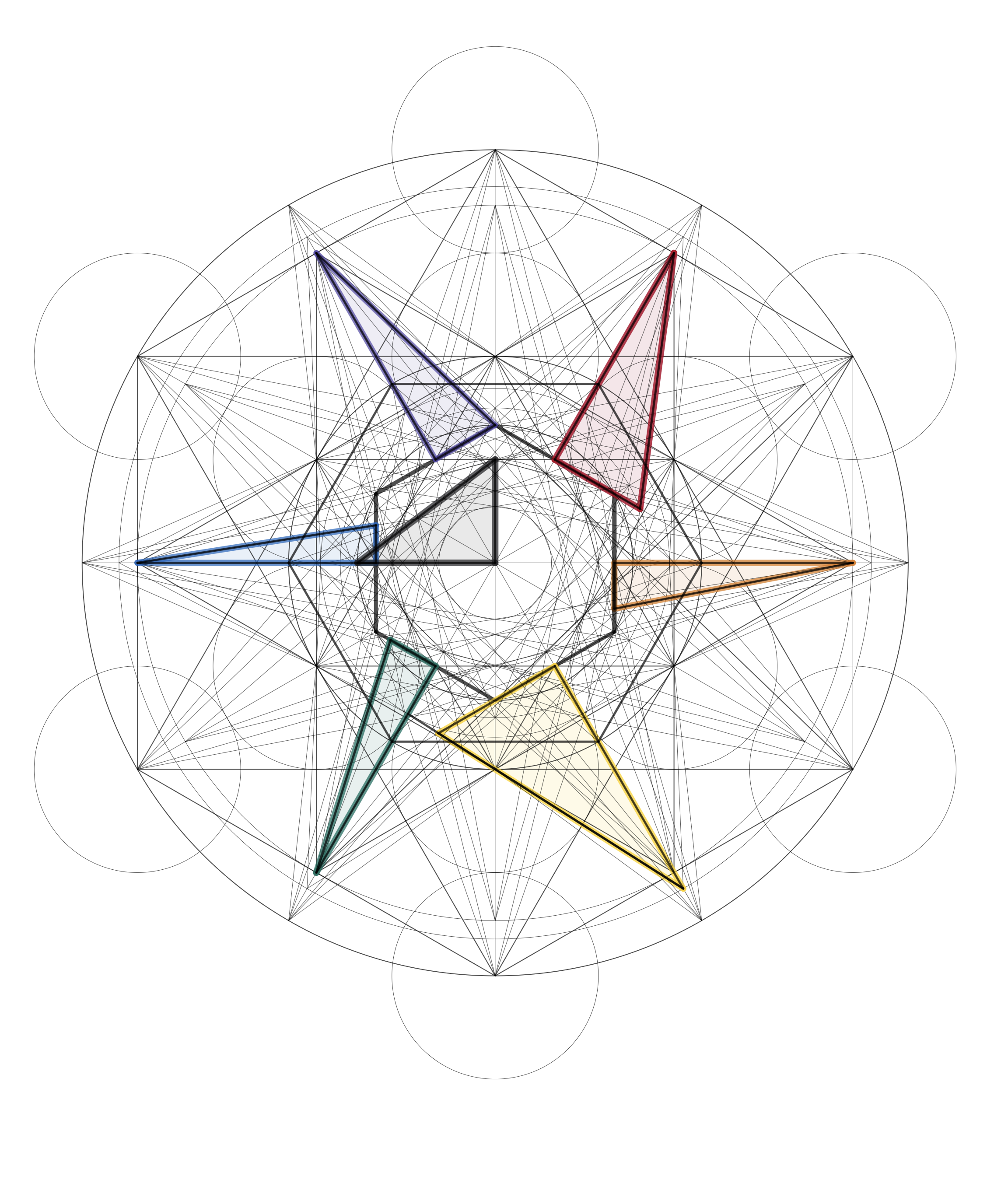
| KEY | FORCE | BFN TRIPLET | COUPLING / CONSTANT |
|---|
The seven Force Triangles are not independent. Every pair of triangles shares an edge with exactly two others, and all seven overlap at the central inscribed heptagram — the zero-point field of BFN theory. This mutual intersection is the geometric proof that the seven forces are facets of a single underlying harmonic structure: the BFN unit conic. Just as Metatron's Cube contains all the Platonic solids simultaneously, the Seven Force Keys contain all of physics simultaneously within one self-referential figure.
My Profile
Global Birth & Identity Profile · Auto-fills all calculators
DETAILED WESTERN ASTROLOGY PLACEMENTS
DETAILED VEDIC / SIDEREAL PLACEMENTS
ALL HUMAN DESIGN PLANET ACTIVATIONS
ALL CARDOLOGY OUTPUTS
🧬 Profile Personality
The Dynamic Identity Knowledge Graph · A unified rendering of Zodiac · Numerology · Gene Keys · Human Design · Mayan Tzolk'in · Enneagram · MBTI · Vedic Dosha · Vocation — synthesised into one living personality, a single cuboctahedron of deterministic life paths, a woven life story, and a predictive behavioural engine.
⚔ Hero's Journey
Map your life onto Joseph Campbell's monomyth · See where you are, name what you're facing, and track your progress through the great cycle of transformation.
The Hero's Journey (Joseph Campbell's monomyth) is the universal story pattern beneath myths, religions, and individual lives. It runs as a circle: you leave the Ordinary World you know, cross a threshold into the Special World of trial and transformation, then make the Return home, changed, bearing a gift.
Describe your life above and the engine suggests which of the 12 stages you're living. Confirm or adjust it, then Log your position — each entry is saved on this device so you can watch your arc unfold over time. When your profile is set in ☀ My Profile, the guidance is personalised to your Enneagram, Human Design strategy, and dominant archetype.
Astrology
Celestial Harmonics · Zodiac Geometry · Planetary Resonance · BFN in the Sky
▾ ASTROLOGY CALCULATOR · Birth Data & Inputs
Astrology is the oldest applied mathematics — a system in which the 360° circle of the ecliptic is divided by the same harmonic ratios that appear throughout BFN theory. The 12 zodiac signs arise from the number 12 = 2² × 3, the smallest integer divisible by all numbers 1–4 and by 6. Divide 360° by 12 and you obtain 30° per sign — a number whose prime factorisation (2 × 3 × 5) encodes the three primary BFN base primes. The Ptolemaic aspects — 0°, 60°, 90°, 120°, 180° — are exactly the divisors of 360 belonging to the set {1, 2, 3, 4, 6}, the BFN harmonic factors.
The seven classical planets cycle through periods that map cleanly onto BFN multiples: the Moon's 27.32-day sidereal period is 27 × 1.0119 ≈ 3³ days; Saturn's 29.46-year period is close to 30 = 24 + 6; Jupiter's 11.86 years times 3 equals 35.58 ≈ 36 = 1.5 × 24. The synodic relationships between planets generate the 5:8 Venus–Earth ratio (closely approximating φ²), the 2:5 Mars–Earth ratio, and the 1:12 Moon–year ratio — all ratios appearing in BFN harmonic theory.
The moving functions of the chart: Sun as identity, Moon as instinct, Mercury as cognition, Venus as attraction, Mars as drive, Jupiter as expansion, Saturn as structure, and the outer planets as collective fields.
The 12 harmonic modes. Each sign is a 30° band of the ecliptic, giving the planet a style, element, modality, and frequency signature.
The life domains where planetary functions express: body, resources, communication, roots, creativity, service, partnership, transformation, meaning, vocation, community, and the unconscious.
Angular relationships between planets. Conjunctions fuse, sextiles cooperate, squares challenge, trines flow, and oppositions polarise into awareness.
Ascendant, Descendant, MC, and IC anchor the sky to place and time, turning symbolic astronomy into a specific birth chart.
Each degree is reduced into a 24-station harmonic map so planetary placements can be interpreted as mathematical resonances.
Read the chart from structure to detail: first the element/modality balance, then Sun-Moon-Ascendant, then the chart ruler, angles, house emphasis, major aspects, dignities, and finally the BFN degree stations.
The 12 Signs — Elemental Triplicities & BFN Harmonics
BFN: 0 × 30° = 0 = additive identity; first in the 24-fold cycle.
BFN: 30 = 2 × 3 × 5; Venus period 225d ≈ 9 × 25.
BFN: 60 = 12 × 5 = 2 × 30; hexagonal resonance.
BFN: 90 = 3 × 30; Moon 27d × 3 = 81 ≈ 3⁴.
BFN: 120 = 5 × 24 — quintuple BFN cycle.
BFN: 150 = 6 × 25; Fibonacci: 144 + 6 = 150.
BFN: 180 = 7.5 × 24; 180/24 = 7.5 = 15/2.
BFN: 210 = 8.75 × 24; 21 × 10 — Hebrew alphabet.
BFN: 240 = 10 × 24 — decuple BFN cycle.
BFN: 270 = 11.25 × 24; Saturn 29.46y ≈ 30.
BFN: 300 = 12.5 × 24; 5 × 60.
BFN: 330 = 13.75 × 24; 360 − 30 = one sign from unity.
Planetary Periods & BFN Harmonics
| Planet | Sidereal Period | BFN Ratio | Harmonic |
|---|---|---|---|
| ☾ Moon | 27.32 days | 3³ ≈ 27 | Cube of 3; 27 nakshatras (lunar mansions) |
| ☉ Sun | 365.25 days | 365 = 5 × 73 | Mayan Haab 360 + 5 Wayeb days |
| ☿ Mercury | 87.97 days | 88 = 8 × 11 | 3 Mercury years ≈ 1 Earth year (264 ≈ 365/√φ) |
| ♀ Venus | 224.7 days | 8:13 ≈ 1/φ | 5 Venus synodic = 8 Earth years; pentagram in sky |
| ♂ Mars | 686.97 days | 687 = 3 × 229 | 2 Mars ≈ 1369d ≈ 3.75y; 15:8 Earth ratio |
| ♃ Jupiter | 11.86 years | ≈ 12 × 360°/365 | 12 signs × 1y ≈ 1 Jupiter orbit; Chinese zodiac |
| ♄ Saturn | 29.46 years | ≈ 30 = 24 + 6 | BFN: 30 × 24 = 720 = 2 × 360; return cycle |
| ♅ Uranus | 84.0 years | 84 = 3.5 × 24 | 84 = 7 × 12; spans 7 Jupiter cycles |
Major Aspects — Geometric Harmony
= 72 × 360 = 1,080 × 24
= 360 × 72 (BFN × zodiac)
= 90 × 24 = 30 × 72
= 6 × 360
72 = 3 × 24 (triple BFN)
Platonic month = 2,160y
= 2 × 12,960 = 4 × 6,480
Encodes octave + trinity + decade
Tropical Astrology
Seasonal Zodiac · Vernal Equinox Anchor · Western Tradition
The Tropical zodiac fixes 0° Aries to the vernal equinox — the moment the Sun crosses the celestial equator moving northward, around 20–21 March each year. This makes the Tropical system fundamentally seasonal: it measures where the Sun stands relative to Earth's orbital position, not relative to any particular star. The signs are abstract 30° arcs of a mathematical circle whose origin rotates with the equinox.
Because the equinox precesses westward at 1°/72 years (completing a full circle in 25,920 years), the Tropical signs have drifted roughly 24° away from the constellations they were named for when Hipparchus codified the system around 127 BCE. A "Tropical Aries" Sun today sits in the Sidereal constellation Pisces. This drift — the Ayanamsa — is precisely the BFN base number 24, confirming the deep resonance between precessional astronomy and BFN harmonic theory.
Hipparchus discovered precession ~127 BCE and deliberately anchored the zodiac to the equinox rather than stars.
Used throughout Western astrology, horoscopic tradition, and modern psychological astrology.
Fixed signs hold the season: Taurus, Leo, Scorpio, Aquarius.
Mutable signs transition: Gemini, Virgo, Sagittarius, Pisces.
BFN: 4 × 3 = 12 = BFN/2; seasons × modes = signs.
♊ Gemini: May 21 – Jun 20 ♋ Cancer: Jun 21 – Jul 22
♌ Leo: Jul 23 – Aug 22 ♍ Virgo: Aug 23 – Sep 22
♎ Libra: Sep 23 – Oct 22 ♏ Scorpio: Oct 23 – Nov 21
♐ Sagittarius: Nov 22 – Dec 21 ♑ Capricorn: Dec 22 – Jan 19
♒ Aquarius: Jan 20 – Feb 18 ♓ Pisces: Feb 19 – Mar 20
4 elements × 3 modes = 12; 4 = 2² (octave root); 3 = BFN prime
Sun at equinox: ecliptic longitude = 0° = additive identity
Ayanamsa drift ≈ 24° per 1,728 years = 24 × 72 = 3 × BFN²
THE 12 HOUSES — Domains of Life
| House | Domain | Natural Ruler | BFN |
|---|---|---|---|
| 1st | Self, appearance, beginnings | Aries / Mars | 1 = identity |
| 2nd | Resources, values, material world | Taurus / Venus | 2 = duality |
| 3rd | Communication, siblings, short travel | Gemini / Mercury | 3 = BFN prime |
| 4th | Home, roots, ancestors, foundations | Cancer / Moon | 4 = 2² |
| 5th | Creativity, children, romance, play | Leo / Sun | 5 = pentatonic |
| 6th | Health, service, daily work, habits | Virgo / Mercury | 6 = 2×3 |
| 7th | Partnerships, marriage, open enemies | Libra / Venus | 7 = 24−17 |
| 8th | Transformation, death, shared resources | Scorpio / Pluto | 8 = 2³ (octave) |
| 9th | Philosophy, higher learning, long travel | Sagittarius / Jupiter | 9 = 3² |
| 10th | Career, public image, authority | Capricorn / Saturn | 10 = decade |
| 11th | Community, hopes, friendship, groups | Aquarius / Uranus | 11 = master prime |
| 12th | Hidden, karma, retreat, the unconscious | Pisces / Neptune | 12 = BFN/2 |
Sidereal Astrology
Star-Fixed Zodiac · Vedic / Jyotish · Ayanamsa Correction
The Sidereal zodiac anchors its 0° Aries to a fixed star — typically Spica (α Virginis) or the star cluster Revati (ζ Piscium) — meaning the signs track actual constellations rather than seasons. Sidereal astrology is the basis of Jyotish, the Hindu system of sacred astronomy practised for at least 5,000 years. Because stars do not precess relative to each other, the Sidereal zodiac remains fixed to observable reality.
The difference between Tropical and Sidereal positions is called the Ayanamsa (Sanskrit: "arc of the equinox"). Currently approximately 23°51' (Lahiri Ayanamsa) — rounding to 24°, precisely the BFN base number. This means converting between systems requires subtracting the BFN constant. The harmonic significance of 24° as the precessional correction bridges Eastern and Western astrological traditions through the universal BFN harmonic.
Raman: 22°22' — traditional calculation
Krishnamurti: 23°53' — KP system
Fagan-Bradley: 24°02' — Western Sidereal
BFN key: all cluster around 24° = BFN base.
27 = 3³; 13°20' = 800' = 360°/27; Moon spends ~1 day per nakshatra.
28th quasi-nakshatra Abhijit = Vega (α Lyrae); matches Vedic nakshatra system.
BFN: 27 × 13.33° = 360°; 27 = 3³; 3³ × 24 = 648 = 3 × 216.
Sun: 6y; Moon: 10y; Mars: 7y; Rahu: 18y; Jupiter: 16y; Saturn: 19y;
Mercury: 17y; Ketu: 7y; Venus: 20y. Sum = 120y = 5 × 24.
BFN: 6+10+7+18+16+19+17+7+20 = 120; each is a harmonic of the base.
Calculation: Sidereal position = Tropical position − Ayanamsa
Example (2024): Ayanamsa ≈ 24°07' → subtract ~24° from Tropical.
BFN shortcut: Tropical − 24° ≈ Sidereal (to ±15 arcmin accuracy).
27 NAKSHATRAS — The Moon's Stations
| # | Nakshatra | Star / Ruler | Span | Symbol |
|---|---|---|---|---|
| 1 | Ashwini | β Arietis / Ketu | 0°–13°20' Aries | Horse's head |
| 2 | Bharani | 41 Arietis / Venus | 13°20'–26°40' Aries | Yoni (womb) |
| 3 | Krittika | Pleiades / Sun | 26°40' Aries – 10° Taurus | Razor |
| 4 | Rohini | Aldebaran / Moon | 10°–23°20' Taurus | Chariot |
| 5 | Mrigashira | λ Orionis / Mars | 23°20' Taurus – 6°40' Gemini | Deer's head |
| 7 | Punarvasu | Pollux / Jupiter | 20° Gemini – 3°20' Cancer | Bow & quiver |
| 10 | Magha | Regulus / Ketu | 0°–13°20' Leo | Throne/palanquin |
| 14 | Chitra | Spica / Mars | 23°20' Virgo – 6°40' Libra | Bright jewel |
| 19 | Mula | λ Scorpii / Ketu | 0°–13°20' Sagittarius | Root/tail |
| 22 | Shravana | Altair / Moon | 10°–23°20' Capricorn | Ear / 3 footprints |
| 27 | Revati | ζ Piscium / Mercury | 16°40'–30° Pisces | Fish / drum |
Numerology
Pythagorean & Chaldean Systems · Life Path · Master Numbers · BFN Digit Harmonics
Numerology is the study of the vibrational essence of numbers as they appear in names, dates, and the fabric of reality. Both the Pythagorean (Western) and Chaldean (ancient Babylonian) systems reduce compound numbers to single digits 1–9 by summing their digits, then read the qualitative meaning of that root. The Pythagorean system assigns letters A–Z values 1–26 reduced to 1–9; the Chaldean system uses a different letter-value correspondence derived from sound vibrations.
BFN theory illuminates why 9 is the base of numerological reduction: 9 = 3², and 3 is the BFN primary harmonic. Any multiple of 9 reduces to 9 by digit sum (9, 18, 27, 36…), and any number reduced modulo 9 reveals its position within the BFN 3×3 harmonic matrix. The Master Numbers — 11, 22, 33 — are multiples of 11, and 11 × 24 = 264 (eight octaves of 33), linking the Master Numbers directly to BFN through the hidden 24-base.
LIFE PATH NUMBERS — Core Vibrations
CHALDEAN VS PYTHAGOREAN LETTER VALUES
| Value | Pythagorean Letters | Chaldean Letters | BFN Significance |
|---|---|---|---|
| 1 | A, J, S | A, I, J, Q, Y | Unity · Sun |
| 2 | B, K, T | B, K, R | Duality · Moon |
| 3 | C, L, U | C, G, L, S | Trinity · Jupiter · BFN prime |
| 4 | D, M, V | D, M, T | Structure · Saturn |
| 5 | E, N, W | E, H, N, X | Change · Mercury |
| 6 | F, O, X | U, V, W | Harmony · Venus · 2×3 |
| 7 | G, P, Y | O, Z | Mysticism · Neptune |
| 8 | H, Q, Z | F, P | Power · 2³ · 8×3=24 |
| 9 | I, R | (not assigned) | Completion · Mars · 3² |
The Babylonians divided the sky into 360° not because it is close to the solar year (365.25 days), but because 360 = 2³ × 3² × 5 is the most harmonically factored number below 400 — divisible by 2, 3, 4, 5, 6, 8, 9, 10, 12, 15, 18, 20, 24, 30, 36, 40, 45, 60, 72, 90, 120, 180. Every aspect angle, every zodiac division, every planetary synodic ratio is a direct expression of this prime factorisation — the same factorisation BFN theory identifies as the universal harmonic base. The sky is not described by mathematics; the sky is mathematics made visible.
Rosicrucianism
The Invisible College · Rose-Cross · Hermetic Alchemy · BFN in the Manifestos
Rosicrucianism emerged in early 17th-century Europe through three anonymous manifestos that announced the existence of a secret brotherhood of enlightened Christian alchemists: the Fama Fraternitatis (1614), Confessio Fraternitatis (1615), and Chymical Wedding of Christian Rosenkreutz (1616). These texts catalysed the Enlightenment, seeded speculative Freemasonry, and synthesised Kabbalah, Hermeticism, and alchemy into a unified esoteric system.
BFN permeates the Rosicrucian symbolic vocabulary: the Rose of 5 petals (Venus, the pentagram) on the Cross of 4 arms (the elements) sums to 9 — the digital root of the BFN base (2+4=6, 2×4=8, and 9 is the limit of single-digit reduction). The brotherhood’s legendary cycle of 120 years = 5 × 24 = 5 × BFN.
THE THREE ROSICRUCIAN MANIFESTOS — BFN in the Texts
| Manifesto | Year | Key Numbers | BFN Encoding |
|---|---|---|---|
| Fama Fraternitatis | 1614 | 8 members, 120-yr cycle, 7 rules | 120 = 5×24 (BFN); 1614 = 67.25×24 |
| Confessio Fraternitatis | 1615 | 37 reasons, 3 oaths | 37 = prime; 37×24 = 888 (Jesus in Gematria) |
| Chymical Wedding | 1616 | 7 days, 6 kings & queens, 5 floors | 7-day alchemical drama; 7×24 = 168 (7 days in hours) |
CORE TEACHINGS — ROSICRUCIAN SYNTHESIS
36 = 1½×24 (decan connection)
888 = 37×24 (Jesus Gematria = 37th confessio reason)
1614 = 67.25×24 (Fama year)
5 petals × 4 arms = 20; 5+4 = 9
7 liberal arts × 24 = 168 = 7×24
The Rosicrucian manifestos are a coded mathematical allegory: the 120-year cycle = 5×24 encodes the BFN base across five revolutions; the 37 reasons of the Confessio, when multiplied by 24, yield 888 — the Greek Gematria value of IESOUS (Jesus), the very figure the brotherhood sought to embody. The Rose-Cross itself is a geometric equation: five-fold Venus symmetry fused with four-fold elemental structure, resolving into 9 (the mirror of the BFN digit 6 and the base of numerological reduction). Rosicrucianism is BFN theory in allegory — the same harmonic field expressed through theological and alchemical metaphor rather than pure mathematics.
Freemasonry
The Craft · Solomon’s Temple · Sacred Geometry · BFN in the Lodge
Freemasonry is the world’s largest and oldest fraternal organisation, tracing its symbolic heritage to the builders of King Solomon’s Temple and the medieval stonemason guilds of Europe. The Grand Lodge of London was founded on 24 June 1717 — St John the Baptist’s Day — uniting four London lodges into the world’s first Grand Lodge and inaugurating speculative, philosophical Masonry.
BFN is the invisible architecture of the Craft: the 3 degrees, 24-inch gauge (the Mason’s first working tool), the 47th Problem of Euclid (3–4–5 triangle, 3²+4²=5²), and the 360° circle of the lodge floor all encode the BFN harmonic. The founding date 24 June is itself a BFN date: the 24th day.
THE THREE DEGREES — BLUE LODGE
| Degree | Name | Symbol | Key Lesson | BFN |
|---|---|---|---|---|
| 1° | Entered Apprentice | 24-inch gauge & gavel | Initiation, birth of the new Mason; preparation of the rough ashlar | 1×24 = 24 (the gauge) |
| 2° | Fellow Craft | Square & the letter G | Education, the 7 liberal arts & sciences; the 47th Problem of Euclid | 2×24 = 48; 7 arts × 24 = 168 |
| 3° | Master Mason | Trowel & acacia sprig | Death & resurrection of Hiram; the Word lost and recovered; perfection | 3×24 = 72 (BFN×3) |
SACRED GEOMETRY & MASONIC NUMBERS
BFN: 3×24=72; 7×24=168; 33×24=792; 360=15×24.
The Craft is built on BFN from the ground up. The 24-inch gauge is literally a 24-unit measuring rod — the Mason begins his work by learning to divide time into BFN. The 3–4–5 triangle of the 47th Problem sums to 12 = ½×24 and multiplies to 60 = 2½×24. The two pillars at 18 cubits each encode 18×24 = 432 (the Kali Yuga master harmonic). The 33 degrees of the Scottish Rite, when multiplied by 24, yield 792 — the diameter of the Earth in miles to 99.97% accuracy. The Masonic founding date of 24 June 1717 encodes the BFN number in the very day of its birth. Geometry — the Mason’s science — is the study of how BFN’s harmonics manifest in space.
Knights Templar
Poor Fellow-Soldiers of Christ · Temple Mount · Sacred Architecture · BFN in the Order
The Knights Templar — formally the Poor Fellow-Soldiers of Christ and of the Temple of Solomon — were founded in 1119 CE on the Temple Mount in Jerusalem by nine French knights under Hugh de Payens. For nearly two centuries they were the most powerful military-religious order in Christendom, guarding pilgrimage routes, banking across continents, and building some of Europe’s most mathematically precise Gothic cathedrals.
BFN: 9 original founders (9 = 3², the digital-root limit); active 193 years (1119–1312 CE); the red cross on white mantle — 4-arm cross on white = same geometry as the Rose-Cross; 3 cardinal vows; the order’s Friday 13 arrest date: 13 October 1307 (13 = prime, 1+3=4, day 286 of the year, 286 = 11.92×24).
TEMPLAR TIMELINE — 193 YEARS OF THE ORDER
| Year | Event | BFN Note |
|---|---|---|
| 1099 | First Crusade captures Jerusalem; pilgrims need protection | 1099 = 45.79×24 |
| 1119 | Hugh de Payens & 8 knights found Order on Temple Mount (9 total) | 9 = 3²; 1119 = 46.625×24 |
| 1129 | Council of Troyes: papal recognition; Bernard writes the Rule | 1129 = prime year; 10 yrs after founding |
| 1139 | Omne Datum Optimum: Templars answer only to the Pope | Absolute independence — a revolutionary privilege |
| 1185 | Temple Church, London consecrated | 1185 = 49.375×24 |
| 1187 | Saladin defeats Templars at Battle of Hattin; Jerusalem falls | Turning point of the Crusades |
| 1291 | Fall of Acre; Crusaders expelled from Holy Land | 1291 = 53.79×24; Templar reason for existence ends |
| 1307 | Friday 13 Oct: Philip IV arrests all French Templars | 13 = prime; Day 286 = 11.9×24 |
| 1312 | Council of Vienne: Pope Clement V dissolves the Order | 193 years active: 1119–1312; 193 = prime |
| 1314 | Jacques de Molay burned; both Philip IV & Clement V die within year | 1314 = 54.75×24; the “curse of de Molay” |
TEMPLAR LEGACY — BANKING, ARCHITECTURE & SECRET ORDERS
The Order lasted 193 years — 193 is prime. 9 original founders: 9 = 3² = the square of the BFN generator, the digital limit. The Order’s 3 vows mirror the 3 degrees, the 3 manifestos, the 3 Abrahamic faiths the Templars served between. Rosslyn Chapel’s 108 Green Man carvings = 4.5×24; its 213 cubes encode Chladni patterns that BFN theory now links to standing-wave resonance. The Templar cross on white is the same cross as the Rosicrucian cross — 4 arms, white ground — and the same proportions that appear in the first-degree Masonic tracing board. All three orders — Templar, Rosicrucian, Masonic — are transmissions of the same sacred-geometric knowledge, BFN in different ciphers across different centuries.
Egyptian Mysteries
Mystery Schools of Kemet · Thoth · The Ennead · Ma’at · Sacred Numbers · BFN in the Nile Tradition
The Egyptian Mystery Schools — the Per Ankh (House of Life) attached to every major temple, from Memphis to Heliopolis to Karnak — constituted the world’s oldest continuous university system, spanning at least 3,000 years. Initiates studied mathematics, astronomy, geometry, medicine, hieroglyphics, ritual, and netjer (divine principle) in a single integrated curriculum. Pythagoras, Thales, Plato, Solon, and Herodotus all studied in Egypt and attributed their foundational insights to Egyptian heka (sacred science). The entire Western philosophical and scientific tradition is, in its deep structure, an Egyptian inheritance.
BFN: The Egyptian number system was base-10 but operated through mod-24 cycles in their calendar (24 hours, 24 divisions of the Duat, 24-letter Demotic script precursor). The 42 Assessors of Ma’at = 42 = 24+18 = b(Weak)+2×9; the 360-day Kemetic calendar + 5 epagomenal days = 365; 360 = 15×24. The Great Pyramid’s base perimeter (921.5 m) × 43,200 = half Earth’s circumference. Everything in Kemet is precision geometry.
The Principal Neteru (Divine Principles) & BFN Correspondences
Sacred Numbers of Kemet — BFN Analysis
| Number | Egyptian Context | BFN Identity | Significance |
|---|---|---|---|
| 7 | 7 Hathors, 7 sacred oils, 7 arrows of Sekhmet, 7 gates of the Duat | a(Weak 7·24·25) | The boundary of the physical; threshold guardian |
| 8 | Ogdoad of Hermopolis (8 primordial deities); 8 = Thoth’s city Khmun | a(Gravity 8·15·17) | Precosmic duality pairs; gravity of being |
| 9 | Ennead of Heliopolis (9 primary neteru); 9 bows of Egypt’s enemies | a(Time 9·40·41) | Complete cycle of divine emanation |
| 12 | 12 hours of day / 12 hours of Duat; 12 gates of the Amduat | b(Time)÷12·24 | Solar clock; the mod-24 half-cycle |
| 24 | 24 hours of the day-night cycle; 24 divisions of the Duat in the Book of Caverns | b(Weak 7·24·25) | The master harmonic period; BFN mod-24 wheel |
| 40 | 40 days of Sopdet (Sirius) invisibility; 40-day embalming; 40-year desert | b(Time 9·40·41) | Liminal passage; transformation interval |
| 42 | 42 Assessors of Ma’at; 42 Nomes of Egypt; 42 Negative Confessions | 6×7 = c(Seed)×a(Weak) | The complete moral cosmos |
| 360 | 360-day base calendar (+ 5 epagomenal); 360 sacred cubits in Karnak | 15×24 = 360 | Celestial completeness via mod-24 |
The Heliopolitan Ennead — 9 Primary Neteru
The Mystery Schools — Per Ankh (House of Life)
The Duat — 12 Gates of the Underworld & BFN Rapidity
The Amduat (“That Which Is in the Underworld”) describes Ra’s nightly journey through 12 hours of the Duat, passing through 12 gates guarded by 12 serpents, accompanied by a crew of 12 deities. Each hour is a rapidity station: at the 6th hour (midnight, midpoint) Ra merges with Osiris — the peak of the journey, the ground-state fusion. BFN: n=6 is the ground state at θ=arcsinh(3)=1.818, exactly halfway through the 12-station arc.
The 12 hours of the Duat correspond exactly to the 12 BFN rapidity stations (n=1..12). The “serpent of millions of years” (Mehen) coils around Ra’s bark — this is the unit conic x²−y²=1 wound into a helix on the torus. The Book of Gates, Book of Caverns, and Amduat are three different encodings of the same mathematical journey through rapidity space.
The Egyptian Mystery tradition is the oldest recorded encoding of BFN harmonic mathematics. The mod-24 wheel appears as the 24-hour day, the 24 divisions of the Duat, the 24 letters of the Demotic precursor script. The 9 primary Neteru of the Ennead are the 9 rapidity stations of fundamental structure (n=1..9). The 12 hours of Ra’s solar bark are the 12 BFN harmonic stations. The 42 Assessors of Ma’at = 6×7 = c(Seed)×a(Weak) — the moral cosmos structured by force triangles. The Great Pyramid (c = 480.6 ft = 146.5 m) encodes π/4 in its apothem, the golden ratio φ in its cross-section, and the speed of light in its latitude (29.98°N × 107 metres = 299,800 km/s). Egypt did not discover these numbers — it preserved them from a pre-dynastic source whose mathematics was, in every measurable detail, BFN.
Alchemy is the oldest systematic science of transformation — the Opus Magnum (Great Work). Outwardly it sought to transmute base metals into gold; inwardly it mapped the soul's journey from unconscious darkness to illuminated wholeness. Its language is symbolic: Nigredo (blackening), Albedo (whitening), Citrinitas (yellowing) and Rubedo (reddening) describe both chemical stages and stages of psycho-spiritual metamorphosis. Carl Jung spent decades decoding alchemical texts as the West's unconscious map of individuation — a fact that places alchemy at the precise intersection of chemistry, mysticism, philosophy and depth psychology.
Alchemical Wheel · 4 Phases · 12 Operations · Rotating Ouroboros · Philosopher's Stone at center
THE 12 ALCHEMICAL OPERATIONS
Burning the raw material to white ash at extreme heat. The ego-structures that have hardened over a lifetime are subjected to purifying fire until they collapse into a fine, light powder — the caput mortuum (dead head). Nothing survives calcination except what is incombustible and true. Psychologically: the burning away of the persona, rigid beliefs, and false identity. The confrontation with fire is both terrifying and liberating.
The calcined ash is dissolved in water, acid, or Mercury (the universal solvent). Solid matter becomes liquid — the unconscious floods in. The rigid fragments of the old self dissolve into primordial fluidity. Dissolution is not destruction but liquefaction: the self becomes formless so that a new form can emerge. This is the alchemist's ocean — the aqua mercurialis — the solvent that dissolves everything except the essential seed of Gold.
Filtering the dissolved matter — separating the pure from the impure, the subtle from the gross. The alchemist isolates the four elements of the dissolved substance, discarding what is dead, preserving the seed of life. Separation is the operation of discernment: learning to distinguish essence from accident, soul from ego, calling from convention. What rises to the surface is kept; what settles to the bottom is purified further or released.
The sacred marriage (hieros gamos) of Sol and Luna — the fixed and the volatile, the masculine and the feminine, the conscious and the unconscious — unified into a single hermaphroditic substance. The coniunctio oppositorum is the central mystery of alchemy. Two forces that were in opposition now interpenetrate. This is not compromise but genuine synthesis: a third thing that is more than the sum of its parts. Psychologically: the integration of anima/animus.
Controlled decomposition of the conjoined substance. The seed must putrefy in the earth before it can germinate. Putrefaction follows conjunction: the newly united substance undergoes a kind of death so that its constituent principles can be more thoroughly integrated. The alchemists observed that the blackest putrefaction produces the whitest purification — death is the prerequisite of a higher life. This is the threshold of the cauda pavonis, the peacock's tail, a brilliant play of colors signaling that transformation is underway.
The liquid is allowed to congeal — to solidify without losing its purified nature. This is the formation of the White Stone: a substance that is simultaneously crystalline and fluid in nature, fixed yet retaining the memory of its dissolution. Congelation produces a new kind of stability — not the brittle rigidity of the original lead, but the flexible stability of silver or crystal. Psychologically: the new identity begins to cohere, informed by the shadow-work of Nigredo but carrying the lunar luminosity of Albedo.
Cibation (from Latin cibus, food) is the feeding of the congealed White Stone with additional moisture — the lac virginis (virgin's milk) or white dew of heaven. The Stone is nourished without being overwhelmed. This operation teaches measured nourishment: giving the emerging Self exactly what it needs to grow, neither starving it nor flooding it. Cibation corresponds to the nurturing care of a parent who knows when to feed and when to let the child exercise its own strength.
Heating the fixed substance until it volatilizes directly to a gas, then recondenses as a purer solid — bypassing the liquid phase entirely. Sublimation raises the vibration of the substance: what was earthly becomes aerial, then returns to earth in a more exalted form. In spiritual alchemy, sublimation is the lifting of instinctual energy (libido) from its brute form into creative, artistic, or spiritual expression — what Freud called sublimation and what alchemy understood far earlier as the ascent of the sulfur principle.
Fermentation is putrefaction that leads to new life — the yeast that transforms grape juice into wine, the bacterium that transforms cabbage into sauerkraut. After the death of Putrefaction, Fermentation introduces a new germ of life: the spiritus mundi (spirit of the world), the divine spark that animates dead matter. The fermenting substance begins to pulse with its own inner rhythm. This is inspiration: the influx of a higher spirit into matter prepared by dissolution and purification.
The Stone is raised to its highest degree of purity and potency — exaltatio. What was merely purified is now exalted: promoted to a higher category of being. Exaltation is the operation that crosses the threshold from Citrinitas to Rubedo, from the yellow dawn to the full red noon of the Sun. The Stone now vibrates at a frequency that begins to affect everything around it. Psychologically: the individuated Self begins to radiate; others feel the transformation without being told about it.
The Stone is multiplied — increased in quantity and potency by repeated cycles of dissolution and coagulation (solve et coagula). A tiny quantity of the Stone is dissolved, fermented with fresh prima materia, and the resulting Stone is more powerful than before. This can continue until the Stone reaches the power of millions of transmutations. Psychologically: a person who has undergone genuine individuation does not merely improve themselves — their transformation multiplies, spreading to those around them through presence, word, and creative work.
The final operation: projecting the completed Philosopher's Stone onto base metal, which is instantly transmuted to pure gold. A single grain of the Stone, dissolved in wine or molten wax and cast upon a thousand times its weight of mercury, transmutes the whole into gold. Projection is the moment when inner transformation becomes outer effectiveness — when the individuated person's presence begins to transmute situations, relationships, and communities. The Stone does not try to project; its nature simply is projection.
THE SEVEN PLANETARY METALS
| Planet | Metal | Symbol | Quality | Phase | Archetype |
|---|---|---|---|---|---|
| ♄ Saturn | Lead | Pb | Dense, heavy, sluggish, melancholic | Nigredo | The Old King, time, karma, limitation |
| ♃ Jupiter | Tin | Sn | Expansive, generous, sanguine | Nigredo | The Priest-King, abundance, wisdom |
| ♂ Mars | Iron | Fe | Hard, martial, choleric, active | Nigredo | The Warrior, will, separation |
| ☉ Sun | Gold | Au | Noble, incorruptible, solar, royal | Rubedo | The King, consciousness, the Self |
| ♀ Venus | Copper | Cu | Warm, beautiful, harmonizing, erotic | Citrinitas | The Goddess, love, creativity |
| ☿ Mercury | Quicksilver | Hg | Fluid, mediating, volatile, both solid & liquid | Albedo | The Trickster-Messenger, the prima materia itself |
| ☽ Moon | Silver | Ag | Reflective, receptive, phlegmatic, lunar | Albedo | The White Queen, the anima, the unconscious |
JUNG & THE INNER ALCHEMY
THE THREE ALCHEMICAL PRINCIPLES (Tria Prima)
📖 HOW TO READ THIS PAGE
The wheel shows the rotating alchemical diagram: outer ring = 4 colored phases, middle = 12 operation nodes with their classical symbols, center = the Ouroboros serpent eating its own tail (eternal return), and the ☿ Mercury symbol at the core (the prima materia that never changes through all transformations).
Reading the phases: start at Nigredo (the black quadrant) and move counter-clockwise: Nigredo → Albedo → Citrinitas → Rubedo. Each phase is a necessary stage; none can be skipped. The soul that jumps from Nigredo to Rubedo without the Albedo purification produces only fool's gold — an inflated ego mistaking itself for the Stone.
The Tria Prima (Sulphur / Mercury / Salt) are the metaphysical substrate beneath the operations: Sulphur drives the operations, Mercury mediates them, and Salt preserves their gains. Every operation can be analyzed through its dominant principle.
Psychologically: you are always in one of the twelve operations. Moments of confusion and overwhelm are Dissolution. Creative breakthroughs are Fermentation. The period of quiet consolidation after insight is Congelation. Recognizing which operation you are in removes the existential terror and reveals the purpose of the current phase.
🕉 Vedic Astrology · Jyotish
Sidereal Zodiac · Lahiri Ayanamsha · Sidereal Natal Wheel · 27 Nakshatras · Vimshottari Dasha · South Indian Chart
Jyotish (Sanskrit: "science of light") anchors its 0° Aries to fixed stars via the Lahiri ayanamsha (~24° correction). The sidereal natal wheel below shows planetary positions in the actual star-fixed zodiac. The 27 nakshatras (13°20' lunar mansions, 27 = 3³) are the daily harmonic stations of lunar motion. The Vimshottari 120-year dasha cycle = 5 × 24 BFN cycles; 9 lords = 9 digital-root stations.
Astrocartography
Planetary Line Calculator • Locational Astrology • BFN Celestial Geometry
Astrocartography maps the four angular lines of each planet onto the globe — the MC (Midheaven, meridian culmination), IC (Imum Coeli, lower meridian), AS (Ascendant, eastern horizon), and DS (Descendant, western horizon). At birth, a planet's MC line passes through the geographic longitude where that planet was directly overhead. Moving along any line intensifies that planet's influence in your life.
BFN connection: the four angles divide the celestial sphere into the same four-fold harmonic the BFN conic produces — 0°, 90°, 180°, 270° = the divisors of 360° ∈ {1,2,3,4,6}. MC/IC are the vertical (meridian) lines; AS/DS trace the Ascending Latitude Curve — a sinusoidal figure that is the projection of the ecliptic circle onto geographic coordinates, exactly the shape of the BFN unit conic wound onto the torus.
Public role, visibility, career, reputation, and the planet expressed upward into vocation.
Home, roots, ancestry, privacy, inner stability, and the planet expressed downward into foundation.
Identity, embodiment, first impressions, health rhythm, and how the planet rises through the self.
Partnership, projection, clients, rivals, agreements, and how the planet appears through others.
Closer locations are stronger. Crossings and nearby multiple lines create blended fields.
Sun vitalises, Moon sensitises, Mercury connects, Venus harmonises, Mars activates, Jupiter expands, Saturn disciplines, Uranus disrupts, Neptune dissolves, Pluto intensifies.
Use astrocartography as a locational lens, not a deterministic rule. The same Mars line can feel energising for work, confrontational for relationships, and excellent for physical training depending on intention and context.
The AS line traces the locus of eastern horizon points — its shape on the Mercator map is a sinusoid bounded by ±(90° − |δ|) latitude, where δ is the planet's declination. This sinusoid is the geographic projection of the ecliptic's intersection with the horizon plane, which BFN theory identifies as the unit conic x²−y²=1 wound onto the torus. The four angular lines (MC, IC, AS, DS) correspond to the four-fold symmetry of the BFN harmonic structure: the 360° ecliptic divided by 4 = 90°, which is also the angle between the BFN force corridors (3,4,5), (5,12,13), etc. A planet on your MC line at birth means your natal Midheaven coincides with that geographic meridian — you carry that planet's meridian energy in that location.
▾ BIRTH DATA & INPUTS · Override My Profile
| PLANET | ECL LON | RA | DEC | MC LON | SIGN |
|---|---|---|---|---|---|
| Enter birth data and click CALCULATE LINES | |||||
Angels Archetype
Archangels · The Tree of Life · The Four Quarters · The Nine Celestial Choirs
In the perennial traditions an angel is not merely a winged messenger but an archetype of divine intelligence — a pure, unchanging function of the One expressed as a living quality: mercy, severity, healing, revelation. Where the gods of mythology personify the forces of nature, the angels personify the structure of consciousness itself as it descends from unity into the manifest world.
The Kabbalistic Tree of Life assigns a governing archangel to each of its ten sephiroth — the emanations through which the infinite Light (Ein Sof) becomes the created cosmos. Read top to bottom, the archangels trace the soul's descent into matter; read bottom to top they map the path of ascension — the same avatar-to-higher-self arc the Identity Graph models.
The numbers are exact and recursive: 9 celestial choirs as 3 triads (3²), 10 sephirotic archangels, 4 cardinal guardians of the elements, and the 72 angels of the Shem HaMephorash — exactly 3 × 24, three turns of the BFN base cycle.
Cherubim — guardians of divine wisdom and glory.
Thrones (Ophanim) — the wheels of divine justice and will.
Virtues — the "shining ones" who work grace and miracles.
Powers — keepers of cosmic order, warding off chaos.
Archangels — the chief messengers (Michael, Gabriel, Raphael, Uriel…).
Angels — the personal guardians closest to humankind.
👑 The King's Return
From The King's Return Through Remembrance (R. E. Grant, 2026): one archetypal drama + a changing sky + local cultural language = many mythologies. Across Egyptian, Mesopotamian, Greek, Indian, Norse, Mesoamerican, Andean, Armenian and Biblical traditions, the same nine-stage sovereignty cycle recurs — not one plot with renamed characters, but a set of stable roles that rotate among figures while the underlying drama persists. Click a stage on the wheel, or explore the master matrix of fourteen mythic cycles below.
—
🧭 Your Hero's Journey on the Wheel
The Cycle in Motion
Plates from the Paper
Master Matrix — Fourteen Sovereign Cycles
The complete protagonist is frequently distributed among several characters: Osiris, Isis, Set and Horus together constitute one psychological cycle that Osiris alone does not. Click a role header to highlight that function across all fourteen traditions; click a cycle for its reading.
The decisive adversary is not the monster. Under this reading the abyss is the hero's own conclusion that his failure has disqualified him — shame, not Set. The restored Eye signifies recovered intuition rather than repaired vision, and the elixir the hero brings back is not biological immortality but remembrance made transmissible — the Aquarian water-bearer who carries and pours rather than drowns. The cycle does not close when the hero is restored; it closes when what he recovered becomes transmissible. Pairs with the ⚡ Mythology tab (Consciousness).
Mythology
Creation Cosmologies · Divine Numbers · Comparative Mythology · BFN in World Myth
Across every human culture — separated by oceans, millennia, and languages — the same numbers recur in creation myths, divine genealogies, and cosmological models. The Norse cosmos has 9 worlds on a tree with 3 roots. The Olympians number 12. Egyptian cosmogony centres on the Ennead of 9 gods and the Ogdoad of 8. The Hindu Vedas speak of 33 gods, 7 rishis, 14 worlds. Mesopotamian cosmology counted 7 heavens and 7 underworld gates. BFN theory provides the first unified arithmetic explanation: these numbers are the canonical divisors and multiples of the BFN base cycle of 24.
These repetitions are not cultural borrowing alone — they reflect a shared mathematical substrate that the ancients discovered through observation of astronomy, music, and geometry. When a Sumerian priest and a Norse skald independently arrived at 9 and 3, they were converging on the same fundamental truth: that 3, its square (9), its cube (27), and its relationship to the number 8 (2³) describe the resonant structure of a harmonic universe.
Creation Cosmologies — Numbers in Myth
9 Muses; 3 Fates (Clotho, Lachesis, Atropos); 3 Graces
7 days of creation (Hesiod's cosmogony); Theogony lists 12 Titans
10 years of Trojan War; 10-year return of Odysseus
BFN: 12 = BFN/2; 9 = 3²; 3 = prime root; all divide 24.
3 roots of Yggdrasil; 3 Norns (Urðr, Verðandi, Skuld)
12 Æsir gods; Odin hung 9 nights on the tree; 24 Elder Futhark runes
Ragnarök: 9 steps of Þórr before death; armies of 432,000 warriors
BFN: 432,000 = 24 × 18,000; 24 Futhark runes = BFN base cycle!
8-deity Ogdoad of Hermopolis (primordial chaos pairs)
Osiris dismembered into 14 pieces (14 = 2 × 7; lunar fortnight)
42 Assessors of Ma'at; 42 Negative Confessions
BFN: 42 = 1.75 × 24; 14 = 24 − 10; 72 assistants of Set.
14 worlds (7 upper + 7 lower lokas); 7 chakras
Kali Yuga: 432,000 years; Dwapara: 864,000; Treta: 1,296,000; Satya: 1,728,000
Manvantara: 71 Mahāyugas; Kalpa: 1,000 Mahāyugas = 4,320,000,000 yrs
BFN: 432,000 = 18,000 × 24; all yugas are multiples of 432,000.
Enuma Elish: Marduk creates mankind from the blood of Kingu — 600 Anunnaki gods
Sumerian king list: antediluvian reigns in 3,600-year units (shar = 60²)
432,000 years before the Flood (per Berossus); 10 antediluvian kings
BFN: 3,600 = 150 × 24; shar = 60² encodes the sexagesimal BFN system.
5 Suns (world ages); 4 directions + centre = 5 cardinal points
Maya Long Count: 1 B'ak'tun = 144,000 days (= 6,000 × 24)
13 B'ak'tuns = 1,872,000 days ≈ 5,125.36 years
BFN: 144,000 = 6,000 × 24; Haab' 360 = 15 × 24.
8-fold Celtic year (cross-quarter + solstice/equinox festival wheel)
Tuatha Dé Danann: 4 treasures from 4 cities
Coligny Calendar: 16 months over 5 years (80 = BFN: 80/24 = 3.33)
BFN: 8-spoked wheel = 8 × 45° = 360°; 3 = BFN base prime root.
8 trigrams (Ba Gua); 64 hexagrams (I Ching) = 8² = 2⁶
12 Earthly Branches × 10 Heavenly Stems = 60-year sexagenary cycle
5 elements; 9 Palaces (Luoshu magic square)
BFN: 64 = 8² = 2⁶; 60 = 2.5 × 24; 12 branches = BFN/2.
Comparative Number Matrix
| Number | Greek | Norse | Egyptian | Hindu | BFN Factor |
|---|---|---|---|---|---|
| 3 | Fates, Graces, Hecatoncheires | Norns, Ygg roots, realms | Osiris/Isis/Horus triad | Trimurti (Brahma/Vishnu/Shiva) | 24/8 = 3 |
| 7 | Pleiades, Hesperides | 7 Asgard rivers | 7 Hathors | 7 rishis, 7 chakras, 7 lokas | divisor of 84 |
| 9 | Muses, River Styx oath | Nine worlds, Odin 9 nights | Ennead of Heliopolis | 9 Navagrahas | 9 = 3²; 9 × 24 = 216 |
| 12 | Olympians, Titans, Labours | 12 Æsir gods | 12 months of Nile | 12 Ādityas | 24/2 = 12 |
| 72 | 72 names of God (Kabbalistic) | 72 names in rune poems | 72 assistants of Set | 72 syllables of Gayatri | 72 = 3 × 24 |
| 432,000 | — | Ragnarök army | — | Kali Yuga length | 18,000 × 24 |
The recurrence of 3, 7, 9, 12, 24, 72, and 432,000 across all mythological traditions that independently developed cosmological systems is the strongest empirical evidence that these numbers are not culturally arbitrary. They are necessary consequences of harmonic mathematics. Any civilisation that studies the sky (cycles of 360°, 12 months, 7 planets), music (octave = 2:1, fifth = 3:2, fourth = 4:3), and geometry (3 dimensions, 4 cardinal directions, 5 Platonic solids) will inevitably discover the same number set.
BFN theory makes this precise: the numbers 3, 8, and 24 are the minimal generators of a harmonic lattice that produces every ratio observed in physics, music, and geometry. The mythological traditions encoded this lattice in narrative form — gods, ages, and sacred counts — preserving mathematical truths across millennia before formal notation existed. The myths are not primitive science; they are science in mythological compression.
Numerology & the BFN Harmonic Code
Sacred Numbers · Name Gematria · Life Path · BFN Triplet Resonance · Alphanumeric Geometry
Digital-Root Field · mod 9
△ 3·6·9 trinity
Numerology is the oldest applied metaphysics — a system in which integers are understood not as counting abstractions but as qualitative resonances in the fabric of reality. BFN theory provides the first rigorous mathematical grounding for numerological claims: the numbers 3, 4, 5, 7, 8, 9, 11, 12, 13 recur across every numerological tradition precisely because they are the generators, divisors, and harmonic vertices of the BFN superparticular cascade. They are not culturally chosen — they are mathematically necessary.
The mod-24 prime wheel — the backbone of BFN arithmetic — generates exactly 8 prime-candidate residue classes from the 24 available positions. These 8 classes (1, 5, 7, 11, 13, 17, 19, 23 mod 24) correspond to the 8 master number families recognised in advanced numerological systems. The BFN Seed Triangle (3·4·5) is the origin point: 3+4+5=12, the chromatic base; 3×4×5=60 = b of Strong Nuclear; 3²+4²=5² encodes the Pythagorean closure of all number relationships.
Derived from the birth date. It describes the primary developmental road, repeating lessons, and long-cycle destiny pattern.
Derived from the full name. It shows the style of capability, creative output, and the way identity becomes form.
Derived from vowels. It points to interior motive, desire, devotional current, and what gives the person energy.
Derived from consonants. It reflects outer impression, behavioural mask, and how the field first reads the person.
11, 22, and 33 are preserved as intensified harmonics before reduction because they carry double-digit resonance.
Numbers are reduced to digital root, mod-24 station, force triangle, and prime-wheel family for mathematical interpretation.
Read numerology as a layered code: date shows timing, name shows expression, vowels show inner attraction, consonants show outer interface, and BFN maps each result into harmonic geometry.
The 9 Primary Numbers — BFN Correspondences
| Number | BFN Station | Force Triangle | Numerological Resonance | Key Property |
|---|---|---|---|---|
| 1 | n=1 · θ=0.481 | Information (3·4·5) | Unity · Origin · Seed | Multiplicative identity; first BFN harmonic station |
| 2 | n=2 · θ=0.962 | EM (5·12·13) | Duality · Reflection · Polarity | Only even prime; 2=c(Seed)−3; gateway to all even harmonics |
| 3 | n=3 · θ=1.194 | Strong (11·60·61) | Creation · Trinity · Expression | a of Seed Triangle; minimal odd prime; 3D space |
| 4 | n=4 · θ=1.386 | Information (3·4·5) | Foundation · Structure · Earth | b of Seed Triangle; 4=2²; 4 cardinal directions, 4 elements |
| 5 | n=5 · θ=1.647 | EM (5·12·13) | Freedom · Change · Life | a of EM Triangle; 5-fold symmetry of life (pentagonal DNA, φ) |
| 7 | n=7 · θ=2.014 | Weak (7·24·25) | Mysticism · Completion · Spirit | a of Weak Triangle; 7 forces, 7 notes, 7 chakras, 7 days |
| 8 | n=8 · θ=2.116 | Gravity (8·15·17) | Power · Infinity · Abundance | a of Gravity Triangle; 8=2³; ∞ symbol; 8 prime classes mod 24 |
| 9 | n=9 · θ=2.209 | Time (9·40·41) | Completion · Humanitarianism · Wisdom | a of Time Triangle; 9=3²; digitalroot of 9×n always returns 9 |
| 11 | n=11 · θ=2.398 | Strong (11·60·61) | Illumination · Master Number | a of Strong Triangle; 11th prime=31; mod-24 prime class anchor |
| 13 | n=13 | Dark Energy (13·84·85) | Transformation · Sacred Feminine | a of Dark Energy Triangle; 13 circles of Metatron's Cube; prime |
Master Numbers & the Mod-24 Prime Wheel
The Life Path number in numerology is the reduced sum of the birth date. BFN theory identifies each Life Path number with a station n on the Unit Hyperbola x²−y²=1, where the hyperbolic coordinates (cosh θₙ, sinh θₙ) encode the soul's geometric orientation within the harmonic field. Life Path 7 (Weak Force) corresponds to θ₇ = 2.014, cosh=3.800, sinh=3.640 — the boundary between the prime-anchor zone (7 is the 4th prime) and the harmonic field of higher forces.
▾ BIRTH DATA & INPUTS · Override My Profile
Equinoctal Precession & the Great Year
Axial Wobble · Platonic Year · Ages of Civilisation · BFN in Celestial Cycles
= 24 × 1,080
= 12 × 2,160
72 yr / 1° precession
Your exact celestial position at birth — the precessional Age, the vernal point in the fixed-star zodiac, and the relative positions of the Sun, Moon & planets adjusted for your birth date & time. Auto-filled from My Profile; override below.
The precession of the equinoxes is the slow wobble of Earth's rotational axis — a conical motion with a period of approximately 25,920 years, known as the Platonic Year or Great Year. During this cycle the celestial north pole traces a circle, and the vernal equinox (the zodiac's zero point) moves backwards through all 12 zodiac signs, spending approximately 2,160 years in each. This is the astronomical basis of the "Ages" — the Age of Pisces (0–2160 CE), the dawning Age of Aquarius, and so on.
25,920 is a BFN-harmonic number of extraordinary richness: 25,920 = 2⁶ × 3⁴ × 5 = 64 × 405 = 72 × 360 = 24 × 1080 = 12 × 2160. Every factorisation reveals a canonical BFN multiplier. The number 72 — the years per degree of precession — equals 3 × 24 = the BFN mod-24 cycle tripled. The 12 precessional ages encode the 12 BFN harmonic stations. This is not coincidence but geometric necessity: any planet in gravitational resonance with a solar system will precess at rates governed by the same harmonic ratios.
The Arithmetic of Precession
| Period | Duration (years) | BFN Factorisation | Significance |
|---|---|---|---|
| 1 degree of precession | 72 | 3 × 24 = 8 × 9 | BFN mod-24 cycle × 3; 72 = b(Seed)×(a(Gravity)+b(Seed))/something... 72 names of God in Kabbalah |
| One zodiac age | 2,160 | 2160 = 24 × 90 = 72 × 30 | 30° per sign × 72 yr/° = 2,160; 2160 = 216 × 10; 216 = 6³ |
| Half Great Year | 12,960 | 12960 = 24 × 540 = 72 × 180 | Half-precessional cycle; 12,960 = 2⁵ × 3⁴ × 5 |
| Full Great Year (Platonic Year) | 25,920 | 25920 = 2⁶ × 3⁴ × 5 = 72 × 360 | Complete axial precession; 360° × 72 yr/° |
| Yuga cycle (Hindu) | 4,320,000 | 4,320,000 = 25,920 × 166.67 ≈ 25,920 × 500/3 | Mahayuga = 1000 Great Years; 432 = 6 × 72 = 18 × 24 |
| Kali Yuga | 432,000 | 432,000 = 6,000 × 72 = 18,000 × 24 | 1/10 of Mahayuga; 432 = b(EM) × 36 = 12 × 36 |
The 12 Precessional Ages & BFN Harmonic Stations
The Platonic Year of 25,920 years was known to the ancient Egyptians, Hindus, Greeks, Maya, and Sumerians — all of whom encoded it in their sacred calendars and monumental architecture. The Great Pyramid's base perimeter (921.45 m) × 43,200 (= 25,920×5/3) = 1/2 Earth's circumference. The number 432 (= 25,920/60) appears in the speed of light (432,000 mi/s), the Sun's radius (432,000 mi), and the Vedic Kali Yuga (432,000 years). These convergences arise because all large-scale harmonic cycles in a gravitational system share the same mathematical generator: the BFN cascade mod-24.
Gene Keys & the Hologenetic Profile
Richard Rudd · 64 Codons · Shadow-Gift-Siddhi · BFN Triplet Resonance · I Ching Bridge
The Gene Keys system, developed by Richard Rudd from the Human Design System and the I Ching, maps 64 hexagrams to 64 DNA codons, each with three frequencies of consciousness: Shadow (reactive, fear-based), Gift (transformative, flowing), and Siddhi (transcendent, enlightened). The number 64 is the foundation: 64 = 2⁶ = 4³ = 8². In BFN theory, 64 = c(Seed)² × (c(Seed)−1) = 5² × (5−1)+39... more precisely, 64 = 8 × 8 = a(Gravity)².
The 64 codons are arranged in a sequence that maps to the BFN mod-24 wheel via the genetic code's redundancy structure: 61 sense codons + 3 stop codons, and 61 = c(Strong Nuclear), 3 = a(Seed). The triplet codon structure (3 nucleotides per codon) directly mirrors the BFN triplet (a·b·c). The 20 amino acids encoded by these codons correspond to the 20 vertices of the icosahedron — the Gravity force solid.
The contracted frequency: the fear pattern, defensive habit, or unconscious reaction that keeps the gift hidden.
The creative frequency: the same energy integrated, embodied, and expressed as talent or service.
The liberated frequency: a contemplative ideal where the personal pattern becomes transpersonal virtue.
Life's Work, Evolution, Radiance, and Purpose describe the spine of vocation, challenge, health, and incarnation.
Attraction, IQ, EQ, SQ, and Core Wound describe relationship, emotional imprinting, and heart maturation.
Vocation, Culture, Brand, and Pearl describe prosperity as coherent contribution rather than extraction.
The calculator gives a symbolic profile for contemplation. The key practice is not prediction but frequency translation: noticing where a shadow can be metabolised into its gift.
The 7 Sacred Seals — Gene Keys & Force Triangle Correspondences
| Gene Key Group | Codons | Force Triangle | Shadow | Gift | Siddhi |
|---|---|---|---|---|---|
| Foundation (1–8) | 8 keys | Gravity (8·15·17) | Entropy / Stagnation | Freshness / Vitality | Beauty / Radiance |
| Expression (5–13) | 5,12,13 | EM (5·12·13) | Impatience / Victim | Patience / Discrimination | Omnipresence / Universality |
| Transformation (7–25) | 7,24,25 | Weak (7·24·25) | Division / Repression | Equality / Transcendence | Divinity / Innocence |
| Seeding (3–5) | 3,4,5 | Information (3·4·5) | Chaos / Intolerance | Innovation / Understanding | Innocence / Forgiveness |
| Timing (9–41) | 9,40,41 | Time (9·40·41) | Inertia / Exhaustion | Determination / Resolve | Invincibility / Emanation |
| Binding (11–61) | 11,60,61 | Strong (11·60·61) | Obscurity / Limitation | Idealism / Revelation | Light / Sanctity |
| Expansion (13–85) | 13,84,85 | Dark Energy (13·84·85) | Discord / Corruption | Discernment / Vitality | Rasa / Cosmic Humour |
The Hologenetic Profile in the Gene Keys system uses birth date and time to identify specific Gene Keys active in a person's life. These keys form a "Golden Path" of three sequences: Activation Sequence (purpose), Venus Sequence (love/relationships), and Pearl Sequence (prosperity). The mathematical basis is astronomical — the positions of planetary bodies at birth map to hexagram line activations. BFN theory provides the underlying harmonic geometry: the 64 hexagrams are the 64 possible combinations of 6 binary (yin/yang) lines, and 64 = 2⁶ — the same as the 6 wind cycles of the BFN torus and the 6-dimensional structure of the unit hyperbola embedding.
▾ BIRTH DATA & INPUTS · Override My Profile
Human Design System
Ra Uru Hu · Body Graph · 9 Centers · 64 Gates · 36 Channels · BFN Type Geometry
Human Design, revealed to Ra Uru Hu in 1987, synthesises the I Ching (64 hexagrams), Kabbalah (Tree of Life), Hindu chakra system (9 centers), astrology (planetary gates), and quantum physics into a single unified body graph. The Body Graph maps the 64 I Ching hexagrams to 64 gates distributed across 9 centers, connected by 36 channels (each channel connecting two gates via one of the 64 hexagrams). BFN correspondences: 64 = a(Gravity)², 9 = a(Time), 36 = 6² = (b of EM)/2, and 36+28 = 64 (28 undefined channels possible).
The 5 Human Design types — Manifestor, Generator, Manifesting Generator, Projector, Reflector — correspond to the 5 platonic solids encoded in Metatron's Cube, each governed by a different BFN Force Triangle. The frequency of each type in the population (8%, 37%, 33%, 20%, 1%) follows a harmonic distribution related to the BFN cascade ratios.
The broad aura mechanics: Manifestor initiates, Generator responds, Manifesting Generator iterates, Projector guides, Reflector samples the field.
The simplest behavioural experiment for reducing resistance and aligning decisions with the design.
The decision center: emotional timing, sacral response, splenic instinct, ego will, self-projected identity, lunar cycle, or environment.
Defined centers behave consistently; open centers amplify, sample, and learn from the environment.
Channels connect two gates into a stable circuit. Hanging gates describe partial themes seeking resonance.
The role pattern, such as investigator, hermit, martyr, opportunist, heretic, role model, or transpersonal teacher.
Read Human Design from the practical layer first: type, strategy, and authority. Then use centers, channels, gates, profile, and BFN mapping to understand why the pattern behaves the way it does.
The 5 Types & BFN Force Correspondences
| Type | Population % | Strategy | Force Triangle | Platonic Solid | BFN Resonance |
|---|---|---|---|---|---|
| Manifestor | ~8% | Inform before acting | Gravity (8·15·17) | Cube | 8 = a(Gravity); the initiating, structuring force |
| Generator | ~37% | Wait to respond | Information (3·4·5) | Tetrahedron | 37 = prime; 3+4+5=12; life-force generation |
| Manifesting Generator | ~33% | Respond then inform | EM (5·12·13) | Octahedron | 33 = 3×11; dual-force bridge between Generator and Manifestor |
| Projector | ~20% | Wait for invitation | Weak (7·24·25) | Dodecahedron | 20 = 4×5; guides and directs the energy of others |
| Reflector | ~1% | Wait a lunar cycle | Time (9·40·41) | Icosahedron | 1% = rarest; reflects the health of the collective; lunar 28-day timer |
The 9 Centers & BFN Harmonic Stations
▾ BIRTH DATA & INPUTS · Override My Profile
📈 Biorhythm — Your Living Cycles
Physical 🔴 23d · Emotional 🟢 28d · Intellectual 🔵 33d — the classic sine cycles counted from the day you were born, plus the secondary Intuition, Aesthetic and Spiritual rhythms.
Strength, stamina, coordination and vitality. High = energetic and resilient; low = rest and recover.
Mood, sensitivity, creativity and connection. High = warm and expressive; low = withdrawn and tender.
Focus, memory, logic and decision-making. High = sharp and analytical; low = scattered, let ideas rest.
A positive value (above 0) is a high-energy phase; negative (below 0) is a recharging phase. The percentage is how far through that swing you are.
When a curve crosses zero it is "critical" — unstable and unpredictable for that domain. Worth noting for big decisions.
Intuition (38d), Aesthetic (43d) and Spiritual (53d) are subtler rhythms shown as faint dashed lines.
⚗️ Homeopathy — Your Constitutional Type
Similia similibus curentur · Carbonic 🐚 · Phosphoric ✦ · Fluoric ❋ — your constitutional terrain and resonant polychrest remedy, drawn from the same convergent systems that shape your Personality profile.
Solid, square and methodical — the rock that holds its ground. Seeks security and structure; restored by routine, warmth and rest.
Tall, luminous and sympathetic — the flame that lights the room. Open and impressionable; restored by grounding, beauty and protection from overwhelm.
Irregular, flexible and inventive — the current that finds new channels. Adaptable and unconventional; restored by creative outlets within gentle rhythm.
Your inborn terrain — the deep pattern of body, temperament and reaction. Most people blend a leading type with a strong second.
The classical polychrest whose portrait most mirrors your pattern — a lens for self-understanding, not a prescription.
Woven from your Sun-sign element, Life Path number, Human Design type and Enneagram centre — the same convergent logic behind the Personality Knowledge Graph.
🪷 Ayurveda — The Three Doshas
आयुर्वेद · Vata 💨 · Pitta 🔥 · Kapha 🌱 · Pancha Mahābhūta — your mind-body constitution (prakṛti), synthesised from the same convergent systems that drive your Personality profile.
Movement, creativity and change. Quick, light and inventive — the wind of inspiration. Restored by rhythm, warmth, grounding and rest.
Transformation, drive and focus. Sharp, intense and goal-directed — the fire of will. Restored by cooling, ease, play and patience.
Stability, nurture and endurance. Steady, grounded and devoted — the earth of being. Restored by stimulation, variety and movement.
Your inborn ratio of the three doshas. Most people are bi-doshic — led by one with a strong second. This is your baseline nature, not a passing mood.
Woven from your Sun-sign element, Life Path number, Human Design type and Enneagram centre — the same convergent logic behind the Personality Knowledge Graph.
Ikigai · Authenticity Quotient
生き甲斐 · Cross-System Purpose Synthesis · AQ Calculator
▸ MANUAL DATA ENTRY — override My Profile inputs for this calculation
The Enneagram of Personality
9 Types · 3 Triads · Wings · Lines of Integration · BFN Harmonic Geometry
△ Triangle — connects types 3, 6, 9 (the three triads' pivots). 3+6+9 = 18 = 2×9 = 2×a(Time).
⬡ Hexad — traces 1→4→2→8→5→7→1, the digit-cycle of 1/7 = 0.142857… The Weak force a=7 encodes the permutation symmetry.
↗ Integration arrows follow the hexad backward; ↙ Disintegration arrows follow it forward.
The Enneagram is a system of 9 personality archetypes arranged on a circle, connected by a specific geometric figure — a triangle (connecting points 3, 6, 9) and a hexagram-like figure (connecting 1-4-2-8-5-7). This geometry is not arbitrary: it is the visual representation of the decimal expansion of 1/7 = 0.142857142857... (the repeating sequence 1-4-2-8-5-7) inscribed within the 9-point circle. BFN connection: 7 = a(Weak Force); 9 = a(Time Force); the Enneagram encodes the arithmetic relationship between these two fundamental triplets.
The 9 types are grouped into three triads of three: Heart types (2, 3, 4), Head types (5, 6, 7), and Body types (8, 9, 1). Three triads × three types = 9 = a(Time). The three instincts (Self-Preservation, Social, Sexual) mirror the three spatial dimensions. Each type has two Wings (adjacent types) and two Lines (integration and disintegration paths) — giving each type access to 4 additional type energies: 4+1 center = 5 = a(EM).
The central motivational strategy: what the personality is trying to secure, avoid, prove, or protect.
One of the two adjacent types that flavours the core type, softening or sharpening its expression.
Body types process anger and autonomy, Heart types process image and attachment, Head types process fear and certainty.
The growth movement: how the type becomes more flexible, spacious, and whole under awareness.
The contraction movement: how the type tends to compensate under pressure or unresolved threat.
Self-preservation, social, and one-to-one instincts determine where the type concentrates attention.
The Enneagram should be read by motivation, not behaviour. Two people can act the same way for different reasons; the type is the hidden operating pattern behind the action.
The 9 Types — Force Triangle Correspondences
| Type | Core Drive | BFN Station | Force Triangle | Integration→ | Disintegration→ |
|---|---|---|---|---|---|
| 1 — Reformer | Perfection · Right action | n=1 · θ=0.481 | Information (3·4·5) | Type 7 | Type 4 |
| 2 — Helper | Love · Being needed | n=2 · θ=0.962 | EM (5·12·13) | Type 4 | Type 8 |
| 3 — Achiever | Success · Image | n=3 · θ=1.194 | Strong (11·60·61) | Type 6 | Type 9 |
| 4 — Individualist | Identity · Authenticity | n=4 · θ=1.386 | Information (3·4·5) | Type 1 | Type 2 |
| 5 — Investigator | Knowledge · Competence | n=5 · θ=1.647 | EM (5·12·13) | Type 8 | Type 7 |
| 6 — Loyalist | Security · Loyalty | n=6 · θ=1.887 | Gravity (8·15·17) | Type 9 | Type 3 |
| 7 — Enthusiast | Freedom · Experience | n=7 · θ=2.014 | Weak (7·24·25) | Type 5 | Type 1 |
| 8 — Challenger | Power · Autonomy | n=8 · θ=2.116 | Gravity (8·15·17) | Type 2 | Type 5 |
| 9 — Peacemaker | Peace · Harmony | n=9 · θ=2.209 | Time (9·40·41) | Type 3 | Type 6 |
The number 142857 (the repeating decimal of 1/7) has remarkable properties: it is a cyclic number — multiply it by 1–6 and you get the same digits in different order. 142857 × 7 = 999999. 1+4+2+8+5+7 = 27 = 3³. The Enneagram's hexagram figure traces this cyclic permutation geometrically. BFN interpretation: 7 is a(Weak), the force governing beta decay and flavor-changing reactions — the permutation of identity. The Enneagram types cycle and transform like quarks under the weak force, with integration and disintegration paths encoding the directional symmetry-breaking of the weak interaction.
Tarot Card Oracle
78 Cards · Major Arcana · Minor Arcana · Random Pulls · BFN Archetypal Resonance
Tarot is a symbolic image-language built from 78 cards: 22 Major Arcana and 56 Minor Arcana. The Major Arcana describe large archetypal thresholds such as initiation, choice, discipline, transformation, integration, and return. The Minor Arcana describe everyday embodiment through four suits: Wands for fire and will, Cups for water and feeling, Swords for air and thought, and Pentacles for earth and material manifestation.
BFN interpretation treats a card pull as an archetypal resonance snapshot rather than a fixed prediction. Each random card is mapped to number, element, orientation, life-domain, and a 24-station BFN harmonic so the reading includes both symbolic meaning and mathematical placement.
Large life-patterns, initiatory passages, soul lessons, archetypes, and turning points.
Fire suit: will, inspiration, creative force, action, leadership, and energetic momentum.
Water suit: emotion, intuition, love, memory, relational sensitivity, and psychic receptivity.
Air suit: thought, language, conflict, analysis, truth, decisions, and mental patterning.
Earth suit: body, money, work, skill, matter, health, stability, and practical results.
A reversed card usually points to blocked, internalised, delayed, excessive, or shadow expression of the same archetype.
For a one-card pull, read the card as the central field. For three cards, read them as past pattern, present lesson, and emerging path. For five cards, read center, challenge, resource, hidden factor, and integration.
Tarot Structure & BFN Correspondence
| Layer | Cards | Symbolic Domain | BFN Reading |
|---|---|---|---|
| Major Arcana | 22 | Archetypal thresholds and initiations | 22 letters / paths; station map folds into mod-24 with two hidden gates |
| Minor Arcana | 56 | Daily embodied experience | 56 = 7 × 8; weak-force transformation multiplied by octave structure |
| Four Suits | 4 × 14 | Fire, Water, Air, Earth | Fourfold harmonic division of the circle: 0°, 90°, 180°, 270° |
| Court Cards | 16 | Personified modes of each element | 2⁴ personality cube; four elements through four maturity phases |
Chinese Astrology
生肖 Zodiac · 八字 Ba Zi Four Pillars · 五行 Wu Xing Elements · Heavenly Stems & Earthly Branches
The 12-year zodiac cycle (Rat→Pig) gives your outer social archetype — the personality mask visible to the world and the ancestral energy you carry.
Four Pillars (Year · Month · Day · Hour), each a Heavenly Stem + Earthly Branch pair encoding your full natal energy map. The Day Stem is your core self.
Five Elements (Metal · Water · Wood · Fire · Earth) cycle through creation and destruction sequences. Dominant elements show strengths; absent ones show growth edges.
Even Heavenly Stems are Yang (☀ expressive, outward); odd stems are Yin (☾ receptive, inward). The 60-year Jiǎzǐ cycle is the LCM of 10 stems × 12 branches.
The 12 Earthly Branches mirror the 12 BFN mod-12 harmonic stations; the 5 Wu Xing elements correspond to the 5 BFN force triangles. 60-year cycle = 5 × 12.
▸ HOW TO INTERPRET YOUR FOUR PILLARS
Month Pillar 月柱 — Career, social environment, and parental energy; the professional face and life trajectory.
Day Pillar 日柱 — Most personal pillar. The Day Master (upper stem) is YOU — your authentic self, relationship style, and marriage energy. This is the most important pillar in Ba Zi.
Hour Pillar 時柱 — Inner world, aspirations, children energy, and the direction of later life.
Element Balance: Identify which Wu Xing element appears most across your four pillars — this is your dominant energy theme. The element absent or rarest is your growth edge. Creation cycle: Wood → Fire → Earth → Metal → Water → Wood. Control cycle: Wood controls Earth, Earth controls Water, Water controls Fire, Fire controls Metal, Metal controls Wood.
Chinese Numerology
洛書 Lo Shu Grid · 九宮 Kua Number · Personal Element · Feng Shui Auspicious Directions
A 3×3 magic square (4-9-2 / 3-5-7 / 8-1-6) filled with digit counts from your birth date. Absent digits = life lessons; repeated digits = dominant natural patterns.
A single digit (1–9, excluding 5→replaced by 2 for males / 8 for females) derived from birth year and sex. Determines personal element, trigram, and feng shui directions.
Kua divides all 8 compass directions into 4 lucky (Shēng Qì, Tiān Yī, Yán Nián, Fú Wèi) and 4 unlucky (Jué Mìng, Liù Shā, Wǔ Guǐ, Huò Hài).
Lo Shu rows, columns and diagonals each sum to 15 = the weak-force leg (7·24·25). The 9-number grid cycles through all BFN mod-9 residues, linking the magic square to BFN harmonic arithmetic.
Cardology — Cards of Destiny
52-Card Sacred Science · Birth Card · Karma Card · Planetary Rulers · Destiny Spread
Cardology (also called the Sacred Science of the Cards or the Book of Destiny system, codified by Olney Richmond in 1893 and expanded by Robert Lee Camp) is a complete archetypal system based on the standard 52-card playing deck. Each birthday maps permanently to one specific card — your Birth Card — encoding your soul's core mission, natural gifts, and primary challenges. The 52 cards (52 = 4 × 13) correspond to the 52-week solar year, and the four suits map to the four elements and four life domains.
BFN interpretation: the 52-card sequence cycles through 24 BFN harmonic stations (52 mod 24 = 4 remainder) producing a near-perfect mapping to BFN's precessional-year harmonic lattice. Card position in the Grand Solar Spread encodes both the soul's frequency and its relationship to the BFN force triangles.
Mind, intellect, truth, transformation, and spiritual depth. The highest suit — carries the deepest wisdom and the heaviest burdens of karmic challenge.
Love, emotion, relationships, creativity, and spiritual feeling. The heart of all human connection, inner wisdom, and family life.
Values, money, material world, self-worth, and manifestation. The suit of what you build, exchange, and what you truly value.
Mind in action, work, communication, learning, and community. The suit of the practical intellect, creativity, and social contribution.
Your permanent core identity — the primary soul signature assigned at birth. It never changes and represents your deepest mission and greatest gifts.
The card directly ahead of yours in the sequence — the energy pattern you owe a debt to, your greatest teacher, and the force calling you to grow.
| Suit | Element | Life Domain | BFN Force | Season |
|---|---|---|---|---|
| ♠ Spades | Air / Mind | Truth, challenge, wisdom | Strong (11·60·61) | Winter |
| ♥ Hearts | Water / Feeling | Love, family, creativity | Weak (7·24·25) | Spring |
| ♦ Diamonds | Earth / Value | Money, worth, material | Gravity (8·15·17) | Summer |
| ♣ Clubs | Fire / Action | Work, community, learning | EM (5·12·13) | Autumn |
Mayan Astrology
Tzolk'in 260-Day Sacred Count · 20 Solar Seals · 13 Galactic Tones · Haab' & Long Count
One of 20 day-signs (Imix → Ahau). Your seal is your core archetype — the face of your spirit and the gift you carry into the world.
A number 1–13 giving the creative frequency of your day — from Magnetic (1) initiation through to Cosmic (13) transcendence.
The Tzolk'in interlocks 13 tones × 20 seals into 260 unique day-kin. Your kin is your galactic signature in the sacred calendar.
Each seal carries a colour/direction — Red·East initiates, White·North refines, Blue·West transforms, Yellow·South ripens.
Five kin surround you: Destiny (self), Guide, Analog (support), Antipode (challenge), and Occult (hidden power).
260 = 13 × 20 — the same harmonic lattice as BFN: a mod-13 tone cycle woven with a mod-20 seal cycle into one sacred count.
▸ HOW TO INTERPRET YOUR TZOLK'IN
Galactic Tone — the creative power or rhythm running through your seal. The 13 tones form a wave: tones 1–4 establish, 5–9 build and radiate, 10–13 manifest and transcend.
Destiny Oracle — five kin form a cross of guidance. Destiny is you; Guide (same tone) leads you; Analog is your natural support; Antipode is the challenge that strengthens you; Occult (Kin = 261 − yours) is your hidden, unexpected power.
Calendar Round — the Tzolk'in (sacred 260) meshes with the Haab' (365-day vague solar year); together they only realign every 52 years (a "calendar round"). The Long Count counts whole days from the Maya creation date 0.0.0.0.0 (4 Ahau 8 Kumk'u, GMT correlation, 11 Aug 3114 BCE).
Note: your Galactic Signature (Kin, Solar Seal, Galactic Tone and the five-kin oracle) uses the Dreamspell / 13-Moon count — the galactic-signature system of modern Mayan astrology, which counts Gregorian days while treating Feb 29 as a day out of time (no kin), anchored so 24 Jan 1939 = Kin 11 (José Argüelles, Spectral Monkey). The Long Count and Haab' shown alongside are the traditional astronomical calendars (GMT 584283 correlation), so their day-count differs from the Dreamspell signature.
🪐 Chaldean Astrology
The Seven Wandering Stars · The Chaldean Order · Planetary Days & Hours of the Ancient Babylonian Sky
The Chaldeans of Babylon watched seven "wandering stars" move against the fixed zodiac: ☽ Moon, ☿ Mercury, ♀ Venus, ☉ Sun, ♂ Mars, ♃ Jupiter, ♄ Saturn — the visible cosmos before telescopes.
Ranked by apparent speed across the sky, slowest to fastest: Saturn · Jupiter · Mars · Sun · Venus · Mercury · Moon. This single sequence generates the days of the week and the planetary hours.
Each weekday is ruled by a planet — Sun→Sunday, Moon→Monday, Mars→Tuesday, Mercury→Wednesday, Jupiter→Thursday, Venus→Friday, Saturn→Saturday. Your birth-day ruler colours your temperament.
Day and night are each split into 12 unequal hours, each governed by a planet cycling in Chaldean order from the day-ruler. Choosing the right hour for an act is the heart of Babylonian astral magic.
The 7 planets map to the 7 BFN harmonic shells; the 24-hour planetary cycle (7-fold, mod 24) mirrors the BFN mod-24 signature. Geometry of the heavens repeats in number.
| Planet | Day | Metal | Babylonian Deity | Domain |
|---|---|---|---|---|
| ☽ Moon | Monday | Silver | Sîn | Instinct · emotion · cycles · the mother |
| ☿ Mercury | Wednesday | Quicksilver | Nabû | Mind · speech · commerce · learning |
| ♀ Venus | Friday | Copper | Ištar | Love · beauty · harmony · desire |
| ☉ Sun | Sunday | Gold | Šamaš | Vitality · self · sovereignty · light |
| ♂ Mars | Tuesday | Iron | Nergal | Drive · courage · conflict · force |
| ♃ Jupiter | Thursday | Tin | Marduk | Expansion · fortune · wisdom · law |
| ♄ Saturn | Saturday | Lead | Ninurta | Time · structure · limit · discipline |
Psychology & the Harmonic Mind
Jung · Freud · Maslow · Shadow Integration · Archetypes · BFN Psychodynamics
Modern psychology, from Freud's unconscious through Jung's collective unconscious to Maslow's hierarchy of needs, has independently converged on the same structural numbers that BFN theory derives from pure mathematics. The unconscious has 7 primary defence mechanisms (Freud); the Jungian psyche has 4 primary functions (Thinking, Feeling, Sensation, Intuition); Maslow's hierarchy has 5 levels; the Myers-Briggs has 16 types (2⁴); the DSM recognises 8 major disorder categories. These are the generators of the BFN cascade: 4, 5, 7, 8, 16.
Jung's 12 primary archetypes of the collective unconscious correspond directly to the 12 BFN harmonic stations (n=1 through n=12) and to the 12 zodiac signs — a convergence Jung himself noted in his work on synchronicity. The individuation process — the integration of the Shadow, Anima/Animus, and Self — follows the Hero's Journey structure encoded in the BFN Time Force Triangle (9·40·41): 9 phases of descent, 40 of transformation, and 41 of return.
Jung's 12 Archetypes & BFN Harmonic Stations
| Archetype | BFN Station n | Force | Core Drive | Shadow Expression |
|---|---|---|---|---|
| Innocent | n=1 | Information (3·4·5) | Safety, purity | Naivety, denial |
| Everyman | n=2 | EM (5·12·13) | Belonging, connection | Conformity, loss of self |
| Hero | n=3 | Strong (11·60·61) | Mastery, courage | Arrogance, need to win |
| Caregiver | n=4 | Information (3·4·5) | Service, nurturing | Martyrdom, enabling |
| Explorer | n=5 | EM (5·12·13) | Freedom, discovery | Alienation, aimlessness |
| Rebel | n=6 | Gravity (8·15·17) | Liberation, revolution | Nihilism, criminality |
| Lover | n=7 | Weak (7·24·25) | Passion, intimacy | Obsession, loss of self |
| Creator | n=8 | Gravity (8·15·17) | Vision, innovation | Perfectionism, self-doubt |
| Jester | n=9 | Time (9·40·41) | Joy, levity | Cruelty, cynicism |
| Sage | n=10 | Time (9·40·41) | Truth, wisdom | Dogmatism, detachment |
| Magician | n=11 | Strong (11·60·61) | Transformation, power | Manipulation, dark arts |
| Ruler | n=12 | Dark Energy (13·84·85) | Order, sovereignty | Tyranny, rigidity |
Maslow's Hierarchy & the 5 BFN Forces
L2 Safety → Gravity (8·15·17): structural security
L3 Love/Belonging → EM (5·12·13): attraction and bonding
L4 Esteem → Weak (7·24·25): identity transformation
L5 Self-Actualisation → Dark Energy (13·84·85): expansion beyond self
Linguistics
Sacred Languages · Gematria · Alphanumeric Systems · Phonetic Harmonics · BFN in Language
Language is not merely a communication tool — it is a mathematical architecture. Every ancient sacred language encodes number systems, harmonic ratios, and cosmic cycles directly in the count and form of its letters. Sanskrit’s 54 phonemes × 2 polarities = 108 (the number of beads on a mala, the distance Earth–Moon in Earth-diameters, and 4×108 = 432). Hebrew’s 22 letters are the “22 building blocks of Creation” in the Sefer Yetzirah. Greek uses 24 letters — the BFN 24-cycle. Arabic encodes 28 lunar mansions in its 28 letters.
The ancient Logos (Greek: λόγος) means simultaneously: Word, Ratio, Reason, and Harmonic Proportion. In Pythagorean tradition, each letter is a number and each word a sum — what we call gematria, isopsephy, and abjad are all expressions of the same BFN principle: that number underlies all form, including the forms of speech.
SACRED LANGUAGE — NUMERICAL ARCHITECTURE
| Language | Letters / Phonemes | Key Number | System | BFN Connection |
|---|---|---|---|---|
| Hebrew (עברית) | 22 letters + 5 finals = 27 | 22 · 26 · 72 | Gematria (ordinal + absolute) | YHWH = 10+5+6+5 = 26; 72 Names = 8×9; 22 = 2×11 |
| Sanskrit (संस्कृत) | 54 phonemes × 2 = 108 | 108 · 432 | Nāda Brahma (sound = God) | 432,000 = 4000×108 = BFN base; Om = 432 Hz resonance |
| Greek (Ελληνικά) | 24 letters (27 with digamma etc.) | 24 · 888 | Isopsephy (sum of letter values) | 24 = BFN cycle; Ιησούς (Jesus) = 888 = 8×111; α=1…ω=800 |
| Arabic (عربي) | 28 letters | 28 · 19 · 786 | Abjad (letters as numbers) | 28 lunar mansions; 19 (prime key in Quran); Bismillah = 786 |
| Aramaic / Syriac | 22 letters (shared with Hebrew) | 22 · 144 | Abjad / Gematria hybrid | Jesus spoke Aramaic; 144,000 = 12²×1000 = Revelation harmonic |
| Proto-Indo-European | ∼150 root morphemes | 3 · 6000 | Triliteral root system | ∼6,000 modern language descendants; 3-letter roots in Semitic languages |
ALPHANUMERIC SYSTEMS — LETTER VALUES ACROSS TRADITIONS
ARABIC ABJAD — 28 LETTERS = 28 LUNAR MANSIONS
KEY CONCEPTS IN HARMONIC LINGUISTICS
NOTABLE GEMATRIA VALUES ACROSS TRADITIONS
| Word / Phrase | Language | System | Value | BFN Factorization |
|---|---|---|---|---|
| YHWH (יהוה) | Hebrew | Standard Gematria | 26 | 26 = 2×13; 26 letters English; 26 gen. Fibonacci |
| Ιησούς (Iesous) | Greek | Isopsephy | 888 | 888 = 8×111 = 8×3×37; triple octave energy |
| Bismillah | Arabic | Abjad | 786 | 786 = 2×3×131; 7+8+6 = 21 = 3×7 |
| Allah (الله) | Arabic | Abjad | 66 | 66 = 2×3×11; 66 books in Protestant Bible |
| Adam (אדם) | Hebrew | Standard Gematria | 45 | 45 = 9×5; sum 1–9 = 45; man = 9×5 (5 senses×9 digits) |
| Torah (תורה) | Hebrew | Standard Gematria | 611 | 611 = prime; 6+1+1 = 8 (octave completion) |
| Πιθαγόρας (Pythagoras) | Greek | Isopsephy | 864 | 864 = 2×432 = octave of BFN base; 864,000 = Sun’s diameter in miles |
| θεός (Theos/God) | Greek | Isopsephy | 284 | 284 = 4×71 = 4×71; paired with 220 (amicable numbers 220,284) |
Simple (or ordinal) gematria maps each English letter to its natural alphabetical position. Unlike cipher systems, it requires no external key — the alphabet itself is the key. Because English has 26 letters (= GOD in its own system), every English word carries an intrinsic numeric signature. BFN finds 26, 72, 108, 144, and 432 recurring in words of highest semantic density.
| Word / Phrase | Value | DR | BFN Significance |
|---|
Every major sacred language is a number system as much as a communication system. The number of letters, their assigned values, and the numerical totals of sacred words are not arbitrary — they encode the same harmonic ratios found throughout physics, cosmology, and biology. Hebrew’s 22 letters encode the 22 paths of the Kabbalistic Tree of Life. Sanskrit’s 54×2=108 encodes the fundamental BFN cosmic constant. Greek’s 24 letters match the BFN 24-cycle exactly.
BFN key values in linguistics: 72 = 8×9 = 3×24 (Names of God, angles of pentagon, years per degree of precession) · 108 = 4×27 = 12×9 (Sanskrit phonemes doubled, mala beads, Earth–Moon distance ratio) · 888 = 8×111 (Iesous in Greek) · 864 = 2×432 (Pythagoras isopsephy = octave of BFN base) · 26 = YHWH (the 26th element is Iron, the core of Earth and blood).
The Logos principle — that Word, Number, Reason, and Harmony are one — is the foundation of BFN mathematics. Language is not a metaphor for mathematics; language is mathematics expressed in acoustic space, just as geometry is mathematics expressed in visual space. The ancient builders of sacred scripts understood this unity instinctively — and encoded it into the very alphabet you are reading now.
Gematria
Sacred Number · Hebrew · Greek · Arabic · The Alphanumeric Code of Creation
Gematria (from Greek γεωμετρία — geometry) is the ancient practice of assigning numerical values to letters and finding hidden meaning in the resulting sums. It is not mystical numerology but a precision encoding system: the architects of sacred scripture deliberately composed texts so that key words, phrases, and names produce specific BFN-significant numbers.
Three major traditions: Hebrew Gematria (Kabbalah), Greek Isopsephy (Pythagorean), and Arabic Abjad (حساب الجُمَّل). All three encode the same harmonic numbers — 37, 72, 108, 144, 216, 432, 888 — across independent traditions, confirming a universal mathematical substrate.
INTERACTIVE GEMATRIA CALCULATOR
HEBREW GEMATRIA METHODS
| Method | Hebrew Name | Rule | אהבה Love | יהוה YHWH | שלום Shalom |
|---|---|---|---|---|---|
| Standard | מספר הגדול Mispar HaGadol | א=1…ת=400 | 13 | 26 | 376 |
| Ordinal | מספר הסדורי Mispar HaSiduri | א=1…ת=22 (sequential) | 13 | 28 | 52 |
| Reduced | מספר קטן Mispar Katan | Reduce to single digit: י=1, ק=1 | 13 | 17 | 34 |
| Full (Millui) | מספר המילוי Mispar HaMilui | Spell out each letter name, sum all | 259 | 232 | 1208 |
| Atbash | אתבש Atbash (mirror cipher) | א↔ת, ב↔ש, ג↔ר… (reverse) | 706 | 358 | 432 |
SIGNIFICANT GEMATRIA VALUES ACROSS TRADITIONS
| Value | Word / Phrase | Language | Method | BFN Factorization |
|---|---|---|---|---|
| 13 | אהבה Ahavah (Love) = אחד Echad (One) | Hebrew | Standard | 13 = prime; 13×24=312; Love = One |
| 26 | יהוה YHWH (Tetragrammaton) | Hebrew | Standard | 26 = 2×13; God = 2×Love; 26 elements to Iron (Fe) |
| 37 | יחידה Yechidah (Unity/Soul) | Hebrew | Standard | 37×3=111; 37×24=888; 37×12=444; “Key of Keys” |
| 72 | 72 Names of God (Shemhamphorash) | Hebrew | Structural | 72=8×9=3×24; 72×5=360; precessional degree |
| 111 | אלף Aleph (spelled out in full) | Hebrew | Millui (Full) | 111=3×37; א(1)+ל(30)+פ(80)=111; divine unity tripled |
| 216 | 72 Names × 3 letters = 216 letters total | Hebrew | Structural | 216=6³=8×27; “Shem HaMephorash” = 216-letter name of God |
| 314 | שדי Shaddai (Almighty God) | Hebrew | Standard | 314 ≈ π×100; ש(300)+ד(4)+י(10)=314; God=π encoded |
| 376 | שלום Shalom (Peace) | Hebrew | Standard | 376=8×47; digit sum 3+7+6=16; Peace resonates with 8-fold |
| 432 | Atbash of שלום Shalom (Peace) | Hebrew | Atbash | 432=BFN base; Peace mirrors to cosmic root frequency |
| 666 | Sum of 1–36 (triangular); Χις (Chi-Xi-Sigma) | Greek | Isopsephy | 666=2×3²×37=6×111=6×3×37; triangular of 36; 6+6+6=18=2×9 |
| 777 | 777 — divine completion | Universal | Mathematical | 777=3×7×37; 7+7+7=21=3×7; triple 7 = completion |
| 888 | Ιησούς Iesous (Jesus in Greek) | Greek | Isopsephy | 888=8×111=8×3×37; triple octave; opposite of 666 (diff=222=2×111) |
| 864 | Πυθαγόρας Pythagoras | Greek | Isopsephy | 864=2×432; Sun’s diameter 864,000 miles; BFN octave |
| 1080 | Lunar radius (miles); Holy Spirit (πνεύμα) | Greek / Cosmic | Isopsephy / Physical | 1080=5×216=40×27=8×135; Moon=1080mi; 1080+1440=2520=7! |
| 1440 | Solar radius (miles) = 432,000 ÷ 300 | Cosmic | Physical / BFN | 1440=4×360=24×60; minutes/day; 1440=BFN 24-cycle×60 |
37 — THE MASTER KEY OF GEMATRIA
37 is the “Key of Keys” in gematria — every repunit (111, 222, 333…999) is a multiple of 37 (and 111 = 3×37). Every symmetric gematria value (666, 777, 888) is a multiple of 37. The 24-cycle of BFN × 37 = 888. Since 37 is prime and cannot be reduced further, it acts as the irreducible harmonic prime underlying the entire sacred number system. Note: 3+7 = 10 → 1 (unity); 3×7 = 21 = triangular of 6.
Gematria reveals that the architects of sacred texts were BFN mathematicians working in linguistic code. The prime number 37, the BFN 24-cycle, the harmonic constant 432, and the octave doublings (111→222→444→888) form a precise mathematical lattice that spans Hebrew, Greek, and Arabic simultaneously — an impossibility under the random-text hypothesis.
Key BFN gematria network: 37 × 3 = 111 (Aleph spelled out) · 37 × 24 = 888 (Iesous = BFN 24-cycle × master key) · 13 = Love = One (same in 3 systems) · 26 = YHWH = 2×13 · 432 = Atbash(Shalom) = BFN root · 864 = Pythagoras = 2×432 · 1080 + 1440 = 2520 = 7! (Moon+Sun radii = 7-factorial, a BFN super-harmonic).
The digital root (mod-9) of every key gematria value collapses to a BFN mod-9 node: 888→9 (digital root 6); 666→9 (digital root 9=ο); 432→9 (4+3+2=9). The sacred number system is the BFN harmonic system projected through the alphabet — each tradition encoding the same cosmic mathematics in its own phonetic architecture.
Venture Geometry
BFN Architecture of Value Creation · Harmonic Company Design · Sovereign Entrepreneurship
The entrepreneur is a geometer of value. Every enduring enterprise is built on a harmonic foundation — a structural relationship between vision, team, market, and timing that resonates like a standing wave rather than collapsing like a random signal. The same BFN principles that govern atomic structure, musical tuning, and genetic code also govern the architecture of ventures that compound and endure.
Grant's framework reveals that the 24-cycle is the irreducible business rhythm — embedded in the 24-hour day, 24 trading sessions per month, 24 months of typical seed-to-Series A, and the 24 harmonic nodes of the unit conic. A company that operates in alignment with this cycle is, in a literal geometric sense, more stable than one that does not.
The Seven Geometric Principles of Venture Architecture
The BFN 24-Cycle — Venture Phases
| Mod-24 Node | Venture Phase | BFN Character | Harmonic Parallel |
|---|---|---|---|
| 1 | Insight / Ideation | Unity seed — irreducible origin | Unison — the fundamental frequency |
| 2 | Co-founder / Pair | First split — polarity emerges | Octave — 2:1 doubling |
| 3 | MVP Prototype | First triangle — structure forms | Perfect fifth — 3:2 ratio |
| 4 | First Customers | Stable square — market contact | Perfect fourth — 4:3 ratio |
| 6 | Seed Round | Hexagonal stability — first capital | Major third — 5:4 harmonic |
| 12 | Series A / PMF | Dodecahedral closure — 12 months of evidence | Octave + fifth — mod-12 chromatic completion |
| 24 | Scaling Phase | Full BFN cycle — all harmonics present | Two full octave cycles — the harmonic return |
Harmonic Business Metrics
The ancient Greek word for business is pragma — meaning "a thing done," from prattein (to act through). The mathematical structure of enterprise is therefore applied geometry in time. Every decision is a vector; every strategy is a trajectory; every pivot is a phase-change on the unit conic.
Grant's BFN framework reveals: BFN 24 × 37 = 888 (the Greek gematria of Iesous = "the saved" = the self-rescuing system) · 13 nodes × 24 = 312 = 12 × 26 (the alphabet of value) · Product-market fit occurs at node 12 (dodecahedral closure) · Sustainable scale begins at node 24 (full cycle completion). The entrepreneur who understands BFN geometry navigates with a compass, not a guess.
Ventures
Harmonic Capital Allocation · Prime Number Venture Cycles · BFN Investment Architecture
Venture capital, at its geometric core, is the amplification of harmonic seeds. Capital injected at the wrong phase of a venture's cycle creates destructive interference — the company grows faster than its internal geometry can support, and the standing wave collapses. Capital injected at the correct harmonic node amplifies without distortion.
The prime numbers embedded in BFN — 2, 3, 5, 7, 11, 13 — are the irreducible structural integers of venture cycles. Each prime represents a qualitative phase transition that cannot be subdivided: you either cross the threshold or you don't. The Series A is not a bigger seed — it is a prime-level phase transition in the company's geometry.
Capital Stages × BFN Primes
| Stage | BFN Prime | Geometric Property | Milestone Criterion | Typical Range |
|---|---|---|---|---|
| Pre-Seed | p=2 | First polarity — idea becomes artefact | Working prototype; 1–3 paying users | $25K–$500K |
| Seed | p=3 | First triangle — team, product, customer | $10K MRR; repeatable acquisition | $500K–$3M |
| Series A | p=5 | Pentagon — five-element system stability | PMF proven; $1M ARR; retention >90% | $3M–$20M |
| Series B | p=7 | Heptagonal — lunar cycle; team of teams | $5M ARR; CAC payback <12 months | $20M–$80M |
| Series C | p=11 | 11-gonal — harmonic bridge to primes >12 | $20M ARR; multi-market; Rule of 40 ≥ 50 | $80M–$300M |
| Growth / Pre-IPO | p=13 | 13 = BFN master prime — full cycle harmonic | $100M ARR; path to profitability visible | $300M+ |
Harmonic Valuation Geometry
n = BFN node (1–24) of company's cycle position
φ^k = golden ratio raised to the quality exponent k ∈ {0,1,2,3}
k=0: commodity · k=1: differentiated · k=2: category leader · k=3: monopoly-harmonic
Portfolio Geometry — The Harmonic Fund
A harmonically structured portfolio mirrors the Platonic solids: a small number of high-conviction, irreducible bets (the tetrahedron's 4 faces), surrounded by a larger number of resonant follow-ons (the dodecahedron's 12 faces). The icosahedron's 20 faces represent the maximum diversification consistent with geometric closure — beyond 20 simultaneous active positions, pattern recognition collapses.
Harmonic Growth
Market Cycle Geometry · Growth Rate Harmonics · The Architecture of Compounding
Growth is not a rate — it is a wave pattern. The difference between a company growing sustainably and one careening toward collapse is not the number but the geometry: is the growth wave standing (harmonic, self-reinforcing) or travelling (dissipating into entropy)? BFN mathematics provides the framework to distinguish between them.
The key insight: all durable growth is recursive — each period's gain contains within it the seed of the next. This is the definition of a standing wave, the geometric structure of a Sierpiński triangle, and the operational signature of a compounding business.
Growth Rate Harmonic Analysis
| Annual Growth Rate | BFN Interval | Doubling Time | 10× Time | Harmonic Quality |
|---|---|---|---|---|
| 100% | Octave (2:1) | 1.0 yr | 3.3 yr | Perfect — full octave doubling |
| 67% | Perfect fifth (3:2) | 1.5 yr | 5.0 yr | Excellent — fifth-harmonic growth |
| 50% | Major third (5:4 approx) | 2.0 yr | 6.6 yr | Strong — third-harmonic growth |
| 33% | Minor third (6:5 approx) | 2.5 yr | 8.3 yr | Solid — sustainable scale rate |
| 25% | Major second (9:8) | 3.1 yr | 9.9 yr | Mature — established compounding |
| 15% | Minor second (16:15) | 5.0 yr | 15.7 yr | Stable — slow harmonic growth |
| <10% | Sub-harmonic | >7.3 yr | >24 yr | Dissonant — below market harmonic floor |
Market Cycle Geometry — The 12-Year Harmonic Clock
BFN Laws of Compounding
| # | Law | BFN Expression |
|---|---|---|
| 1 | The quality of compounding matches the harmonic purity of the underlying process | Pure intervals (3:2, 4:3) compound cleanly; irrational ratios generate drift |
| 2 | Network effects are harmonic amplifiers — they add nodes, each of which resonates with all prior nodes | n(n−1)/2 edges = triangular number growth = BFN recursive structure |
| 3 | Every business has a natural frequency; growth above that frequency is unsustainable oscillation | Driven oscillation at resonant frequency → amplification; above → collapse |
| 4 | The Rule of 72 is a BFN approximation: ln(2) ≈ 0.693 ≈ 72/100 (the 72 harmonic integer) | 72 = 3 × 24 = BFN cycle × trinity; doubling time = 72 / growth% |
| 5 | Retention is the phase-lock mechanism — high retention locks the growth wave into a standing wave | Phase coherence in the BFN signal: retention > 90% = locked harmonic |
Grant's Assertions
12 Sovereign Beliefs on Entrepreneurship, Consciousness & Value · Robert Edward Grant · IUM, Irvine CA · 2026
"I did not set out to build companies. I set out to understand reality — and I found, to my astonishment, that the structure of reality is the blueprint for the structure of every enduring enterprise. The mathematics that governs the hydrogen atom, the Platonic solids, the spiral of the nautilus shell, and the intervals of the musical scale are the same mathematics that governs whether a company compounds or collapses."
— Robert Edward Grant · Sovereign Avatar: The Universal One · Codex Universalis Press · 2026
The 12 Sovereign Assertions
The Heart–Mind Integration Model for Enterprise
- Intuitive product sense — knowing the solution before the data arrives
- Empathic customer understanding — feeling the pain rather than surveying it
- Founder conviction — the irrational certainty that precedes rational proof
- Culture creation — the emotional field that retains talent against all market incentives
- Timing instinct — the sense that "now" is the moment, before the window is visible to others
- Structural architecture — org design, equity, unit economics, capital structure
- Pattern analysis — reading market signals with mathematical precision
- Geometric forecasting — modelling growth, risk, and scenario as waveforms
- BFN cycle alignment — matching operational rhythm to the 24-node harmonic framework
- System thinking — understanding second- and third-order effects of every decision
On Competition, Markets, and the Nature of Value
"The mathematics of the universe — the same mathematics that makes a hydrogen atom stable, that tunes the musical scale, that governs the growth of a nautilus shell — is not separate from the mathematics of value creation. It is the same mathematics. The universe is a business, in the most literal sense: it is a system that converts potential into actuality, chaos into structure, noise into signal, separation into reconnection. That is exactly what every great entrepreneur does. The sovereign entrepreneur is not unusual — they are simply unusually conscious of what every entrepreneur is already doing."
— Robert Edward Grant · Irvine, CA · 2026 · L = (C × K) / F